
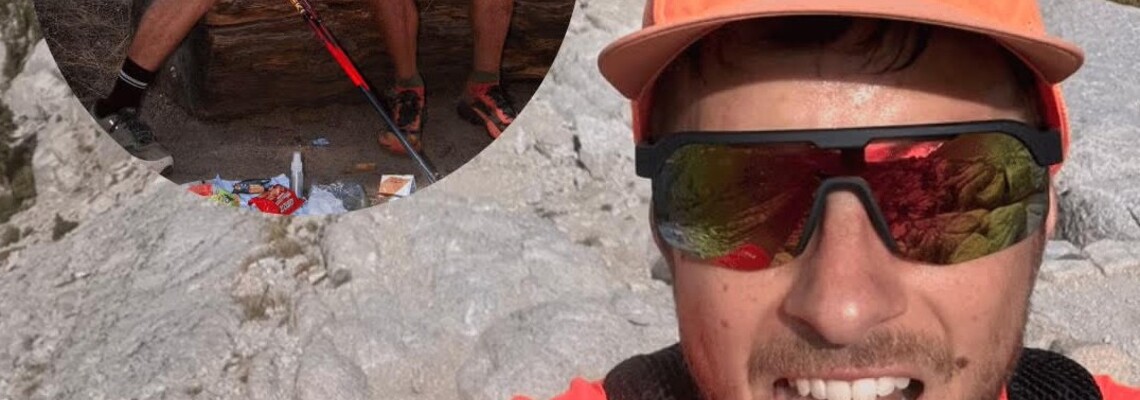
Joe McConaughy thought he would probably start a bit slower than François D’Haene when he went after the Frenchman’s record on the John Muir Trail (JMT) this September. He guessed he’d be maybe 20 or 30 minutes behind in the early miles.
But when McConaughy got to Kearsarge Pass around mile 40, he was an hour off of D’Haene, who ran the Fastest Known Time (FKT) on the 223-mile trail through California’s Sierra Nevada in 2017, just months after winning UTMB for the third time.
“That was definitely a bit of a crack in the armor,” McConaughy told Trail Runner. “But I told myself that maybe he went out at more of a race effort, while my pace was better for a multi-day FKT.”
McConaughy, known by his thru-hiking trail name, “Stringbean,” has more than a few multiday FKTs to his name. He’s set records on the Pacific Crest Trail, Appalachian Trail, Long Trail, and Arizona Trail. And he had two prior record attempts on the JMT, one of which earned him an unsupported FKT.
“I thought my experience could help me beat him,” McConaughy said.
As he chased the ghost of the JMT’s past, McConaughy drew from his many multi-day FKTs and races. All of the miles and mistakes, successes and failures, and lessons and growth along the way helped him ultimately establish a new FKT of 2 days, 16 hours, and 15 seconds, taking nearly three and a half hours off a time that had stood for nearly a decade.
The Art of Trying, and Trying Again
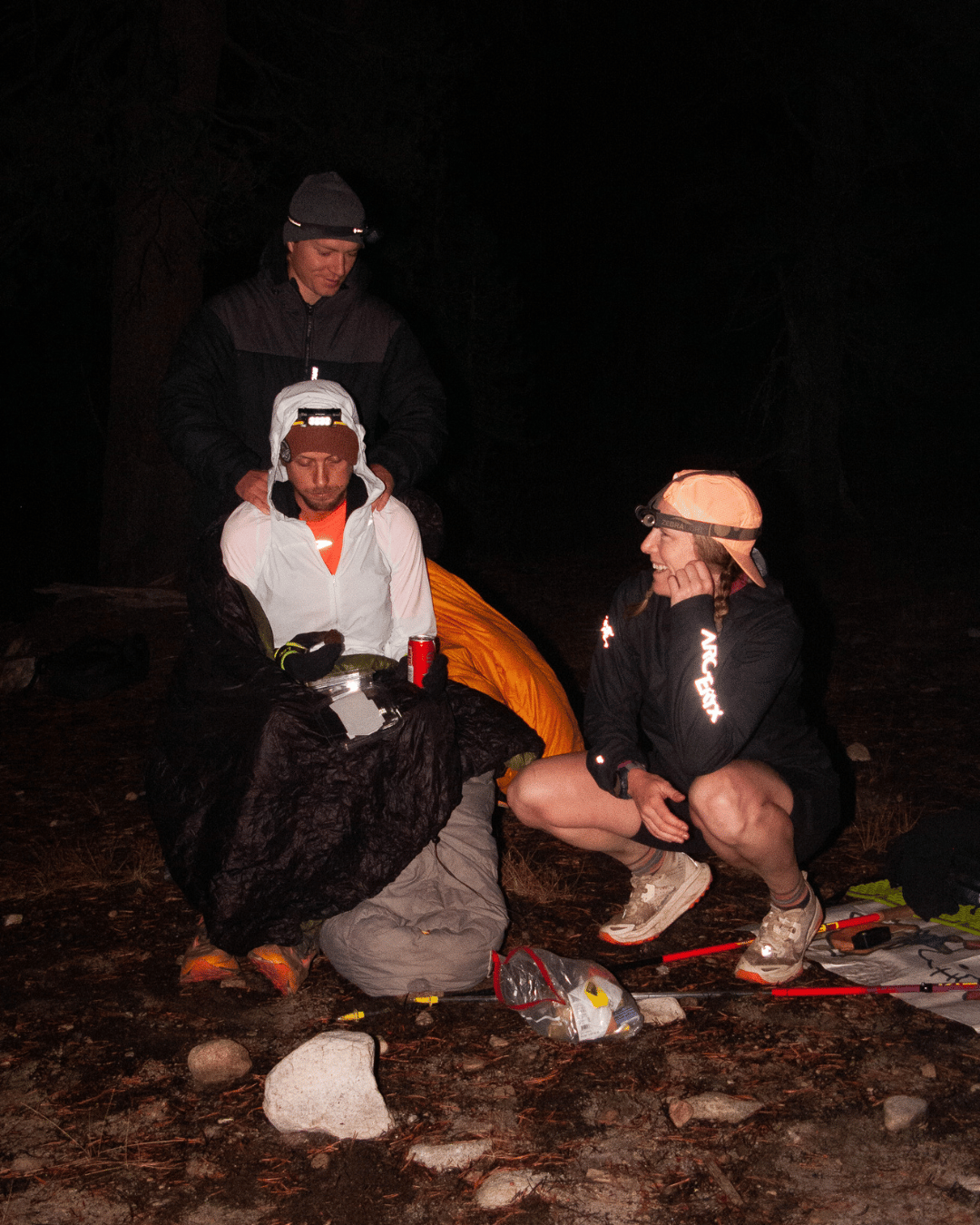
In rock climbing, climbers talk about “flashing” a route. It’s when they successfully climb the whole thing on their first attempt—without any practice or “beta” to help. McConaughy’s JMT effort was pretty much the opposite of flashing. The 33-year-old Seattle-based endurance coach was incredibly familiar with every mile of the JMT. Prior to his record setting attempt this fall, he’d covered the trail four times—the first in 2014—including the two prior FKT attempts. He’d also spent five summers guiding backpacking trips in the Sierra.
So when McConaughy ended up in a blizzard on Muir Pass with snowflakes landing in his eyeballs, it didn’t really stress him out or slow him down. If anything, it helped him move faster as he wanted to get up and over to warmer ground.
“I’ve seen the worst that the Sierra can throw at you,” he said, citing thunderstorms, blizzards, and rugged terrain. “I didn’t have to do a bunch of mental gymnastics, worrying about things I hadn’t experienced before. Instead, I could devote all of my energy to things that actually were issues.”
Most of McConaughy’s issues during the record attempt were ones he expected to occur, was prepared for, and could handle. “The long climbs were long climbs and some of the descents take decades,” he said. But after numerous JMT attempts he knew “it could feel much harder.” A little over a day into his attempt he was two hours ahead of D’Haene’s splits.
The JMT is far from the only goal for which McConaughy’s persistence has paid off. He took seven swings at earning a Golden Ticket into the Western States 100 before clinching one at the Black Canyon 100K on his eighth try in 2025. He’s also raced the Cocodona 250 three times and has a trio of Barkley Marathons starts.
“I like to think I’m more fun than a project-er, but when I look back, that’s pretty much my entire running career,” he said. “I feel like it gives me purpose. I want to do routes that inspire me and motivate me and take what I’ve done wrong, or what I feel like I could improve on, and continue to experiment, tinker, and optimize.”
He’s not as intense as a rock climber going after a seemingly impossible objective like the Dawn Wall, he swears. Rather, it’s about finding the sweet spot where he’s pushing himself to grow but having fun doing it. He’s not training to be the best at any given race or record attempt; he’s training to be the best version of himself for years to come.
“I get a lot of joy from sticking with the process, training with a smile, putting in the work to make a difference, and looking for opportunities to rise like a phoenix and perform the best that I can,” McConaughy said.
Caroline Himbert, who is coached by McConaughy and set her own unsupported FKT on the JMT this July, helped pace McConaughy on the JMT this fall. “He goes back to things he’s failed at and tries to continuously learn and grow; he loves the science and spreadsheets and takes things seriously,” Himbert said. “But at the same time, he doesn’t take things too seriously and he keeps things fluid and fun.”
California Dreaming
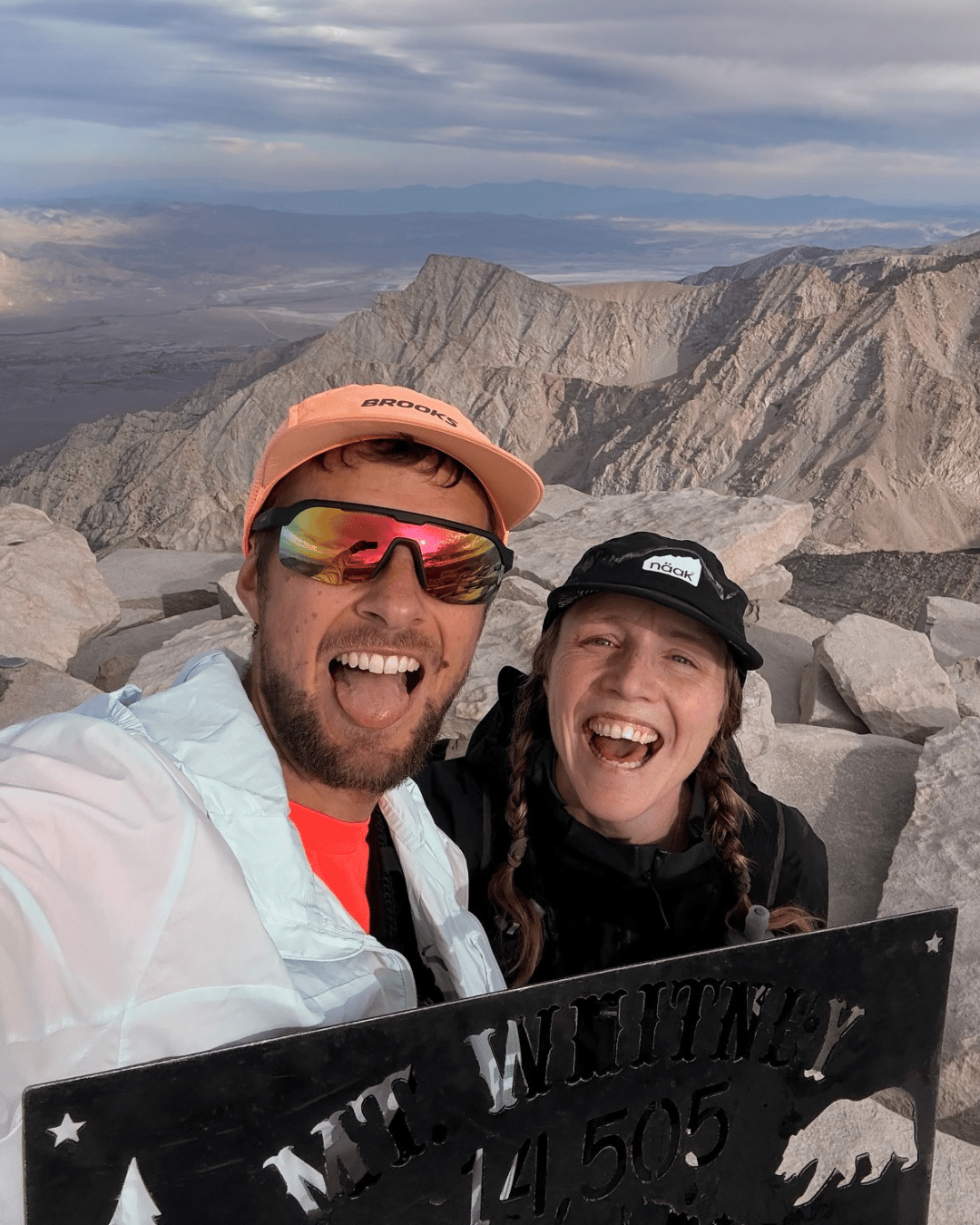
As evidenced by the fact that it stood for nine years, the JMT record was stout. D’Haene is known for bringing a newfound level of professionalism to FKT attempts, with a full support staff, set of pacers, and film crew. But rather than seeing the competitive level of the record as a deterrent, McConaughy saw it as part of the draw.
“It’s the granddaddy of FKTs,” he said. “More people have attempted the JMT FKT than pretty much any other premier route that exists—and the fact that François [D’Haene] and Darcy [Piceu] were the [previous] record holders is an ode to the level of attention and competitiveness that it’s gotten.”
On his first attempt in 2022, McConaughy set an unsupported record of three days and one hour. But Jeff Garmire beat it by 13 minutes just 25 days later.
McConaughy knew he could do better, so he tried to reclaim the record in 2024. But he hallucinated in the final miles and wound up off-trail on a class-four scramble, much closer to life-and-limb-threatening risk than he’d anticipated. It was a wake-up call for McConaughy, who always considers what he’s asking of others when he chases a big goal. He’s now the father of a 6-month-old and knew he couldn’t end up in a similar situation—or worse—if he went back.
“That experience made me really rethink what the record meant to me and ask myself if I wanted to do it again,” he said, adding that it felt reckless to go for another unsupported record. But after much reflection, and many conversations with his wife Katie, he decided he had to go back.
“I knew I couldn’t exist as an athlete without trying to put my stamp on the JMT,” he said. “This was my third time [attempting the FKT] on this trail and I wanted to give it my all, and use my best tips and tricks from every other effort to get the record.”
The Final Exam to a 12-Year Class
McConaughy showed up with a 12-tab spreadsheet and 12 years of beta to guide his effort this fall. He thought some of the greatest opportunities for improvement lay in fueling, pacing, and recruiting an all-star crew to help him out. In his unsupported-style attempts, he’d had to carry all of his own food and gear with no supply restocks along the way.
At Cocodona in 2025, McConaughy hit a wall that no amount of carbs could fix. He thought he knew how he needed to fuel to compete for the win. He’d done sweat testing and was experimenting with high-carb fueling. But he ended up with GI distress and struggled to breathe. He still finished in a respectable fourth place, but it was far from the finish he wanted.
He started working with nutritionist Meredith Terranova, who suggested he was likely hypernatremic—too high of blood sodium concentration—during Cocodona. He wondered if trying to optimize his performance through a data-driven approach with high carb fueling and sweat tests meant he’d stopped listening to his body.
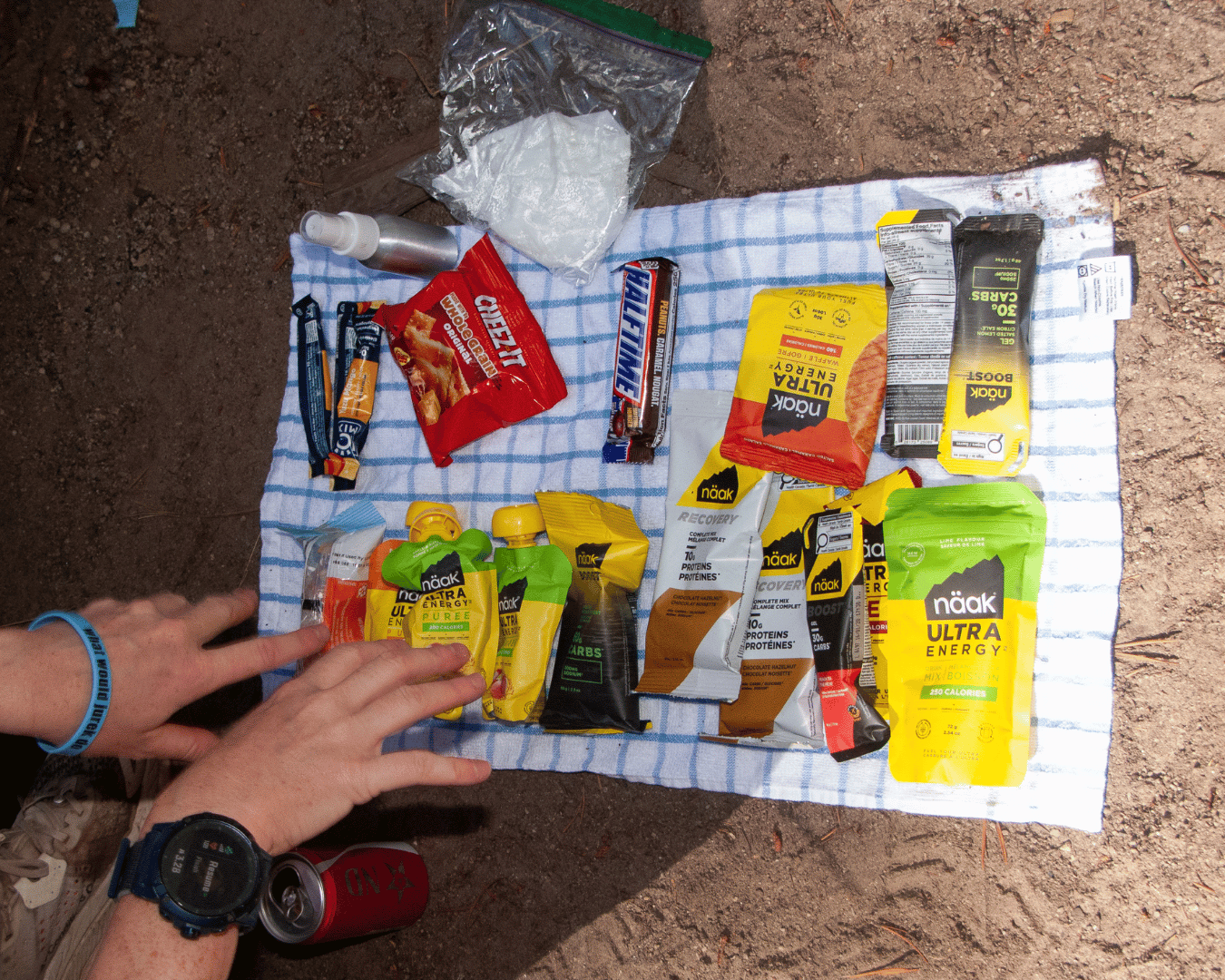
So on the JMT he turned to real food like trail mix, purees, and waffles, especially on the big climbs—of which there is no shortage with 38,000 feet of elevation gain to cover. He also used recovery drink mixes and fat- and protein-based fuels from his nutrition sponsor, Näak.
“I feel like sticking to more whole food was the biggest learning and the biggest difference maker in my performance,” he said.
He also made up ground through a smarter sleep strategy. In his 2022 attempt, in which he finished six hours behind D’Haene’s record time, McConaughy slept for six hours. He knew there was an opportunity to trim down time spent resting while still sleeping enough to avoid dangerous hallucinations.
He settled on taking a mere 40 minutes of sleep beneath a pine tree on Bear Ridge—around 28 hours in. He thought it might be prudent to get at least an hour but he decided to push it a little with 40 minutes, figuring he could always nap later if he needed it. When he got to his third night out on the trail he was still running strong, cracking jokes, and appreciating his surroundings, Himbert said.
“You could tell he was having a good time and he was a ball of energy,” she said. “I was with him more towards the end, and he was still moving so well. I think that’s the key with this trail; it’s so challenging but if you can still move well towards the end then you can crack these times. I think Joe really nailed it, and it went close to perfect.”
Full Cup, Can’t Lose
McConaughy’s crew was one of his greatest assets. He learned some things about crewing the JMT after his crew missed him at Kearsarge Pass during his Pacific Crest Trail FKT in 2014. The PCT overlaps with the JMT for about 170 miles. He had to keep going on the PCT for two days with no sleeping bag, only a half-day’s worth of calories, and nothing warmer than a thin windbreaker. “We didn’t really know what we were doing,” he said. Hence the 12-tab spreadsheet this go-around, which was largely for the benefit of his crew and the complicated logistics of supporting a record-attempt on the JMT.
Part of the beauty of the JMT is that it offers an uninterrupted tour of backcountry wilderness. The trail only crosses the road twice over the course of the entire 223 miles. That’s also what makes it a bear to support. Meeting McConaughy on the trail required hiking several miles and thousands of feet of climbing to deliver food and gear. Pacers ran monster sections—usually around 40 miles at a time. But his crew of pacers was up for the challenge, with a collective résumé that boasted JMT FKTs, podium finishes, and 200-mile runs.
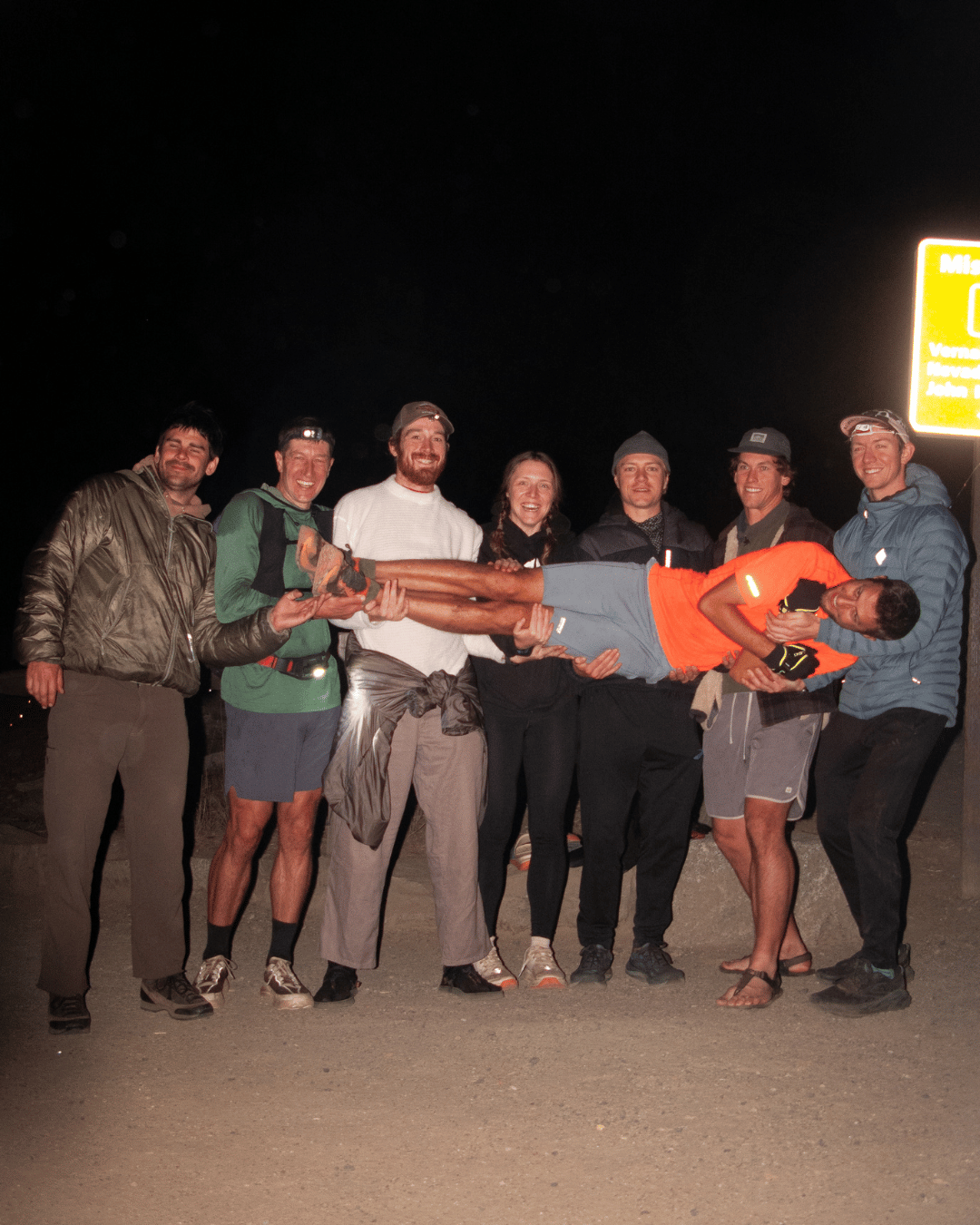
“Tara Dower talked about being a vessel on the Appalachian Trail, and I certainly had a similar experience on the JMT,” McConaughy said. “I was able to appreciate the beauty of where I was and the excitement of doing this absurd endurance thing because my crew was always filling my cup instead of making me pour things out to keep going.”
One thing that McConaughy has learned time and time again, is that he runs best when his cup is full.
“Gratitude and joy are the greatest performance-enhancing drugs,” he said.
While he was running, he thought about Katie, who was home solo-parenting so he could acclimatize to the altitude and run for 64 straight hours. He thought about his parents, who enabled him to get outside and run cross-country from a young age. He thought about the people who have supported his running career, and the friends who traveled to the Sierra to help him through the 223-mile journey. And he thought about the Sierra themselves, the mountains that have kept him coming back time and time again for the last 12 years.
“I run my worst when I’m thinking about how far behind someone’s splits I am,” he said. “When I caught myself doing that on the JMT, I thought, ‘This is doing more harm than good. You need to move forward at your own pace, and focus on the things that really matter.’”
After shaving over three hours off such a long-standing record, McConaughy hopes that he’s reached an end with his JMT FKT attempts. With all of the time and effort he has dedicated to the JMT, it feels a bit like a fairytale ending: “The princess was saved,” he said.
Now, he’s ready for a new goal, one he’s ready to chase to fuel his performance and fill his cup
“It’s one of those moments where I realize I’m maybe more capable than I thought I was,” he said. “And that makes it exciting to go back to Cocodona, or Western States, or another FKT, or any number of things to see what I can do.”