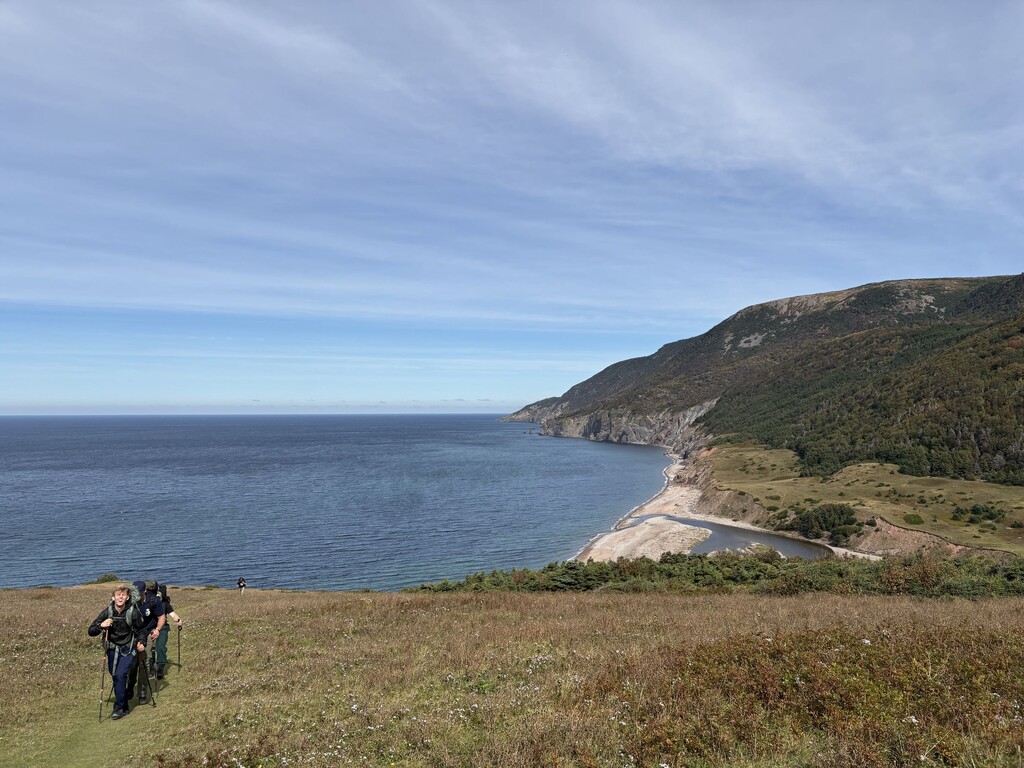
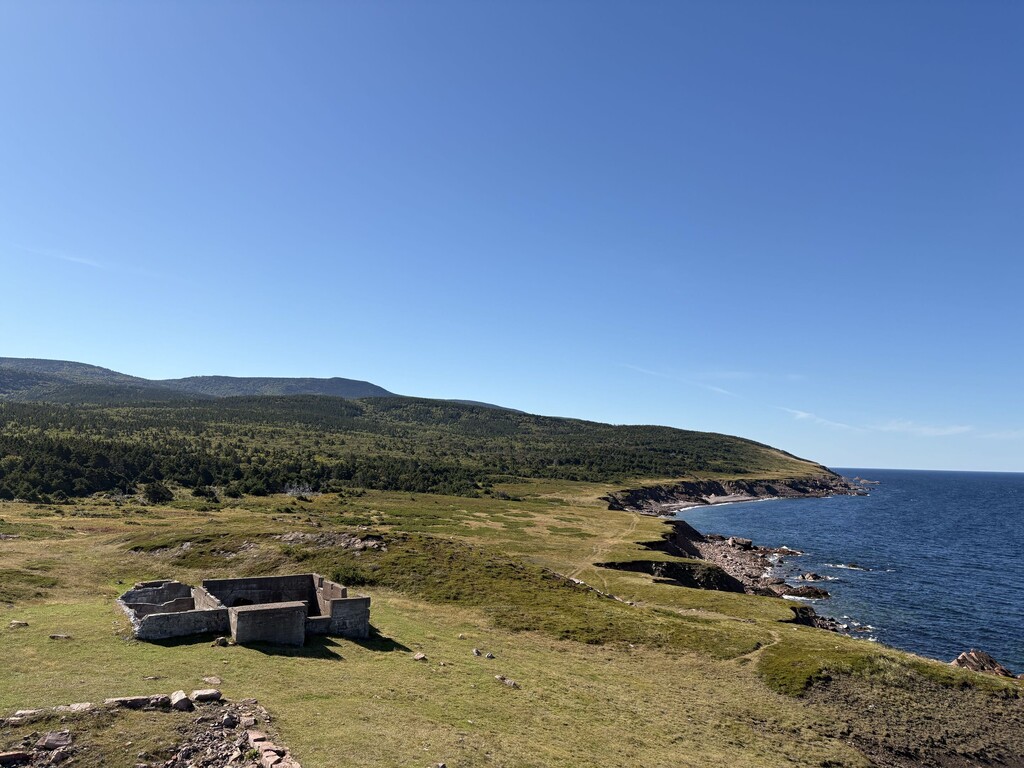
The Seawall Trail, also known as Jajiktek (Mi'kmaw word meaning crouching down and standing up as you move along a difficult route close to water), is a rugged backcountry route traversing the northwestern coast of Cape Breton Island, Nova Scotia, between Red River and Meat Cove. The proposed developed trail is approximately 48 km long, but the route currently undertaken by hikers and runners today is better understood as an off-trail wilderness traverse than a maintained footpath. Depending on the line followed and the route source, reported distances vary roughly from 33 to 55 km.
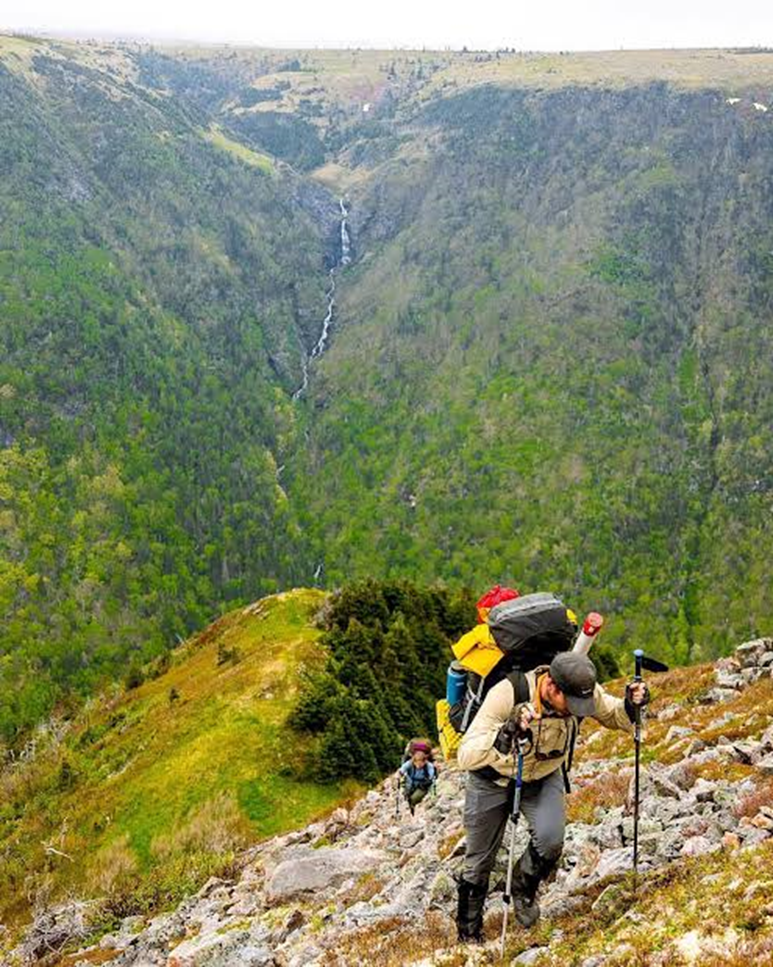
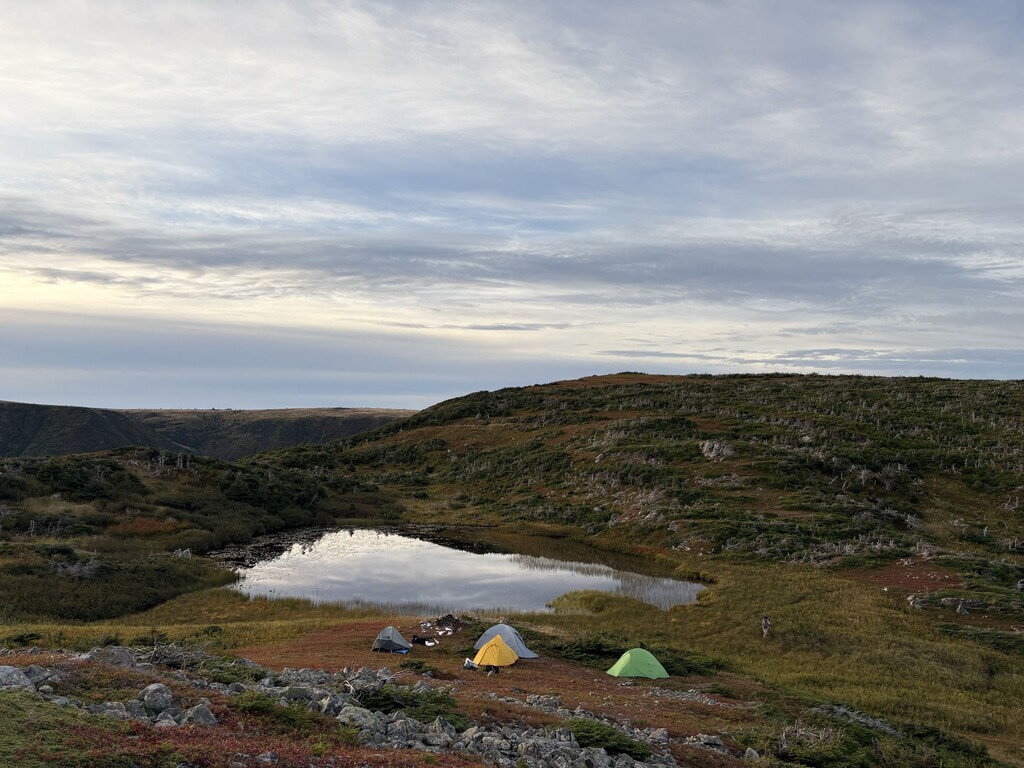
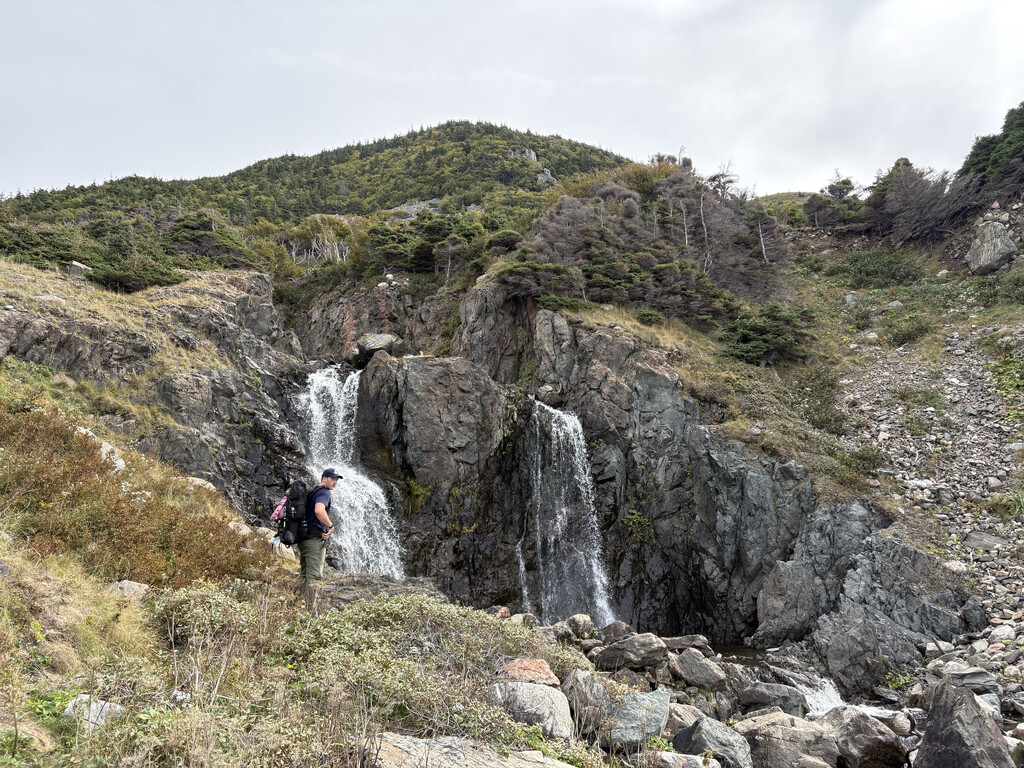
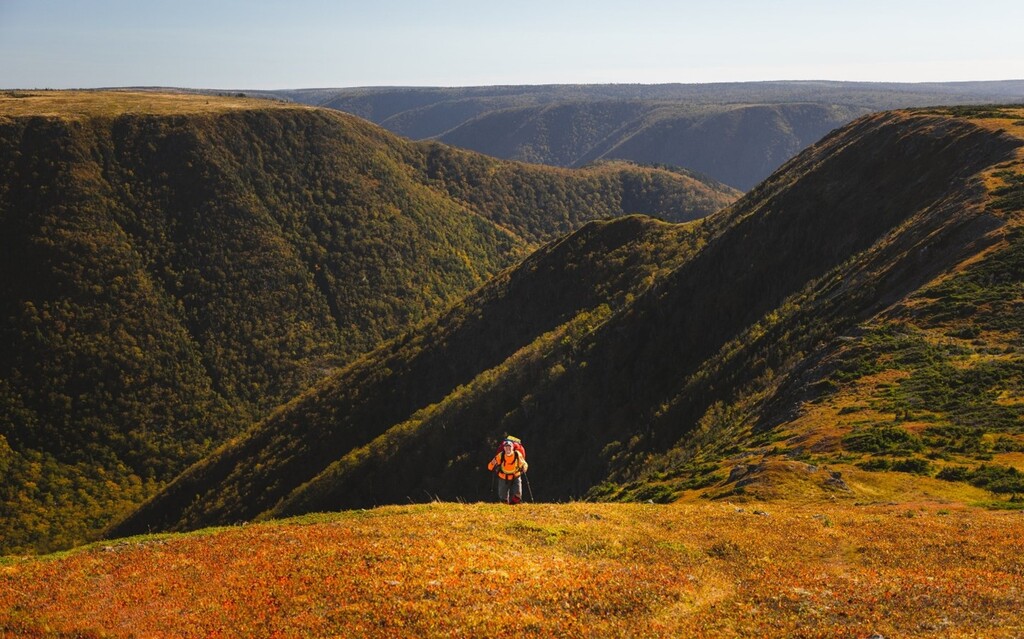
The route passes through the Polletts Cove–Aspy Fault Wilderness Area, a remote landscape of steep coastal mountains, exposed barrens, cliffs, river valleys, marshy lowlands, old-growth forest and isolated beaches. Pollett’s Cove is a notable landmark, with wide-open coastal views and the possibility of seeing wildlife such as bald eagles, moose, black bears, pilot whales and the area’s free-roaming horses.
This is not a conventional trail-running course. While the trail is clearer than it used to be, only a limited portion is an established trail, with substantial sections involving bushwhacking through dense vegetation, deadfall, wet ground and rough, pathless terrain. Route-finding is a major part of the challenge: existing GPS tracks can differ and may lead through inefficient or difficult terrain, so navigation requires sound judgment and the ability to read the landscape rather than simply follow a track. The rugged footing, elevation changes, water crossings and remoteness make pace and completion times highly dependent on conditions and route choice.
The route can be approached from either the Red River/Pollett’s Cove area or Meat Cove. There is currently no developed trail infrastructure, signage or accommodation along the route; anyone attempting it should be prepared for a serious wilderness outing, carry appropriate emergency communications and leave a detailed trip plan. The planned Jajiktek project will eventually establish a formal multi-day trail, but the present route remains a demanding and largely undeveloped backcountry undertaking.
Tips
Government Project

Comments
The title is a typo. It’s obviously in NS not NB