




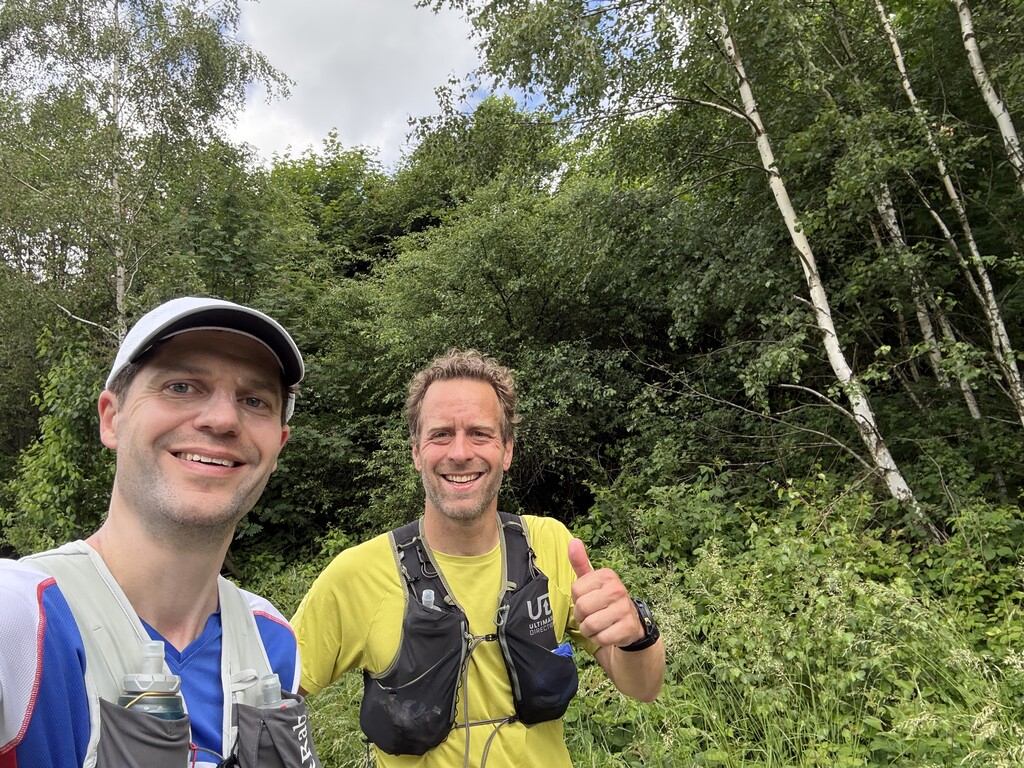

After running 160 kilometers in 24 hours during a backyard ultra in October 2025, plans for a new adventure quickly took shape. We were looking for a challenge that we knew in advance would be extremely tough and would push us to our limits. The idea for an FKT (Fastest Known Time) on the Rennsteig was born.
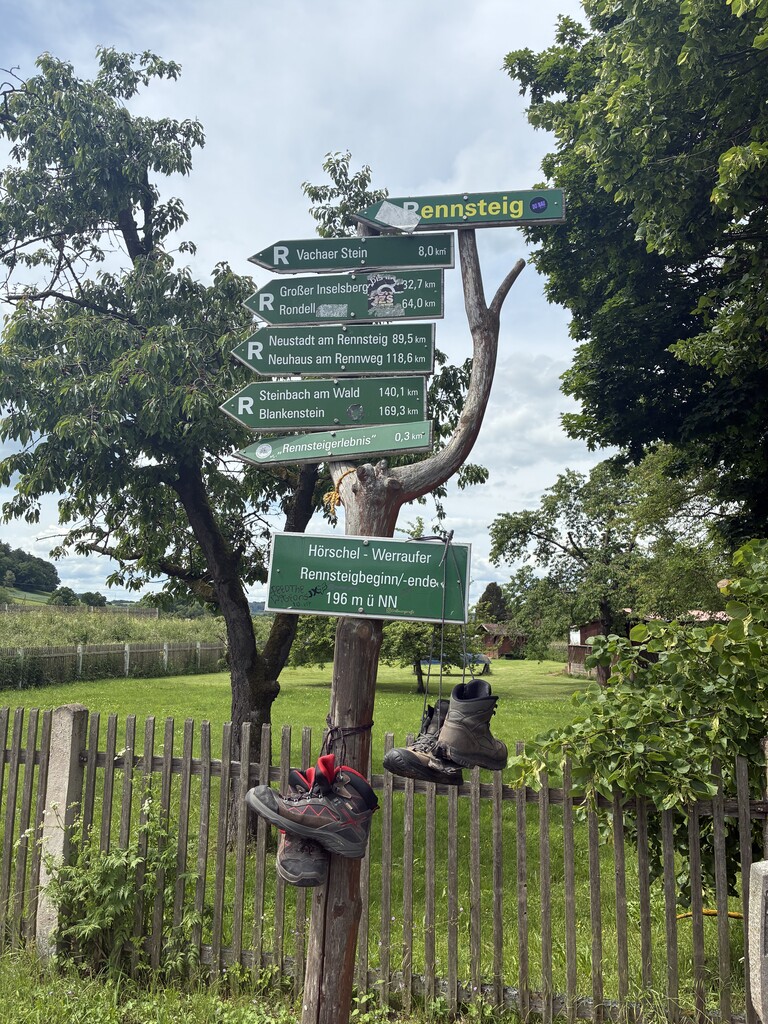
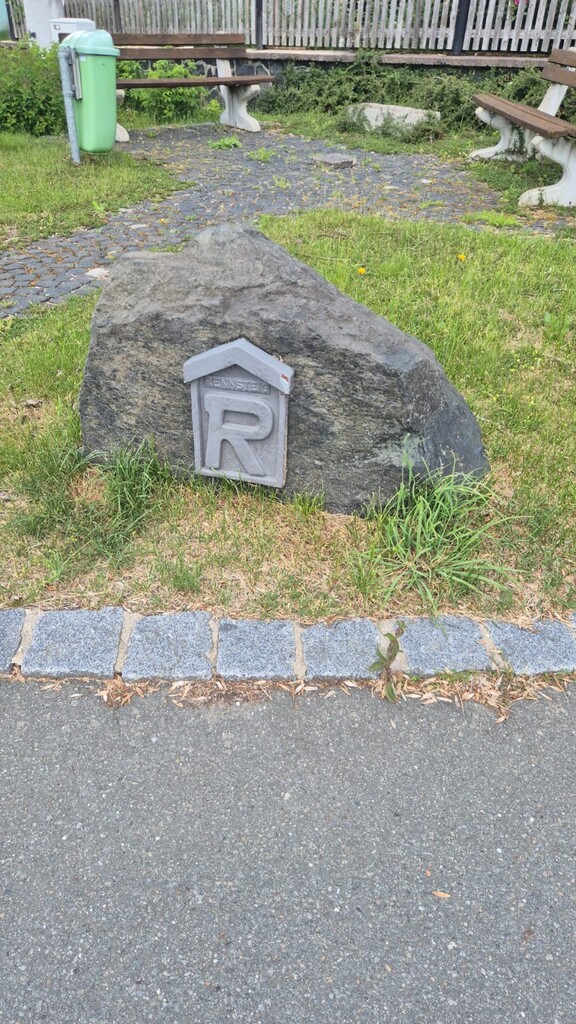
The Rennsteig is Germany’s oldest long-distance hiking trail, measuring approximately 171 kilometers with more than 3,000 meters of elevation gain. Most hikers complete the route in stages over 6 to 10 days.
The fastest time recorded on the FKT website is 28 hours and 39 minutes, set by Daniel Mußbach. Our goal: to beat this time—on June 6.
In the four months leading up to the attempt, we did everything we could to prepare as well as possible. We trained an average of nine hours per week. Still, the question remained: would it be enough?
We also created a detailed race plan and nutrition schedule. Our plan was ambitious: we aimed to complete the route in 24 hours. We divided the Rennsteig into 11 stages. The first ten stages ranged from 14 to 20 kilometers; the final stage was just 6.6 kilometers.
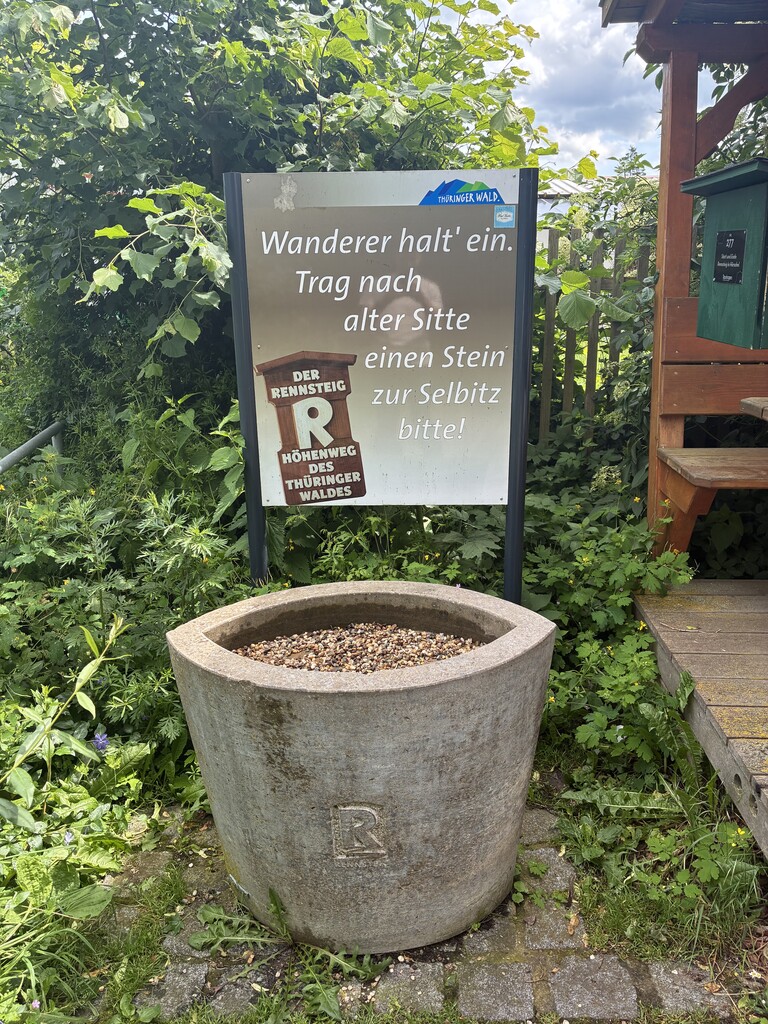
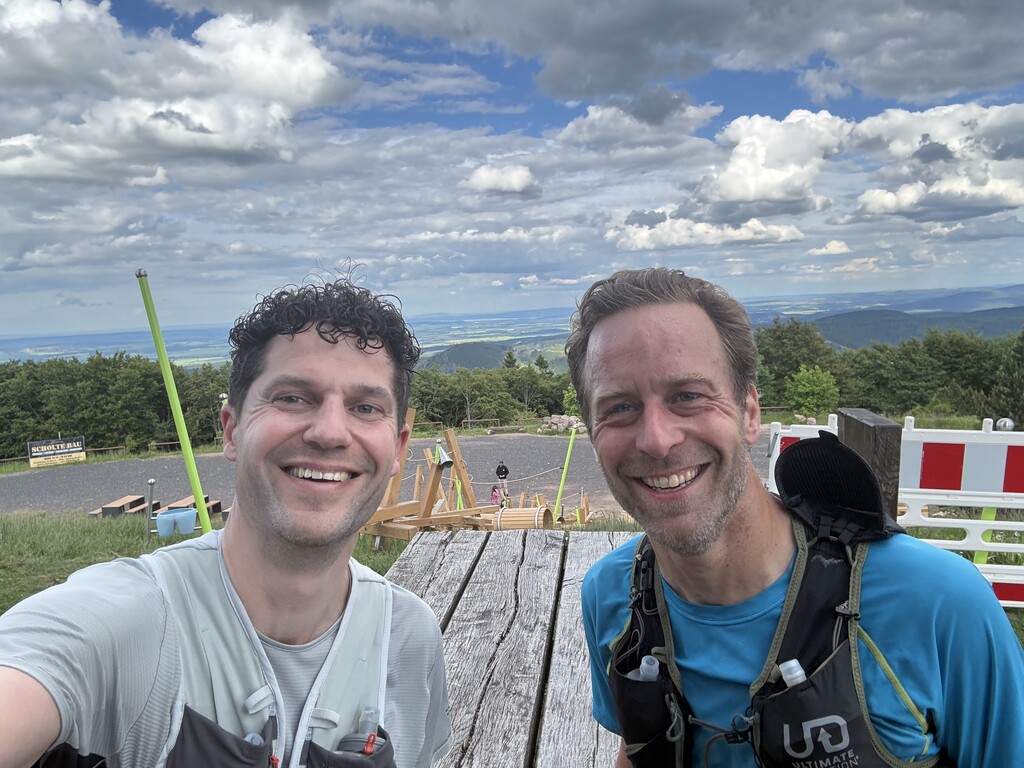
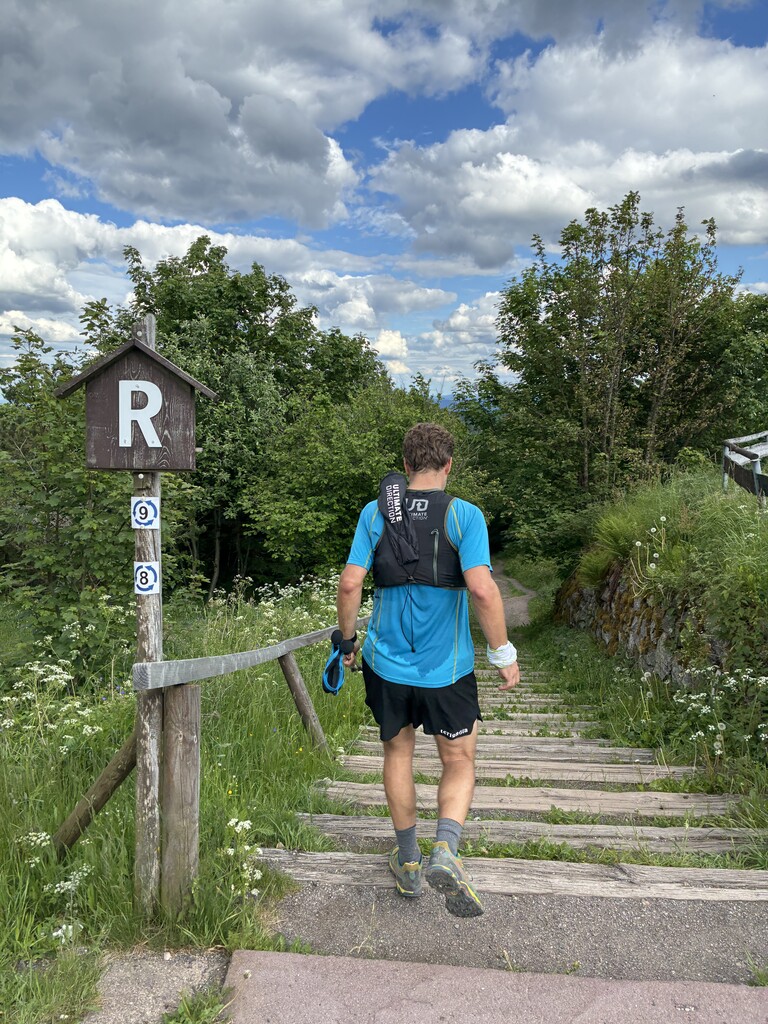
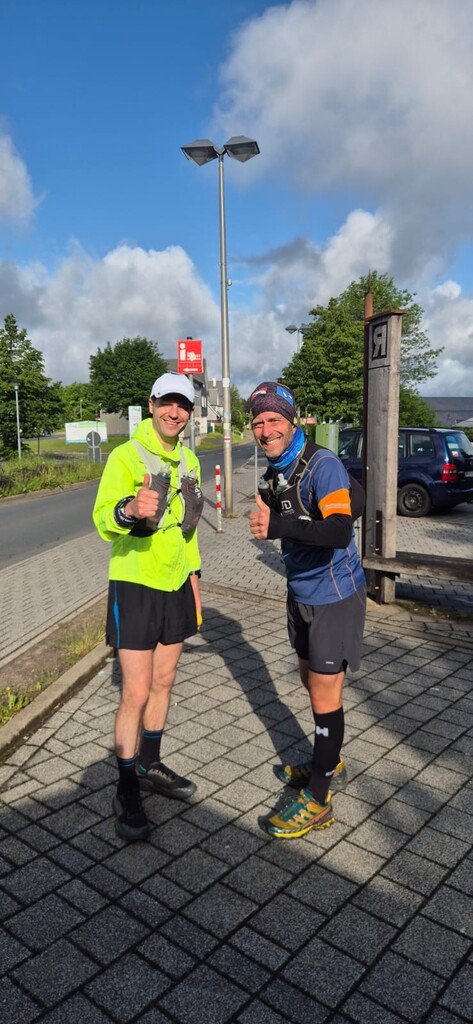
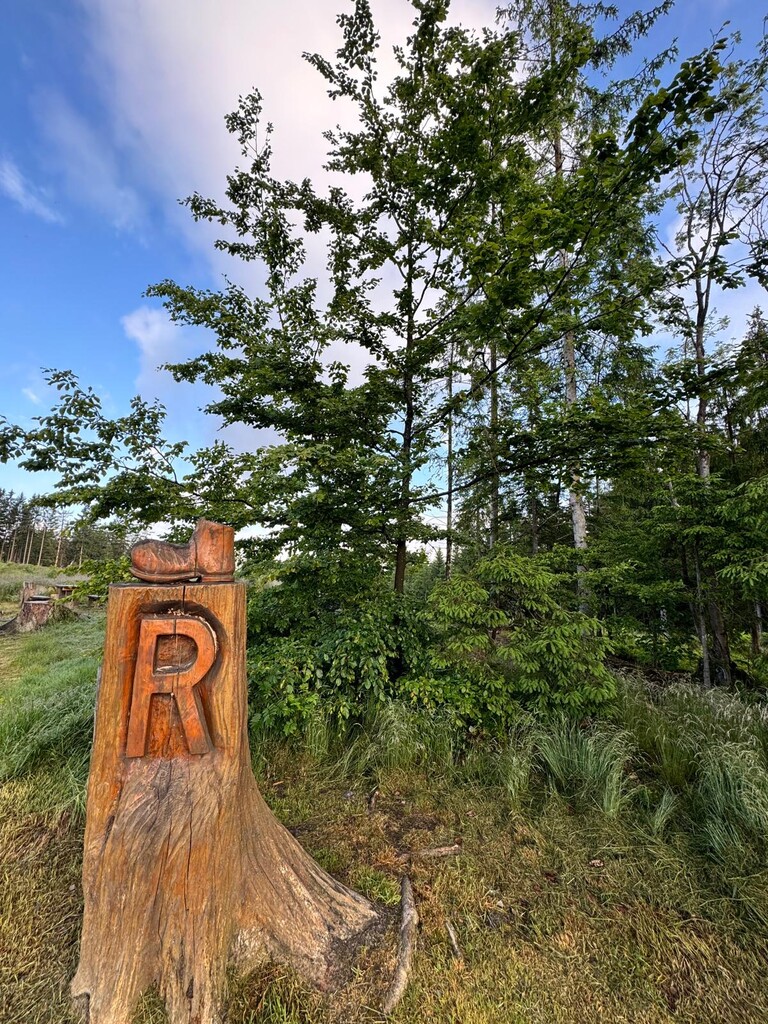
On June 6 at 07:00 in the morning, we left Schijndel (NL) in a camper and drove to the starting point in Hörschel. Traffic was in our favor, and we arrived around 12:00. We decided to start at 1 PM. As is tradition on the Rennsteig, you begin by taking a small stone from a container, which you carry to the finish in Blankenstein and throw into the water from the bridge. That’s how we began our adventure.
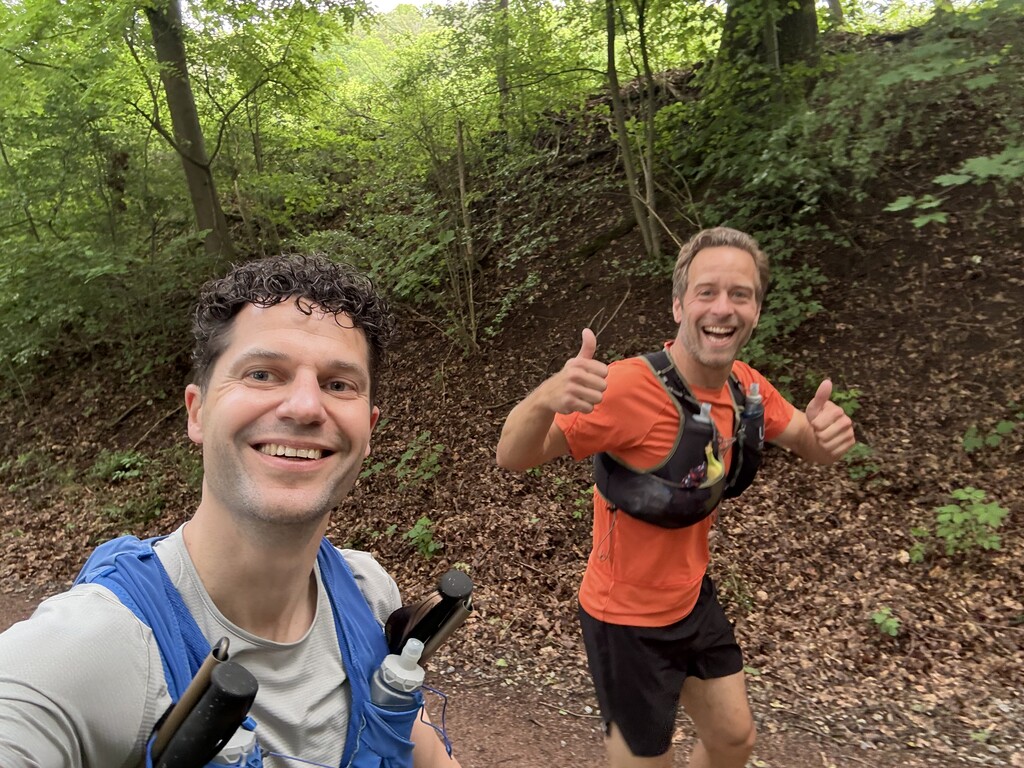
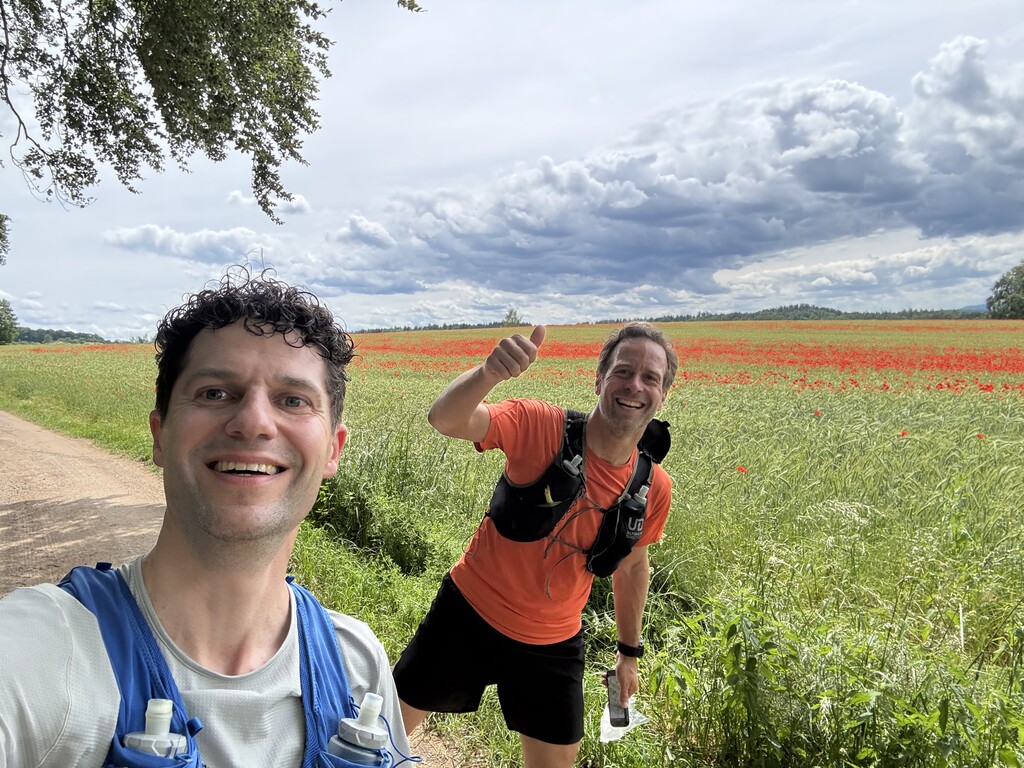
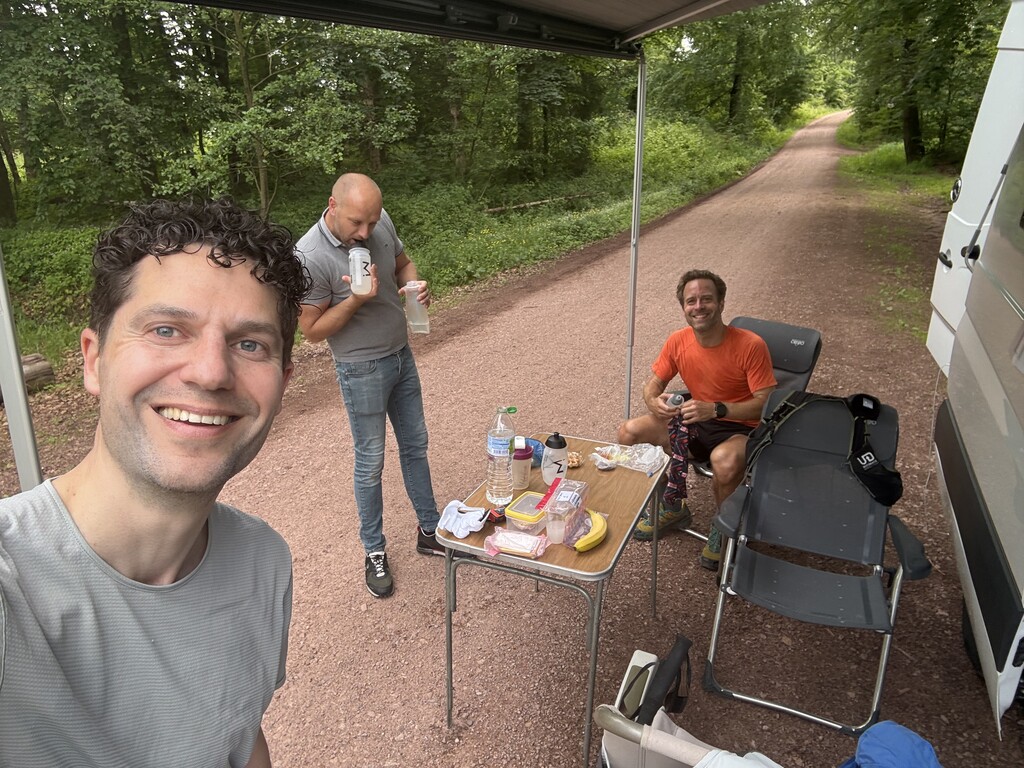
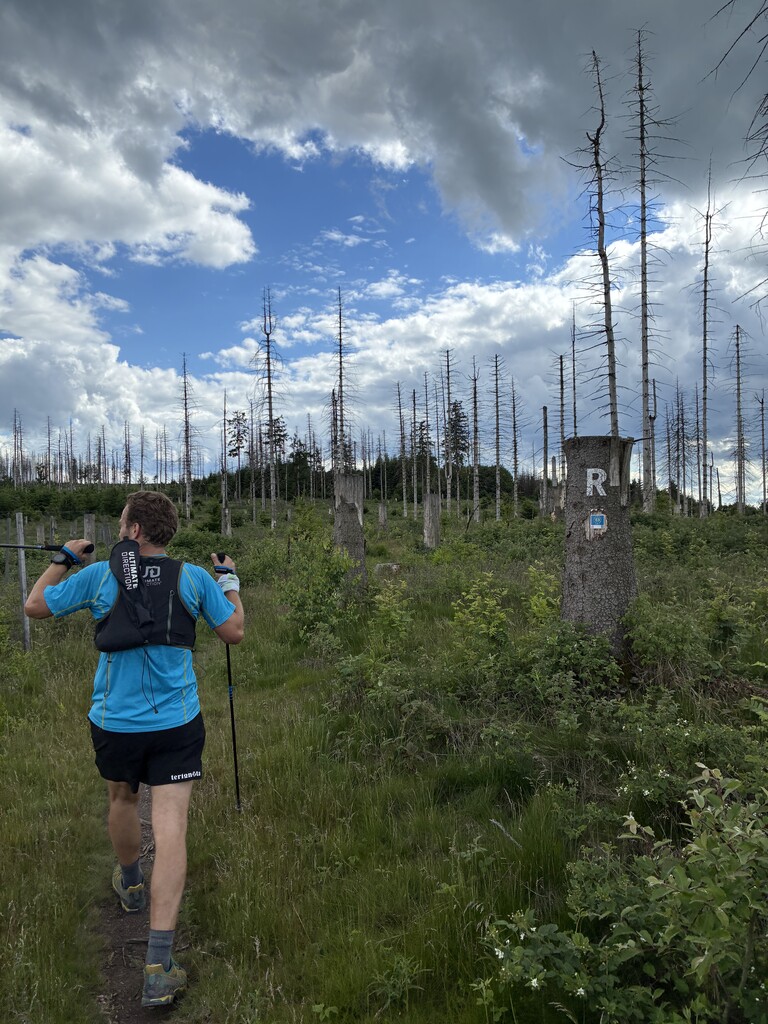
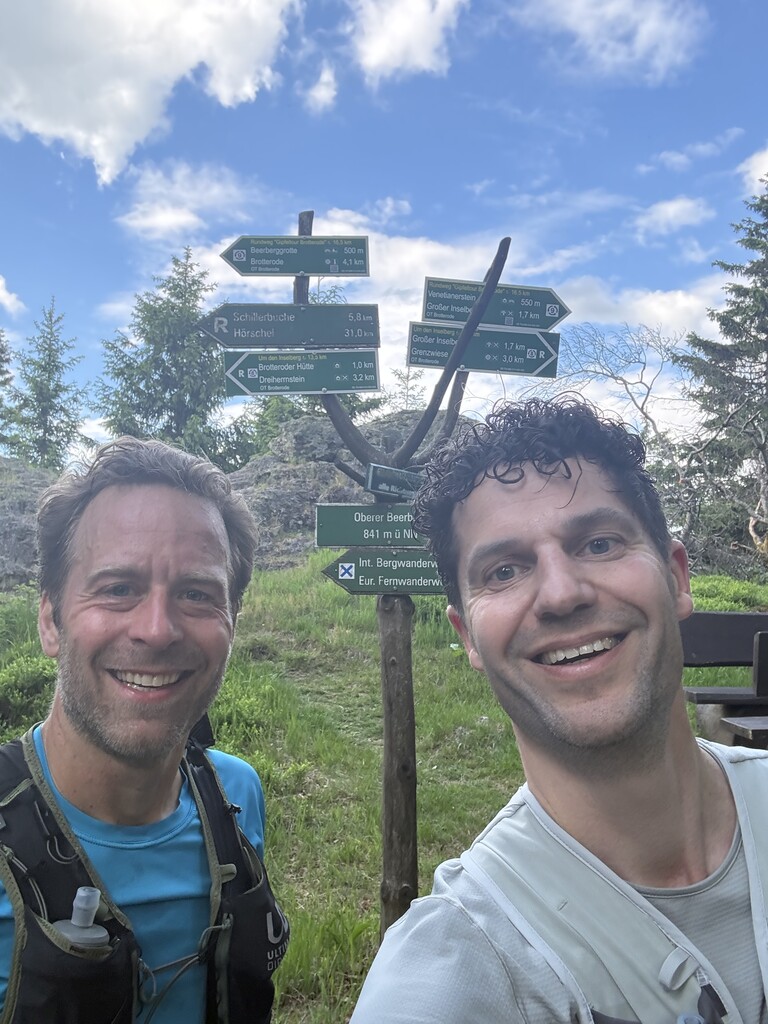
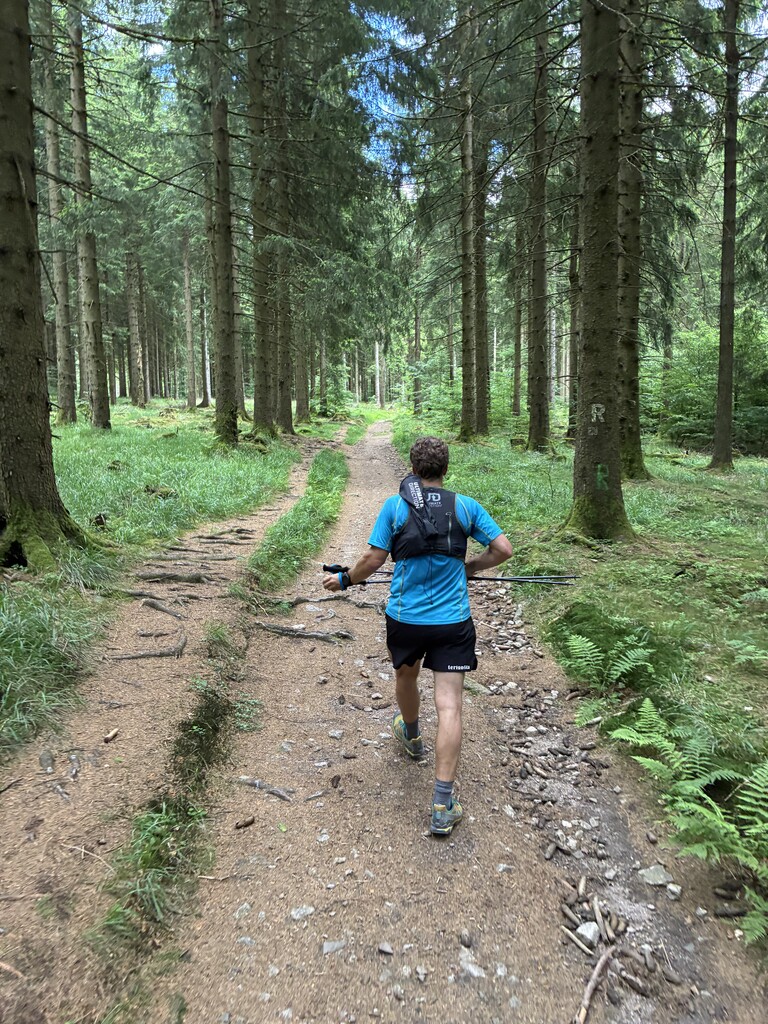
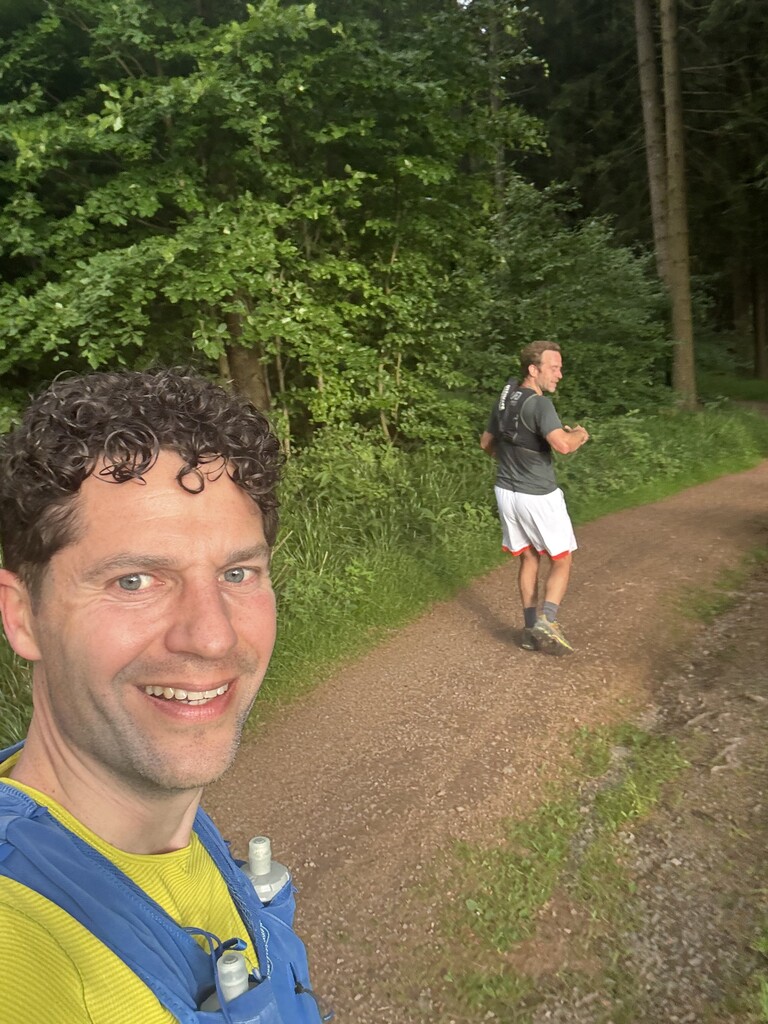
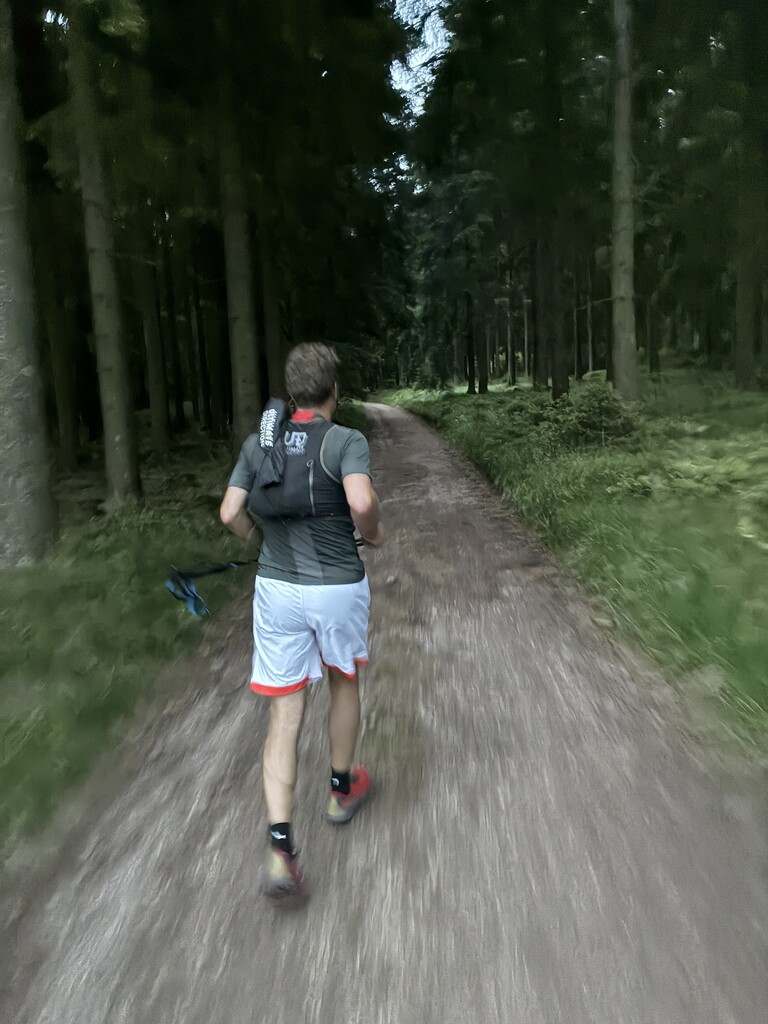
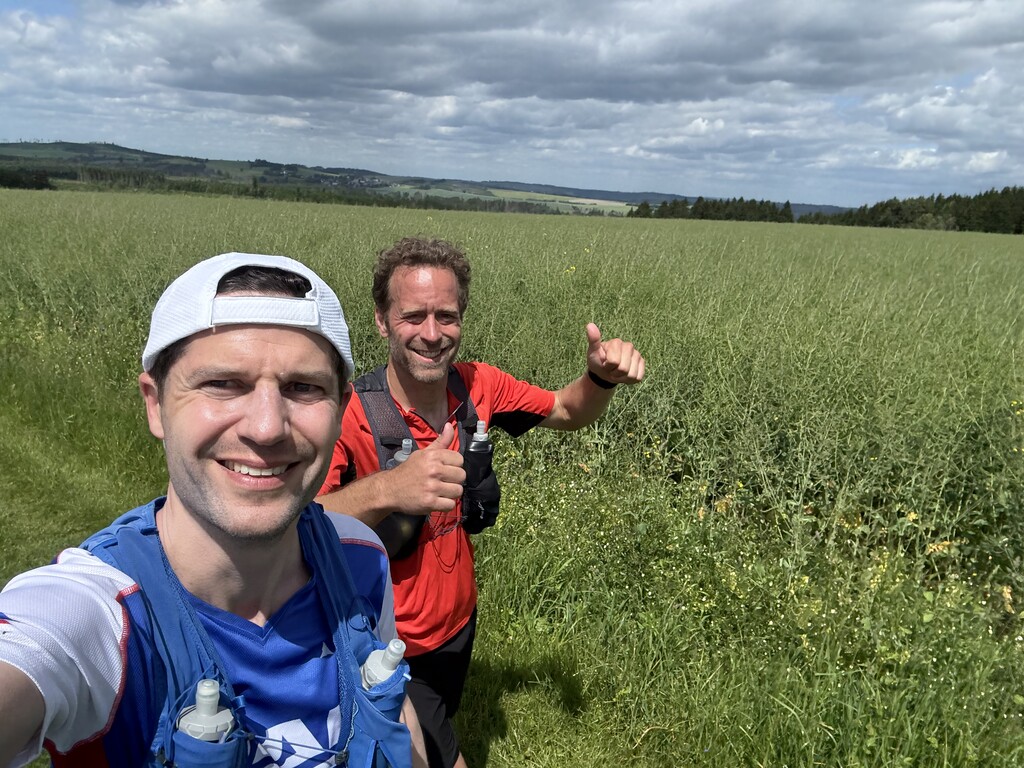
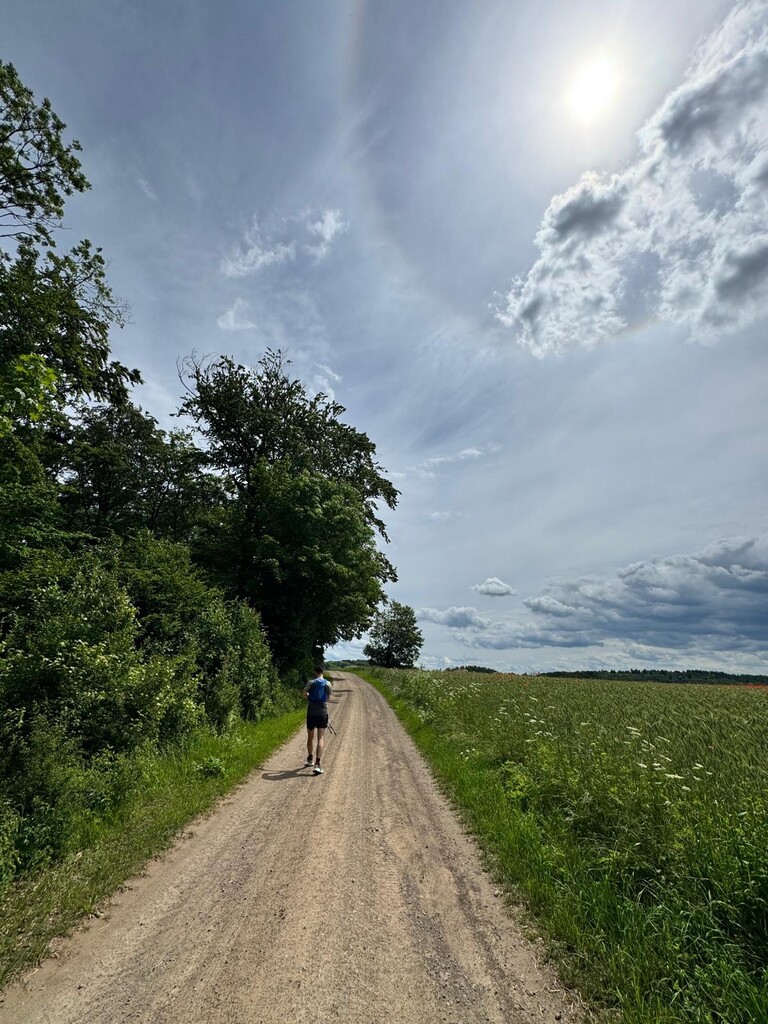
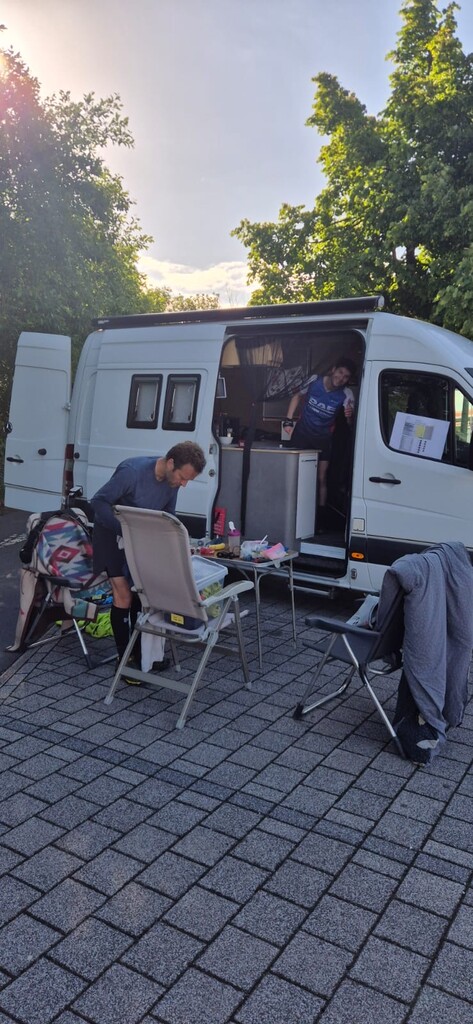
The first two stages took us from Hörschel to Inselberg, covering 34 kilometers. This section has many elevation gains. We planned to complete it in 4 hours and 45 minutes. During the first stage, we managed to maintain our pace well. We ran through forests and along blooming fields, enjoying the sunshine. With temperatures just under 20 degrees, conditions were ideal. Exactly according to plan, we reached the first rest point, where Hans was waiting with fresh bottles and food. In the second stage, it became more difficult to maintain our pace on the climbs. We arrived at the second rest point ten minutes behind schedule, but we were rewarded with delicious vegetable soup that gave us new energy.
Stages 3 and 4, from Inselberg to Oberhof (30 kilometers), turned out to be tougher than expected. We had hoped to increase our pace here, but that proved difficult. By the fourth rest point, we were already half an hour behind schedule. By then, the sun had also set.
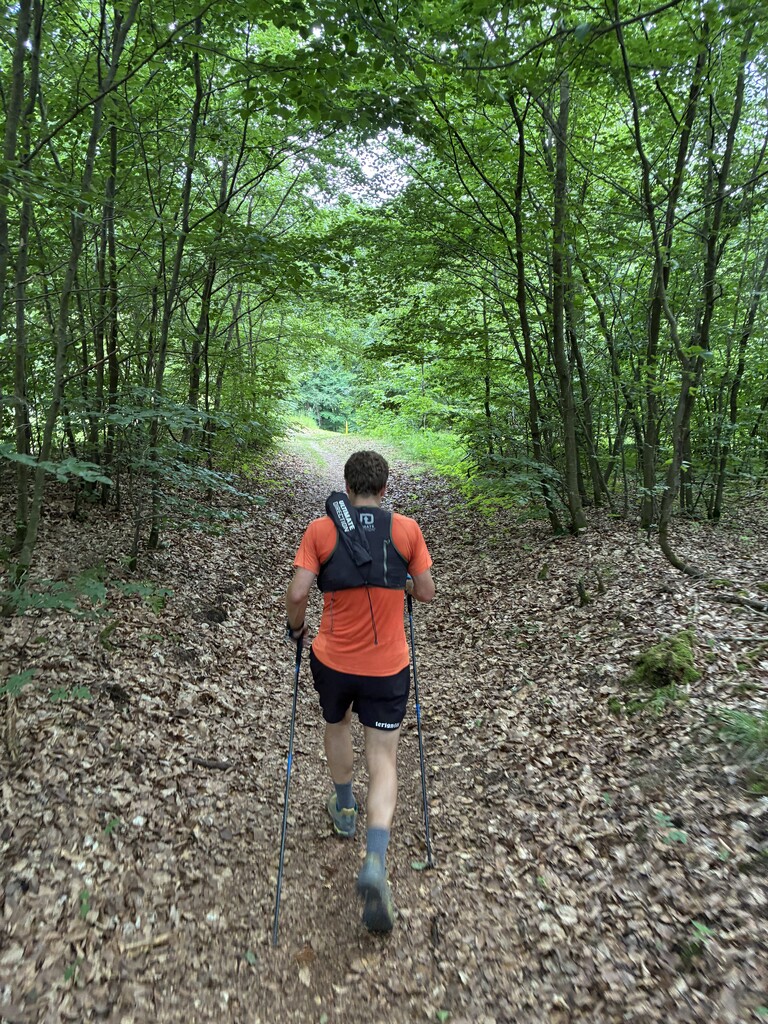
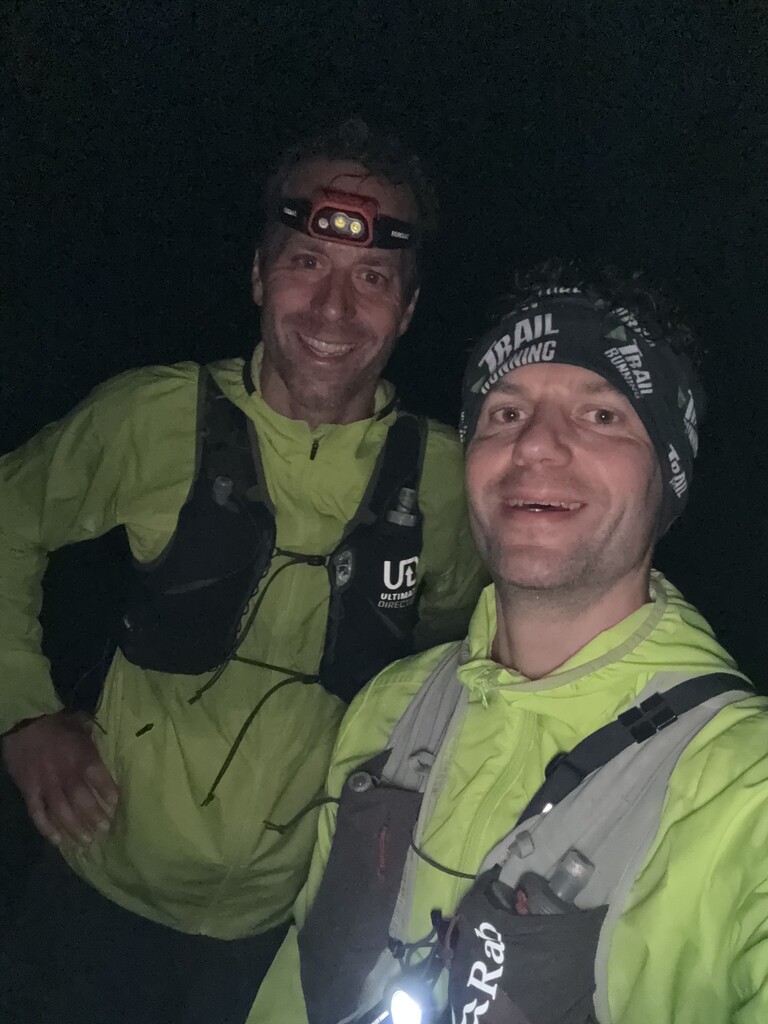
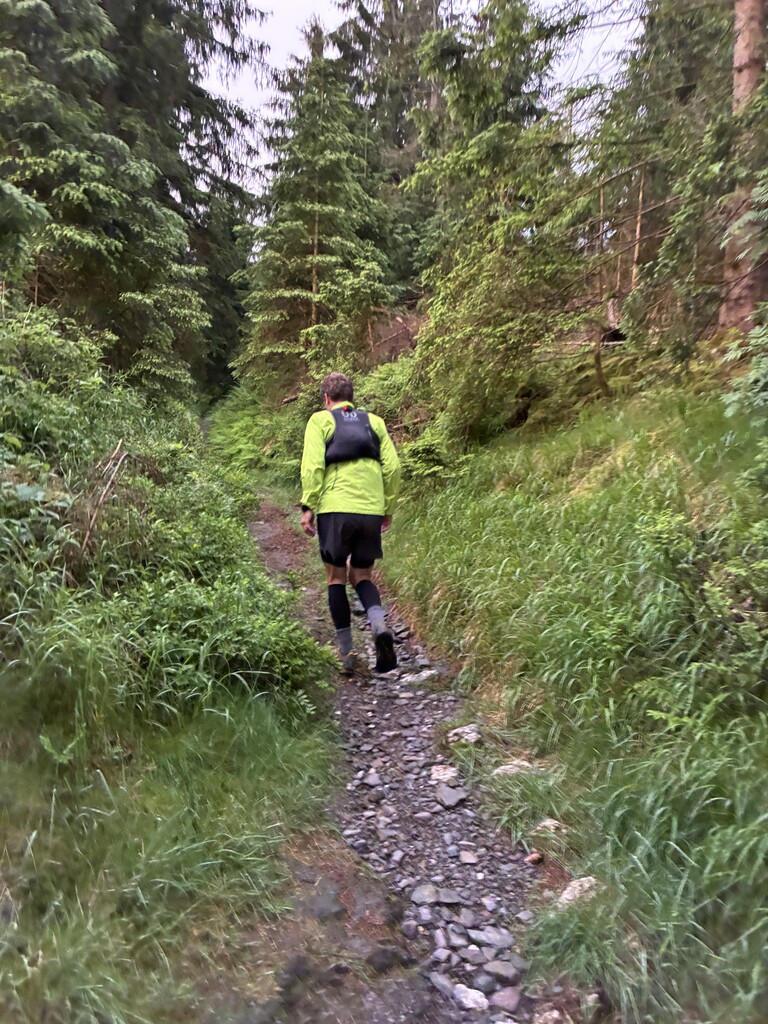
Stages 5 and 6, from Oberhof to Masserberg (34 kilometers), brought new challenges. Shortly after leaving, it started raining, which continued for two hours. Joris had not brought a rain jacket and was soon completely soaked. Running in the dark on narrow, rocky trails was tough, especially combined with dense fog that sometimes limited visibility to less than five meters.
At the rest point between stages 5 and 6, we hit a mental low point. With about 80 kilometers behind us, we wondered how we would complete the remaining 90 kilometers. By then, we had let go of our 24-hour goal. We took extra time to change into dry clothing and regain energy. Around 4 AM in the morning, we reached the sixth rest point.
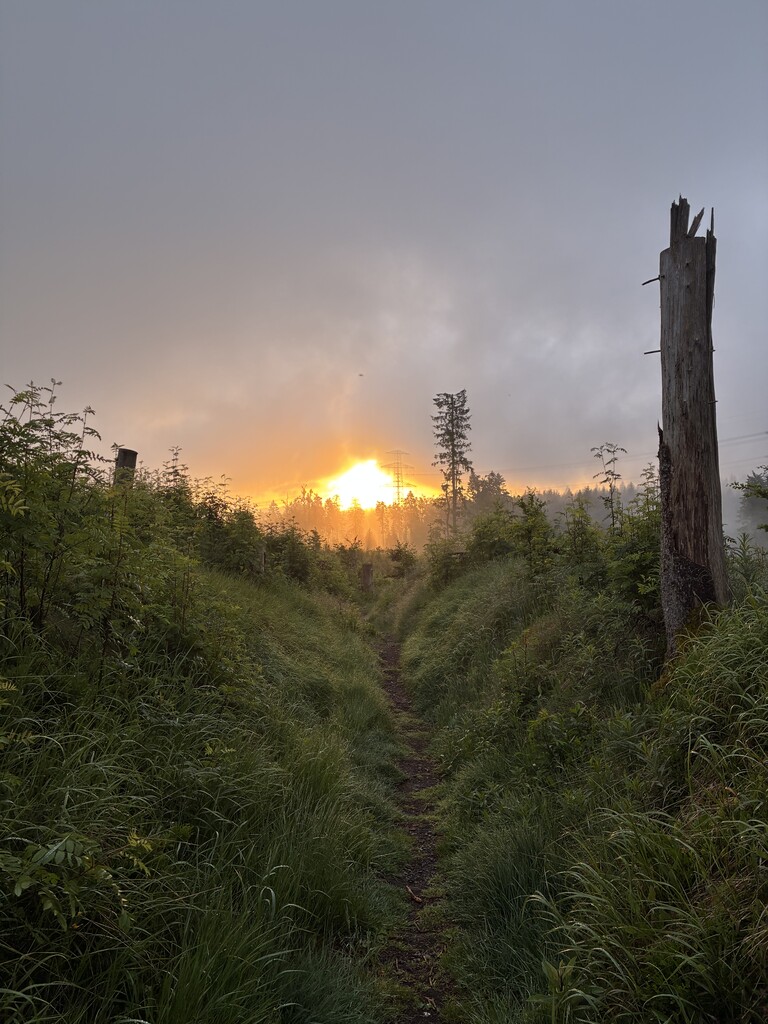
Stages 6 and 7, from Masserberg to Tettau (37 kilometers), marked a turning point. Around 5:30 AM, we saw the sunrise, which gave us renewed energy. At approximately 8 AM, we reached the eighth rest point.
Stages 8 and 9, from Tettau to Wartehalle (32 kilometers), demanded a lot from our legs, which had become painful by then. Still, we kept running on the flat sections and the downhills. With every kilometer, our confidence grew that we would not only finish but also beat the record time. Around 1:30 PM, we arrived at the second-to-last rest point. By then, we had already been on the move for more than 24 hours.
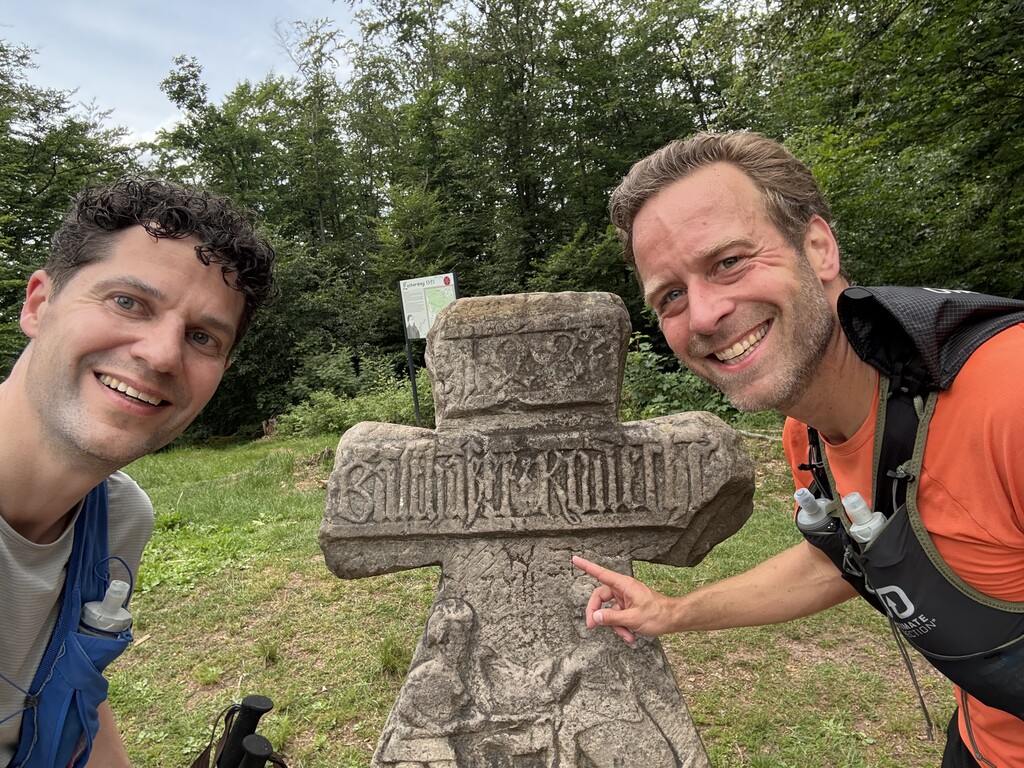
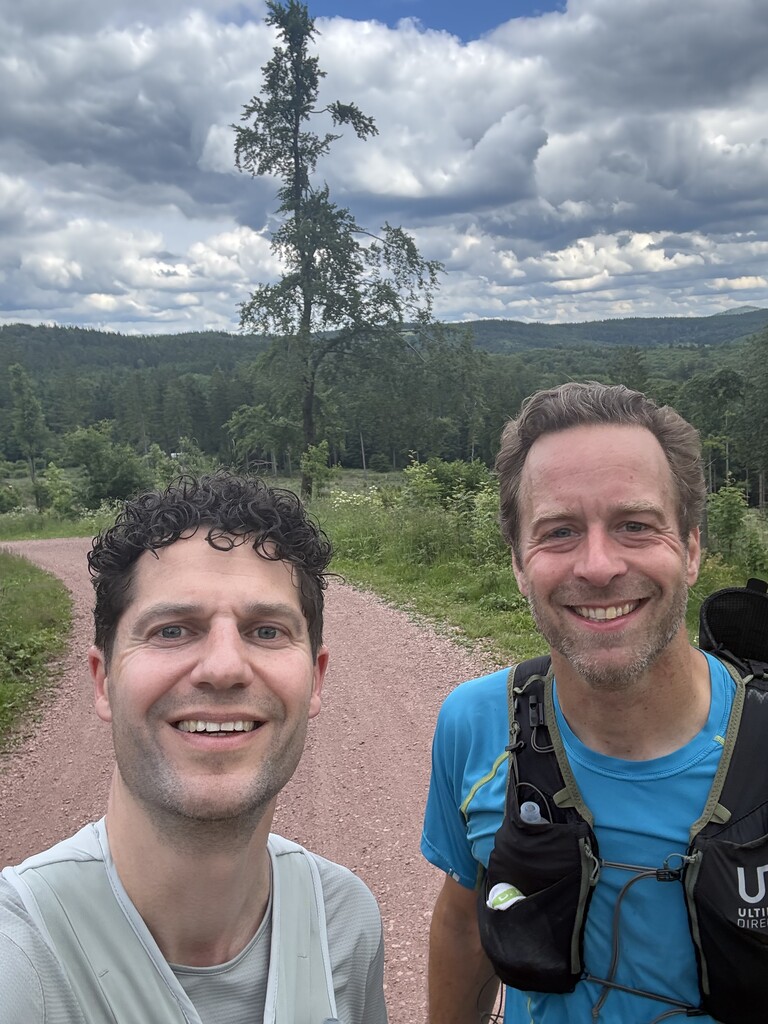
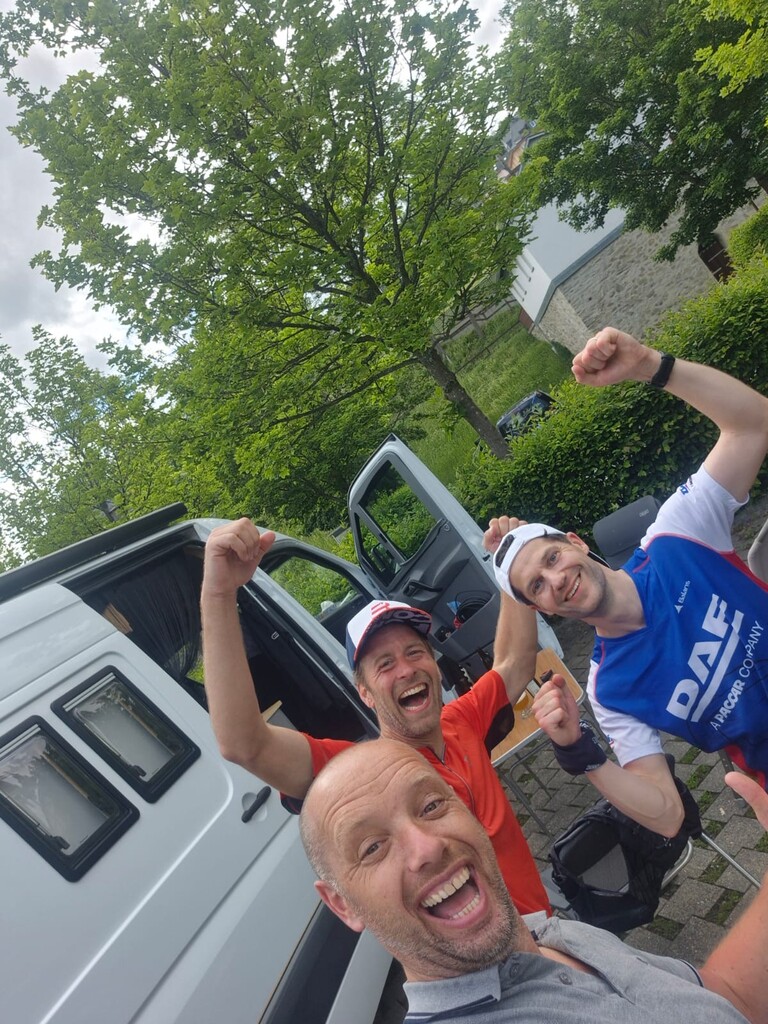
The final two stages, from Wartehalle to Blankenstein (21 kilometers), consisted mostly of downhill sections, which helped us keep up the pace. In the last stage, we even managed to accelerate. At 4:38 PM, we reached the finish in Blankenstein. Our final time: 27 hours and 38 minutes—exactly one hour faster than the existing record.
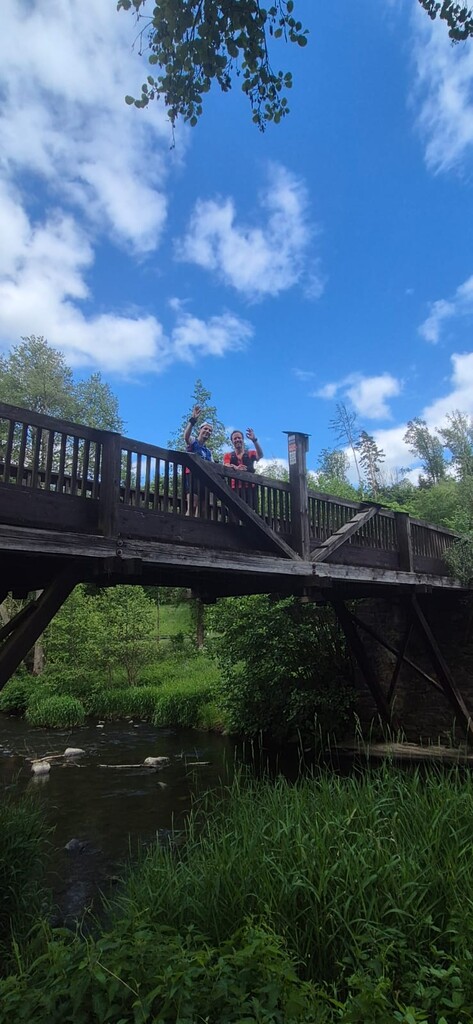
On the bridge, we threw the stones we had carried from the start into the water. The adventure was complete.
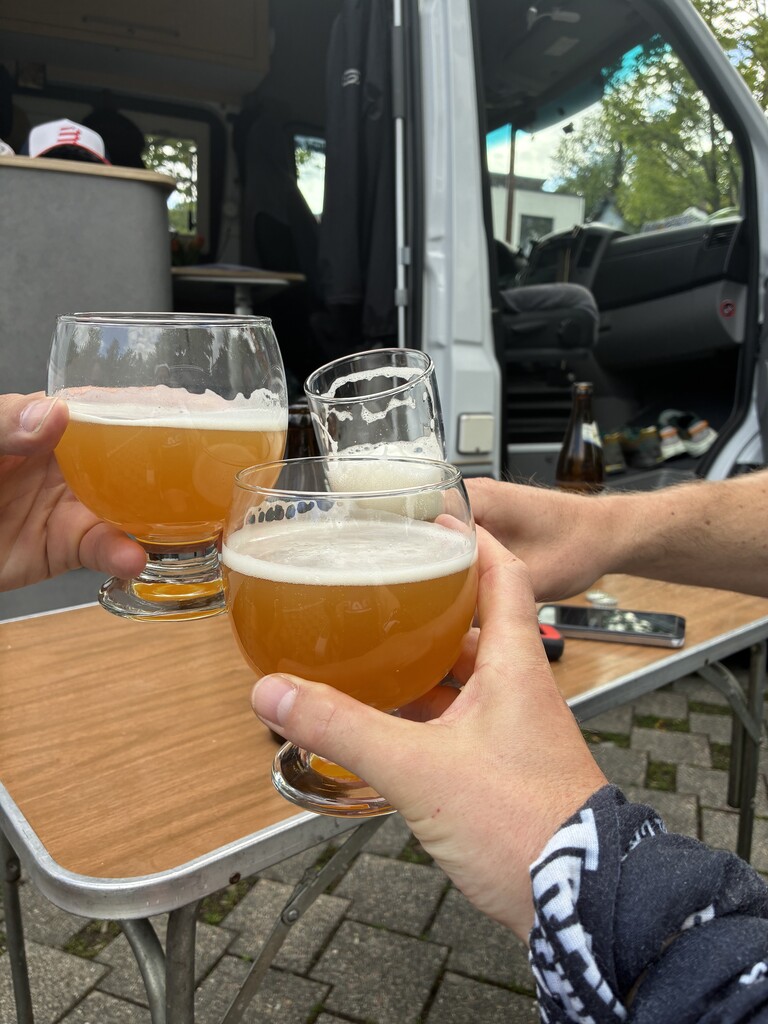
We did it!
Finally, some statistics recorded by our watches:
- Distance: 174 km
- Total time: 27 hours, 38 minutes, and 17 seconds
- Average pace: 9:32 min/km (6.3 km/h)
- Moving time: 23 hours, 35 minutes, and 23 seconds
- Average moving pace: 8:08 min/km (7.4 km/h)
- Total elevation gain: 3,711 meters
- Total descent: 3,487 meters
- Calories burned (Joris): 12,377
- Calories burned (Thomas): 14,773
- Estimated fluid loss (Joris): 15.4 liters
- Estimated fluid loss (Thomas): 19.1 liters
Joris, Thomas and Hans