
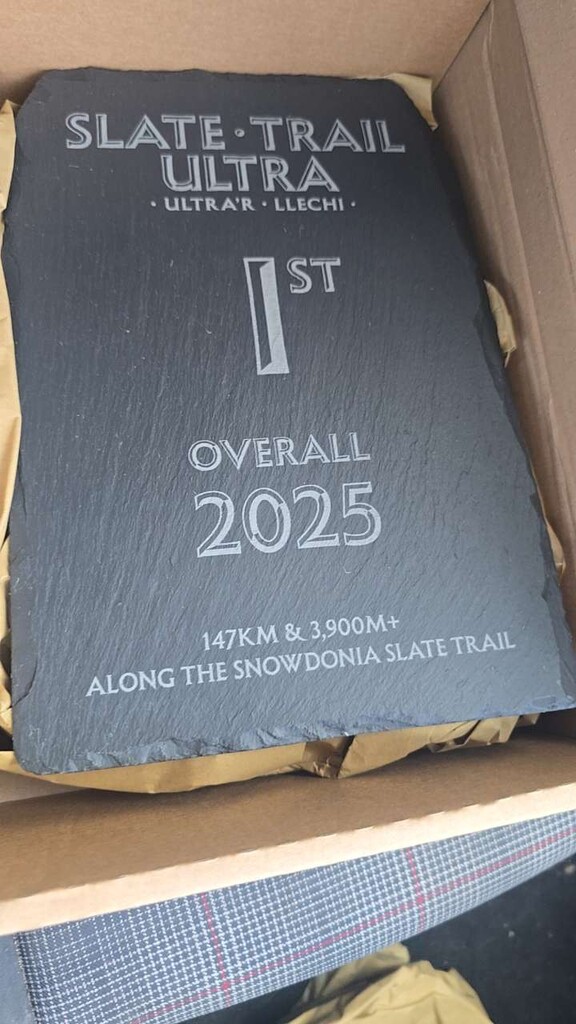
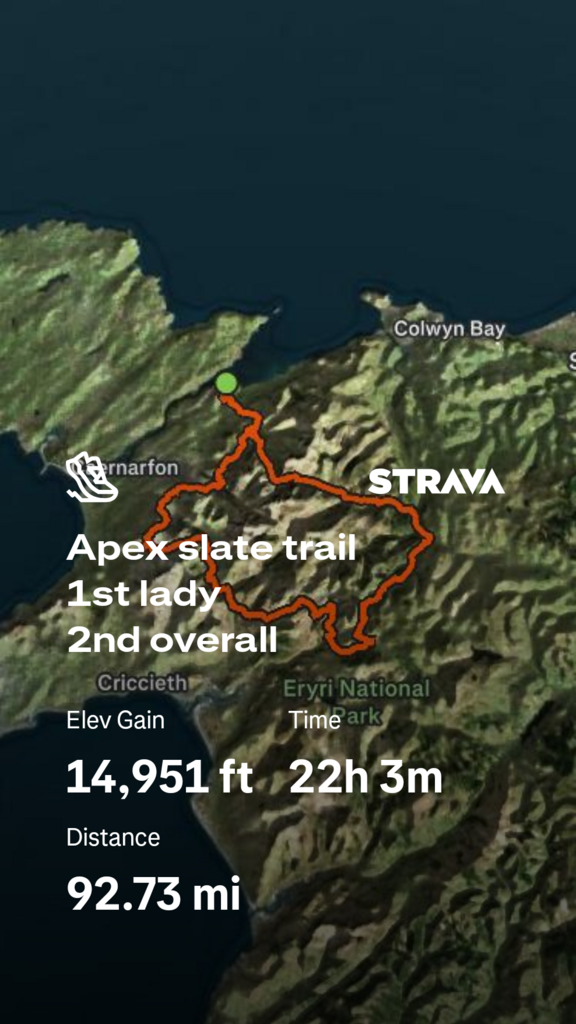
I took on the Snowdian Slate Trail as part of a race, using it as my attempt at securing an FKT. With no personal crew and only the checkpoints for support, I knew this would be a pure test of endurance, self-sufficiency, and grit. The course promised a mix of runnable sections and rugged terrain — and it delivered more than I bargained for.
The Course
The race starts and finishes in Bangor, taking in roughly 92 miles of terrain shaped by slate country and classic Welsh weather. Navigation plays a real role here, and a couple of small errors added an extra mile or two to the total distance — nothing major, but enough to remind me to stay sharp.
The Slate Trail is a patchwork of fast, flowing paths and brutally slow, technical sections. This was especially true after Friday’s heavy rainfall, which turned many paths into flowing streams and made the bogs feel endless. Every footstep was a small gamble.
Conditions
Weather and terrain were the biggest variables of the day. The rain had saturated everything. What should have been simple, runnable stretches were often disguised rivers, while the bogs swallowed energy with every stride.
A huge factor was the time of year. Long hours of darkness meant extended periods running by headtorch, where pace inevitably slowed and the mental load increased. The dark sections demanded concentration, patience, and trust in the route.
Checkpoints & Strategy
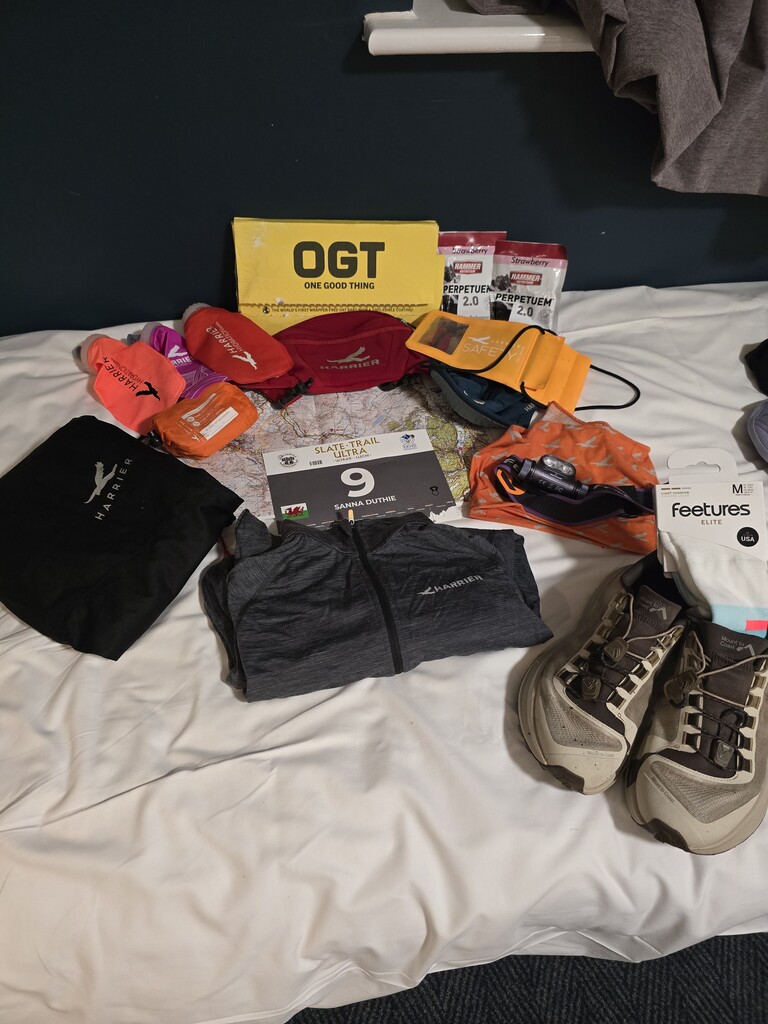
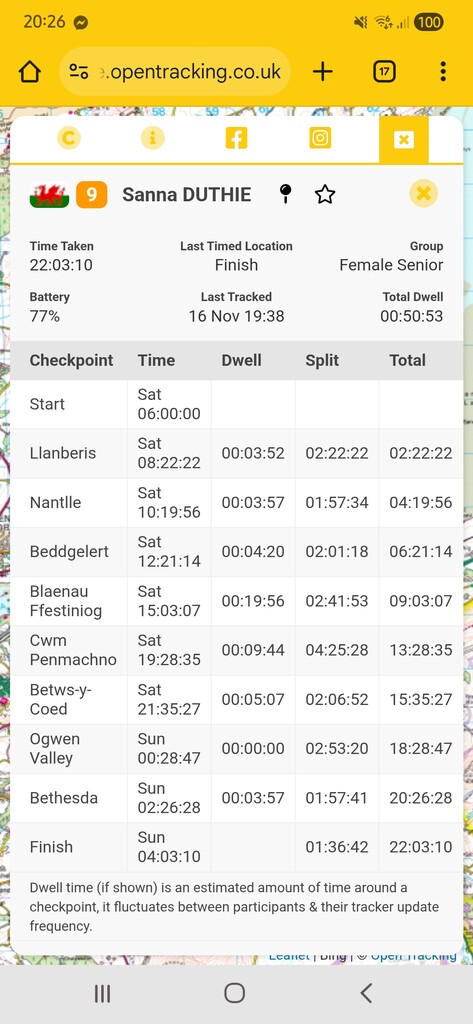
With eight checkpoints spaced across the course and only one drop bag waiting at Checkpoint 4, strategy mattered. I carried the full mandatory kit the entire way and managed nutrition and kit changes carefully.
Running without a crew meant every checkpoint stop had to be deliberate and efficient: grab what I could, reset mentally, and get moving again.
The Grind
Progress was a constant balance between pushing the runnable sections and surviving the rest. There were moments of flow and moments where it felt like I was wading rather than running.
Fatigue set in as the darkness stretched on, but this is where the race became more mental than physical. Digging deep wasn’t optional — it was the only way through. Grit carried the effort when speed couldn’t.
Conclusion
This attempt was a true test: technical terrain, brutal ground conditions, and long spells of darkness made the Slate Trail a challenge worthy of respect. Despite everything, I managed to pull it off and complete the route with determination intact.