

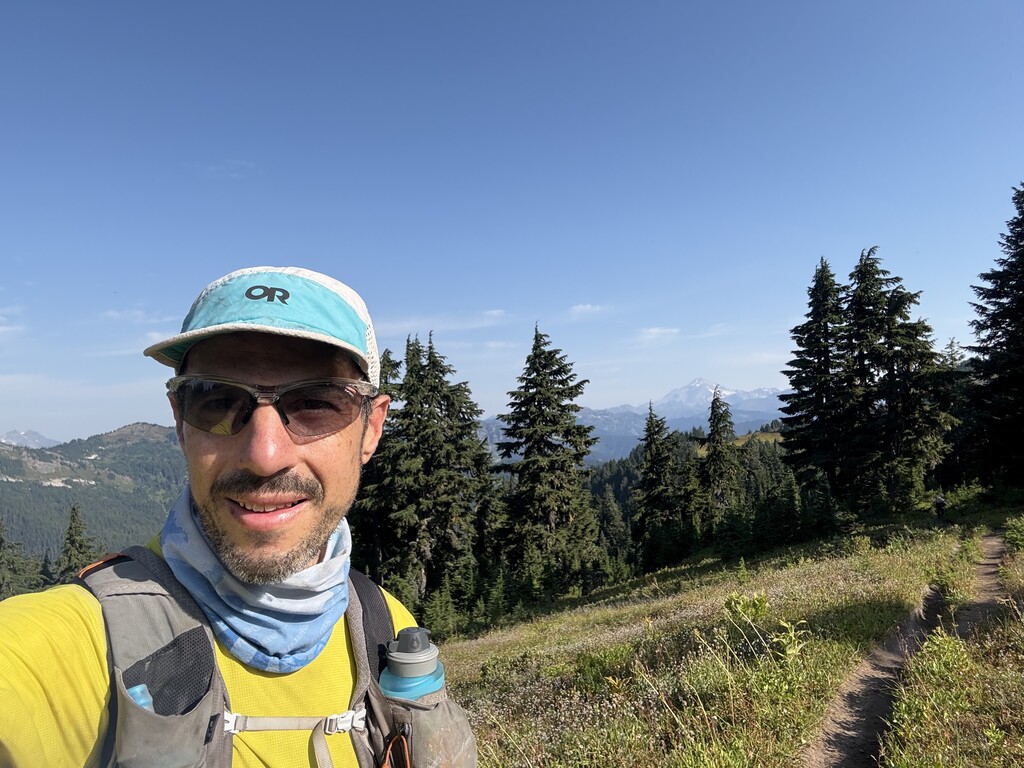

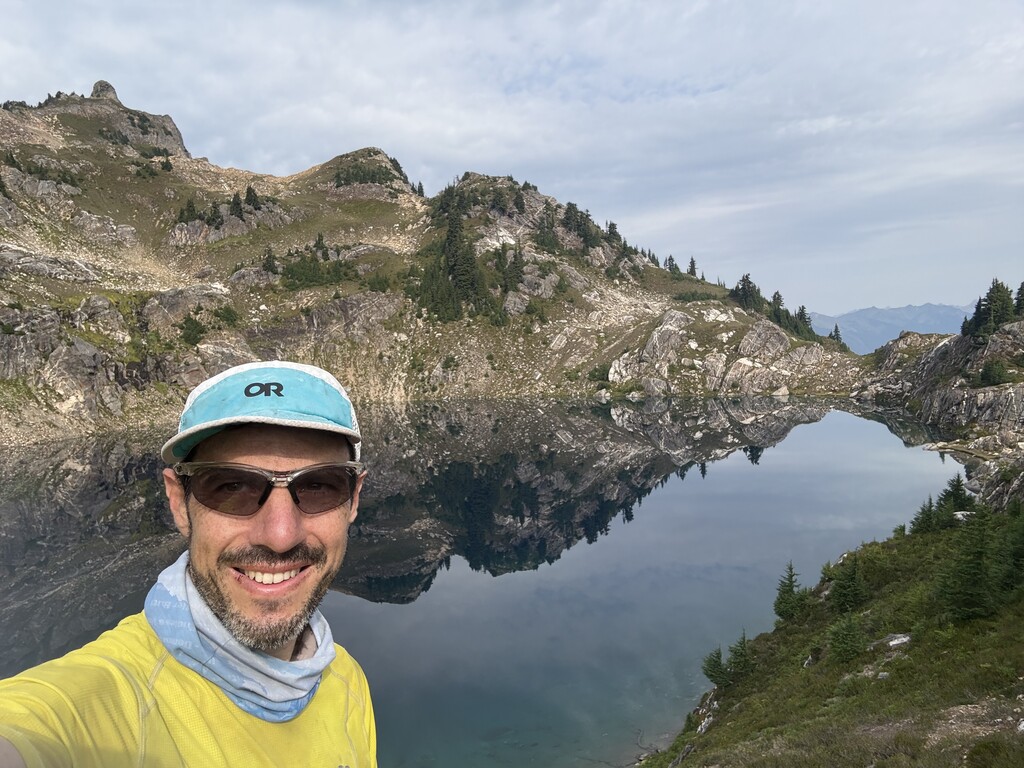
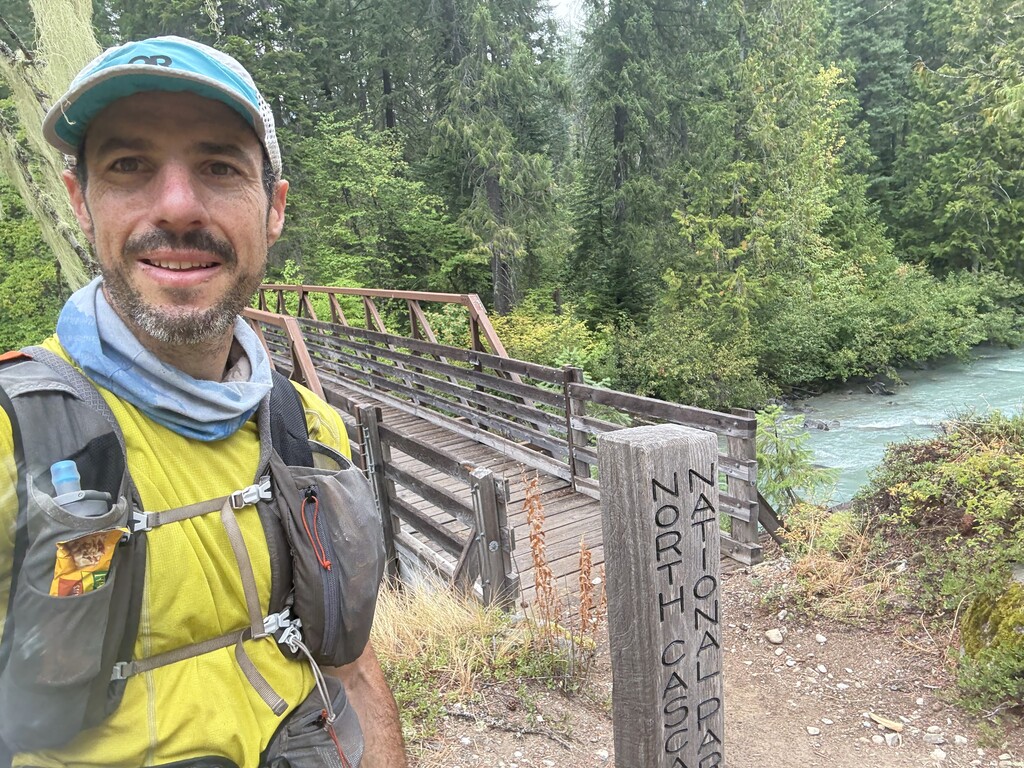
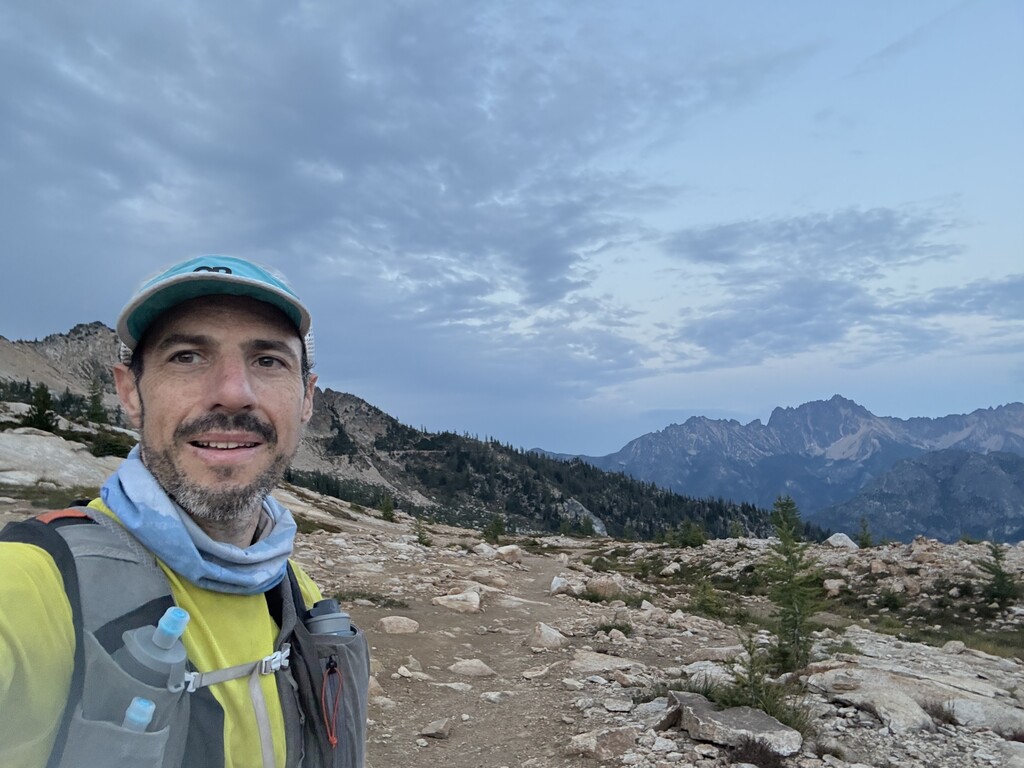
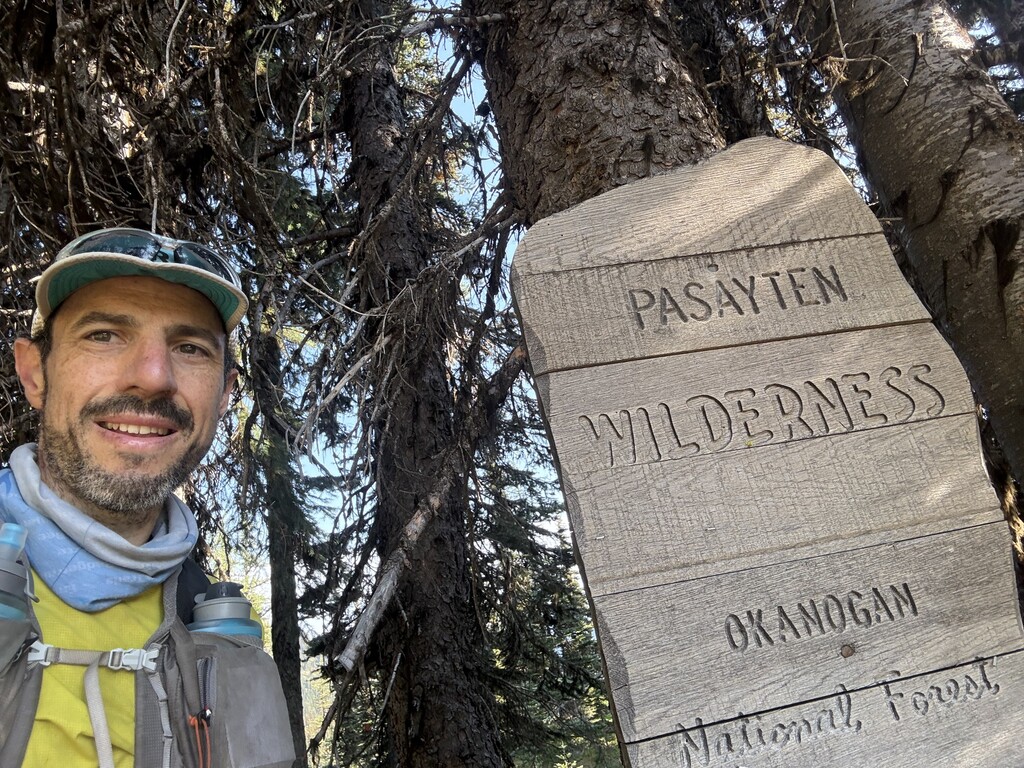


I believe my FKT attempt on this route was significantly different to past efforts, switching mindset from a through-hike to a fastpack; the entire idea to attempt this FKT followed from a 6-day fastpack in 2024 along sections of the PCT, including a 45-mile day on Section I. Rather than attempting a near-continuous hike, I decided to maintain a faster pace throughout the day, resting at night to take advantage of the recovery I achieved. Heather (in her current overall FKT) talks about going largely sleepless for the first 6 days, while Wyatt (in his current men's FKT) carried 45 lbs of weight.
I opted for a fastpack with a 38L capacity and no weight-bearing hip belt. I heavily optimized my meal planning to carry over 42K calories of food while keeping my starting pack weight to just over 28 lbs (7.5 lb base weight, 18.5 lb food weight, 2.2 lb water weight). Every food item was evaluated based on calories per gram, and my pack weight reduced by ~1.5 lbs per day.
A heat wave added a huge challenge to my attempt, with highs in the 70s for the first couple of days before climbing into the 80s for the following week.
Every single calorie I consumed for the entire journey came from the two food bags that left with me from Cascade Locks. The only thing I took from the course was water from natural sources, plus some trash I picked up from other hikers. The only thing I left behind was cat holes. I carried all trash with me to the end. When following those rules, the toughest part was passing by blueberry bushes full of ripe juicy berries; I only sampled my first ripe fresh berry as I hiked back towards Hart's Pass after the terminus.
Day 1 (August 19)
FarOut miles 50.8
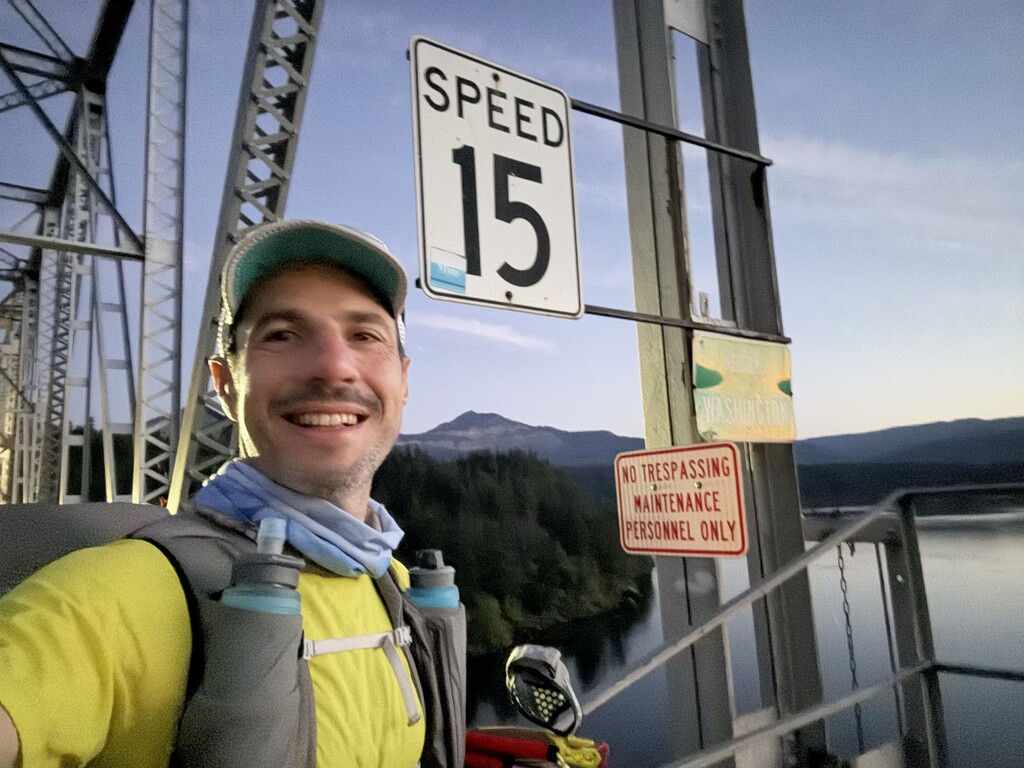
Setting out from the Bridge of the Gods on the Oregon/Washington border, I climbed from the lowest point on the route and finished at a trailhead campsite on Carson Guler Rd. I made further progress than expected, helped by an early start, smooth trails, and getting to prepare myself for the day in a motel (rather than prone in a bivy). I taped four blisters that started to form, which would be the beginning of 11 days of managing my feet. My camping spot featured trail magic for both dinner and breakfast (which I passed up), but the organizer mentioned meeting Heather on her attempt.
Day 2 (August 20)
FarOut miles 43.8, cumulative 94.6
I climbed to the western side of Mt Adams and camped just north of the Lewis River. I started to realize that I would need more non-moving time than I had initially envisioned due to the logistics of water resupply, meal prep, removing my pack periodically to relieve my shoulders, and managing niggles such as foot pain. I smashed the screen protector for my phone when going over downed logs in a Mt Adams burn area, but the phone was still completely usable. I camped with incredible views of Mt Adams.
Day 3 (August 21)
FarOut miles 47.9, cumulative 142.5
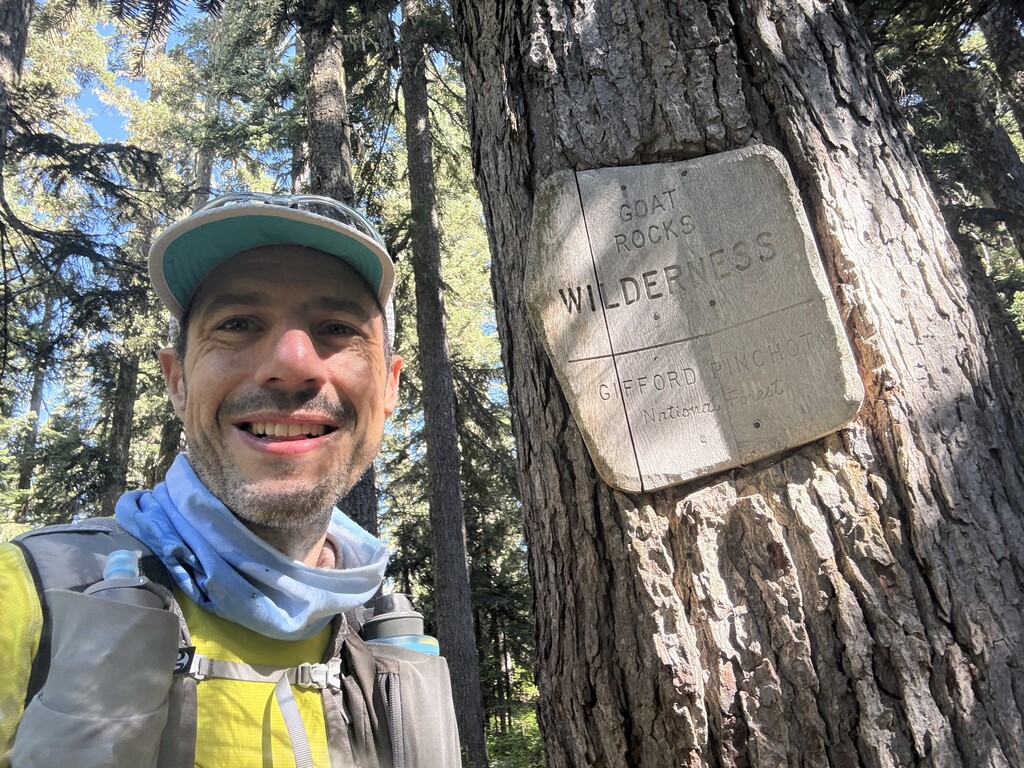
I left Mt Adams and continued through the Goat Rocks Wilderness, with a sweltering climb to the ridge below Old Snowy. I started eating all meals on the move, after sitting down to eat for the first couple of days. I popped some blisters that were forming on both feet. After having strong and joyful mornings with lots of positive thoughts descend into really difficult afternoons and evenings for the first two days, on this day I passed through the early high and afternnoon low point to rebound after dinner feeling strong and happy. I continued moving slightly later into the evening and ended my day just south of White Pass.
Day 4 (August 22)
FarOut miles 44.5, cumulative 187.0
I experienced my first tumble, with a literal face plant while descendiong to White Pass; the heavy weight of my fastpack sitting high on my shoulders unbalanced me so that I did not catch myself before my face hit the ground. However, I only suffered minor scrapes on my arms and legs and nothing but dust in my face. I crossed both White Pass and Chinook Pass, and enjoyed some time on trails I knew well from a couple of different trips last year. I climbed to the ridge above Crystal Mountain (with some great views of the lit-up ski village) and camped high on the ridge.
Day 5 (August 23)
FarOut miles 50.2, cumulative 237.2
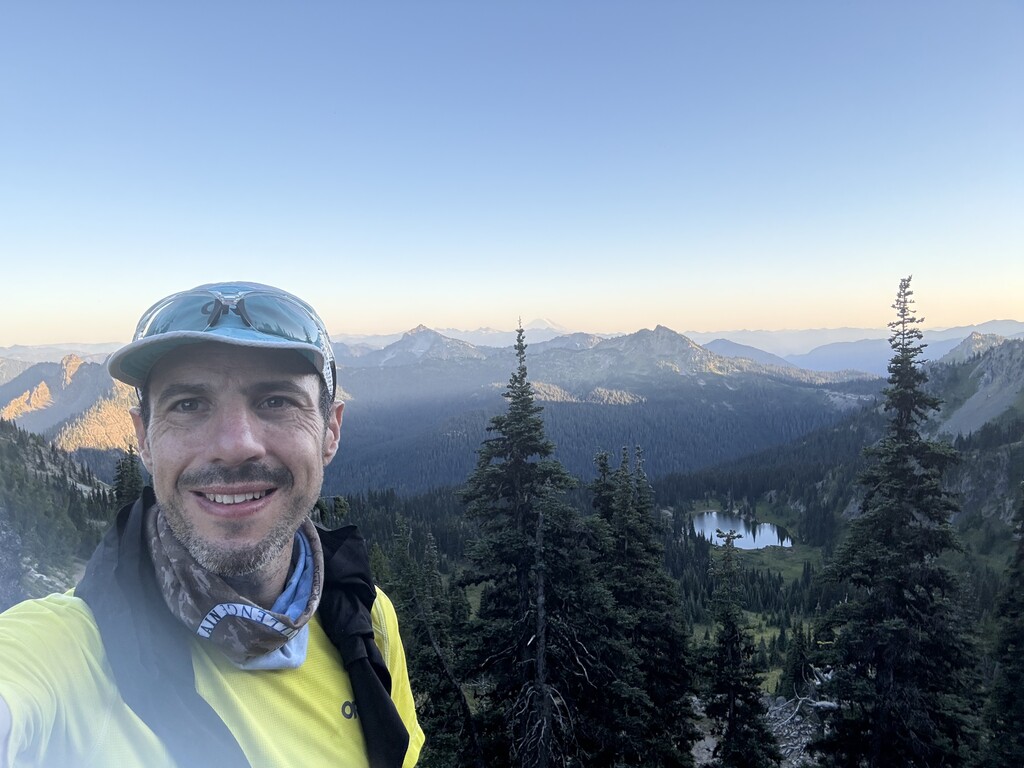
The morning started with a fantastic long ridge traverse before the day heated up. I luckily dropped into forested areas as the temperatures sweltered. It was interesting to run northbound on Section I for the first time since I ran the Cascade Crest 100-mile trail race back in 2016. I patched some heat rashes forming on the top of my feet and realized that if anything was to stop my attempt, it was most likely to be my feet. The weight of the pack on my shoulders was still noticeable but had faded from being the toughest challenge. I continued for my latest day so far, ended my day around 11pm with a nice tent site at Mirror Lake.
The GPX file from my Suunto 9 watch for this day has failed to sync with my Suunto app. I have a case open with Suunto support attempting to retrieve the file. In the meantime, I have uploaded all other GPX files and have attached photos of my watch screens showing the activity as displayed in the logbook on the watch (including date, duration, distance, ascent, and descent).
Day 6 (August 24)
FarOut miles 38.1, cumulative 275.3
I crossed Snoqualmie Pass in the morning but climbed up to Kendall Katwalk and the following long ridge traverse in the heat of the day. The heat slowed me down, and I stopped at Ridge Lake to wash my feet. I started to feel refreshed after a stop at Delate Creek and waterfall, but on the descent I saved a fall but felt a slight tweak to my right hip. I climbed back up from Lemah Creek and meadow, ending the night on the ridge above Waptus Lake, but fearing that my hip would tighten up overnight. I was already starting to determine bailout options for the following day where my wife could pick me up.
Day 7 (August 25)
FarOut miles 45.3, cumulative 320.6
During the descent, my hip loosened up enough that I decided I would push through along the route and bail at Stevens Pass if necessary. However, the tightness faded throughout the day, whether muscularly or just in my mind. Both pair of socks I had started with were beginning to tear, so I put on both pairs together so that the holes on one sock would be covered by material on the other. I made it to Stevens Pass late in the evening, enjoyed a few very easy miles along what must be an old road, and went to sleep with renewed spirits.
Day 8 (August 26)
FarOut miles 44.6, cumulative 365.2
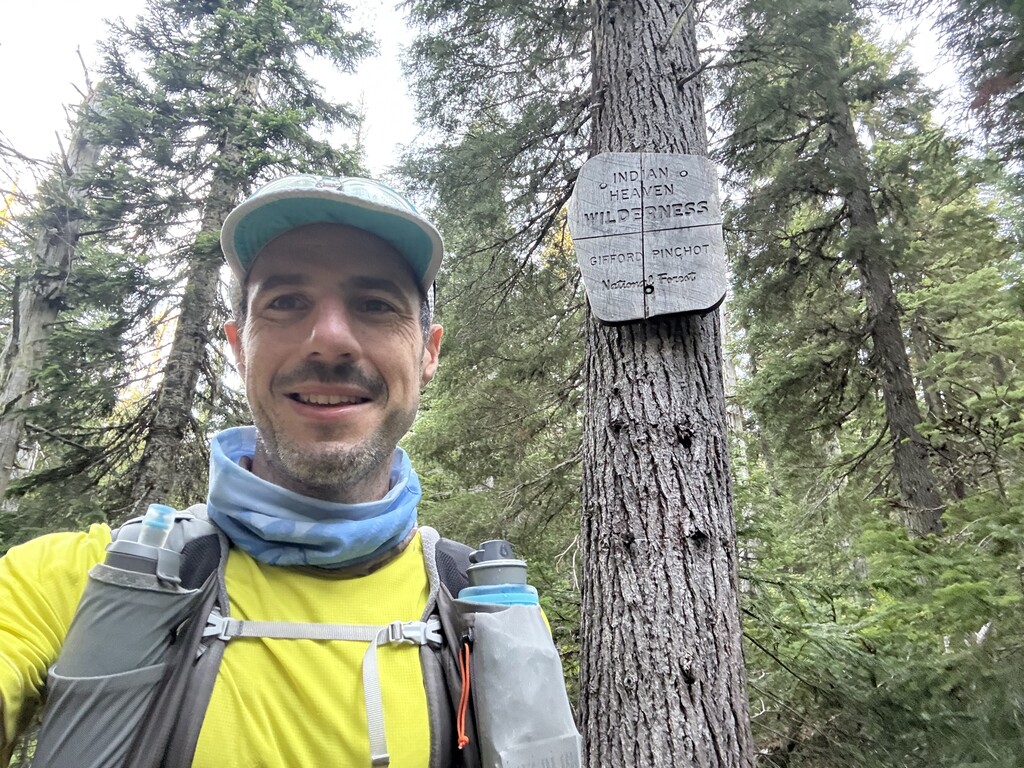
Section K featured the first miles that were new to me since leaving the area south of Goat Rocks in Section H. I knew that the section featured some poor conditional trail sections, but hoped that would not start until the following day. The trails were indeed fantastic, and I enjoyed one of the most enjoyable trail running sections of my life as I descended from Red Pass into forested and waterfall areas in the late evening. I reached the first of the blow down areas, but there were generally clear paths from earlier hikers showing how to over, under, or around. I stopped for the night when I reached the hard-flowing Kennedy River in the dark and decided to await morning to cross.
Day 9 (August 27)
FarOut miles 44.7, cumulative 409.9
I crossed the Kennedy River first thing, wetting both pairs of my socks. I made my way through the sections of the Glacier Peak Wilderness Area known for being overgrown and the trail in poor shape, but they did not slow me down as much as I had worried. I stopped at one point to dry out my feet and socks; damaged skin from blisters on my left foot were so sore that I took a microfiber sunglass cleaning cloth and placed it inside my socks as an additional layer of padding. I made it to a campsite north of Suiattle Pass, and after a very hot first 8 days it rained overnight. I had initially set up only my bivy, which is not waterproof, so I was forced to get up in the middle of the night to assemble my tarp above it.
Days 10/11 (August 28/29)
FarOut miles 95.6, cumulative 505.5
I had decided to make a continuous push through to the border, with less than 100 miles remaining. I set out wearing my rain jacket, the first time for the journey. During the day, blisters on my right foot started bothering me, so I used my wool beanie as layer of padding inside my socks; I started to envision survivor stories, where people end up with rags tied to their feet. After dark, I reached the top of Methow Pass and decided to stop to tend to my feet, popping a new blister that had formed. I finished, got up and started running down the trail. It was 0.9 miles later that I looked at my watch to realize I was heading back downhill the way I had come. I retraced my steps to the pass, surprisingly able to laugh at myself for the extra 1.8 miles I added to my journey. I had a 20-minute power nap around 2am, but realized that would not be enough sleep to see my through to the finish. At around 4am, I stopped at the edge of a campsite with a couple of tents, pulled out my quilt and lay down on some low brush to sleep for a 45-minute nap. I calculated that I should be able to finish in under 10.5 days if I maintained an elapsed speed over 3 miles per hour for the final 36-37 miles, and set that as a goal.
I reached Hart's Pass just before 7:30am on August 29, marking 30 miles to go. Someone yelled out that they had trail magic available, and I responded that I would hopefully be back the following day. I continued to push all the way through to the end, having running the flats and downs for the entire duration of the trip. I was starting to struggle on the ups in this final push as my ascent exceeded 16K feet. I reached the final pass and started the 7+ mile descent to the border. I decided to eat my final snack of the journey on the descent, briefly glanced down towards the zip on my pack, caught a foot and fell. I grazed my shoulder and forehead, reaching up to find blood above my eye. I decided it was not too serious, so I took the buff from my neck, raised it to stanch the bleeding on my forehead and continued running.
I was clearly going to finish within the 10.5 day goal and thought that I might even be able to go under 10 days 11 hours. I felt like I was sprinting down the hill but when looking at the distance remaining slowly decrease I realized I was going much slower than I felt.
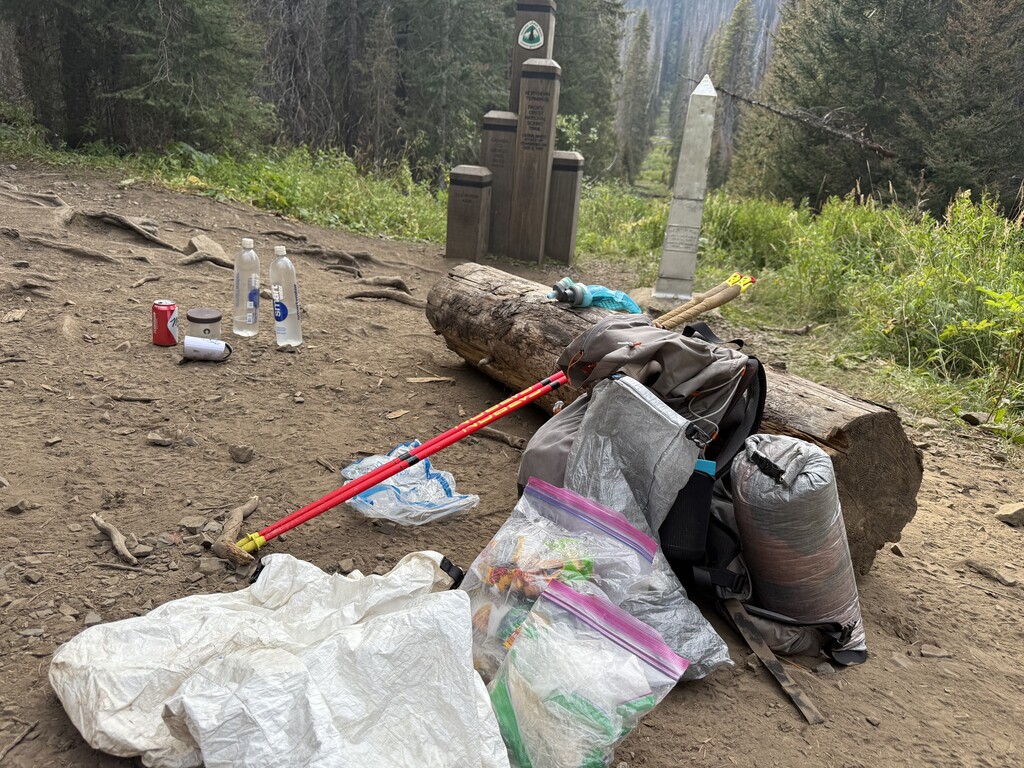
I reached the terminus, put my hand on the monument there, and then stopped my watch. I took out my phone and recorded a video announcing the finishing time and audibly stating for the first time that I had bested the prior FKT.
Having started at 05:34:54 on August 19 and finished at 16:37:18 on August 29, my final time was 10 days, 11 hours, 2 minutes, 24 seconds.
My amazing wife hiked in from Hart's Pass to the finish. On that first evening, we hiked 4 miles back towards the pass, ate a hearty meal, and I enjoyed a leisurely sleep with no rush to get moving the next day. Then, on August 30, we hiked the remaining 27 miles back to Hart's Pass. I was able to accept my first trail magic from the amazing family that has setup on Labor Day for each of the last 8 years.
Final thoughts
I believe there is an opportunity for a faster and stronger runner than me to significantly reduce this FKT following the same fastpacking style. I even think that an unsupported effort could challenge the current self-supported FKT, since while it adds significant weight, it also reduces time spent with resupply.
If anyone wants any thoughts, information, or data around my preparation, logistics, or meal planning, feel free to reach out.