




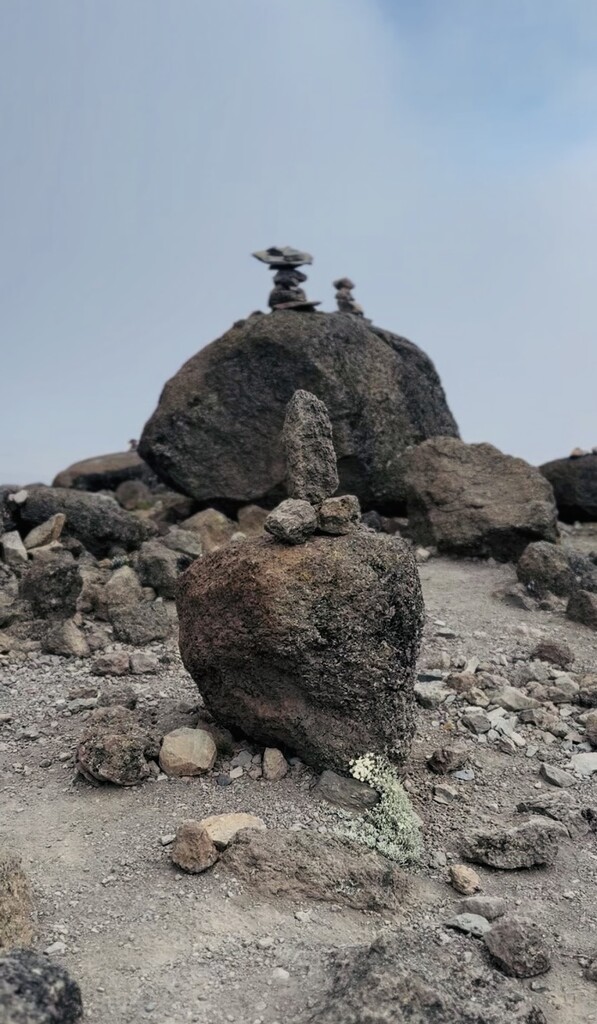
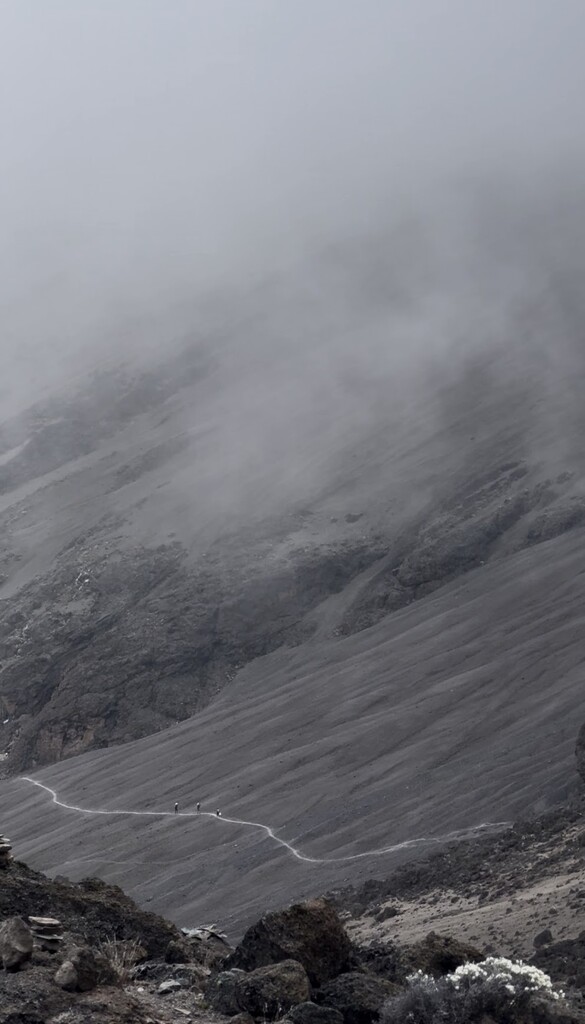
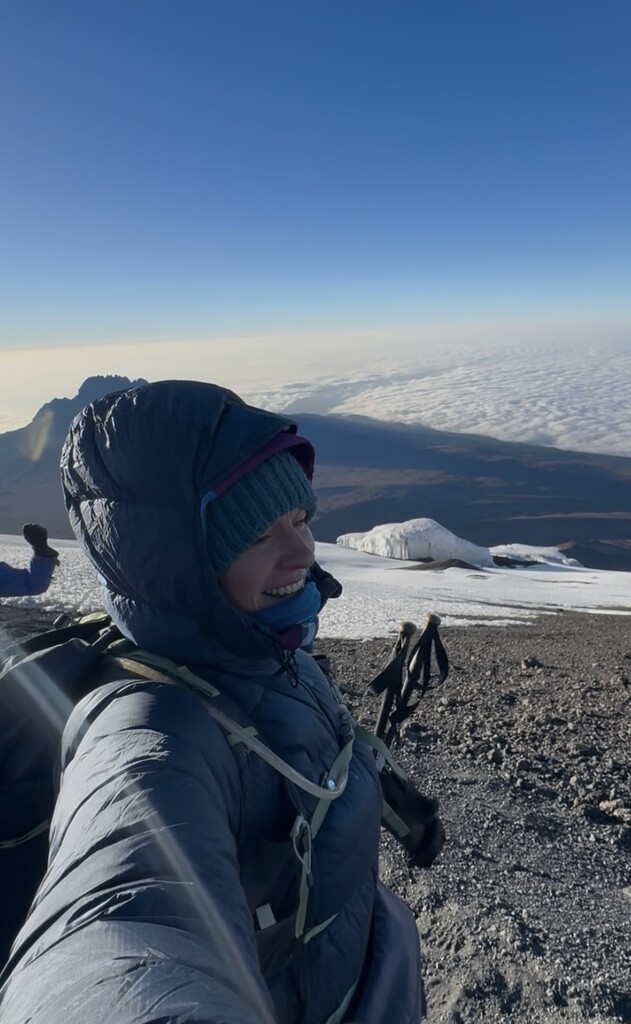
PROJECT SUMMIT EVERY FEELING
Mount Kilimanjaro
Umbwe Gate → Uhuru Peak → Mweka Gate
FASTEST KNOWN TIME REPORT
Mixed-gender team · Supported · 20–24 June 2026
Continuous time
Distance
Vertical gain
Highest point
94h 30m
52.26 km
5,033 m
5,895 m
Submitted by Lindsey Bell on behalf of the completing team
Official start: Umbwe Gate, 20 June 2026 at 1:01pm
Official finish: Mweka Gate, 24 June 2026 at 11:31am
1. Record summary
This report supports an application for the first recorded mixed-gender supported team time on the existing Fastest Known Time variation Kilimanjaro (Tanzania) — round trip, any route (Premier Route). Our precise line was an ascent from Umbwe Gate via the Umbwe Route to Uhuru Peak, followed by descent through Barafu and the Mweka Route to Mweka Gate.
Route sequence:
Umbwe Gate → Umbwe Cave Camp → Barranco Camp → Barranco Wall → Karanga → Barafu Camp → Stella Point → Uhuru Peak → Barafu Camp → Lower Mweka Hut → Mweka Gate
The official continuous clock began at 1:01pm on 20 June 2026 and stopped at 11:31am on 24 June 2026. It included every minute of movement, rest, eating, sleep, camp time and decision-making. The resulting elapsed time was 94 hours and 30 minutes: three days, 22 hours and 30 minutes.
Key route data
- Country: Tanzania
- National park: Kilimanjaro National Park
- Style: Supported
- Gender category: Mixed-gender team
- Recorded distance: approximately 52.26km / 32.47 miles
- Total vertical gain: approximately 5,033m / 16,512ft
- Total descent: approximately 5,061m / 16,606ft
- Highest point: Uhuru Peak, 5,895m
- Evidence: original GPX files, Strava and Outdooractive activities, park records, time-stamped photographs and videos, summit certificates, summit and gate imagery
2. The people behind the time
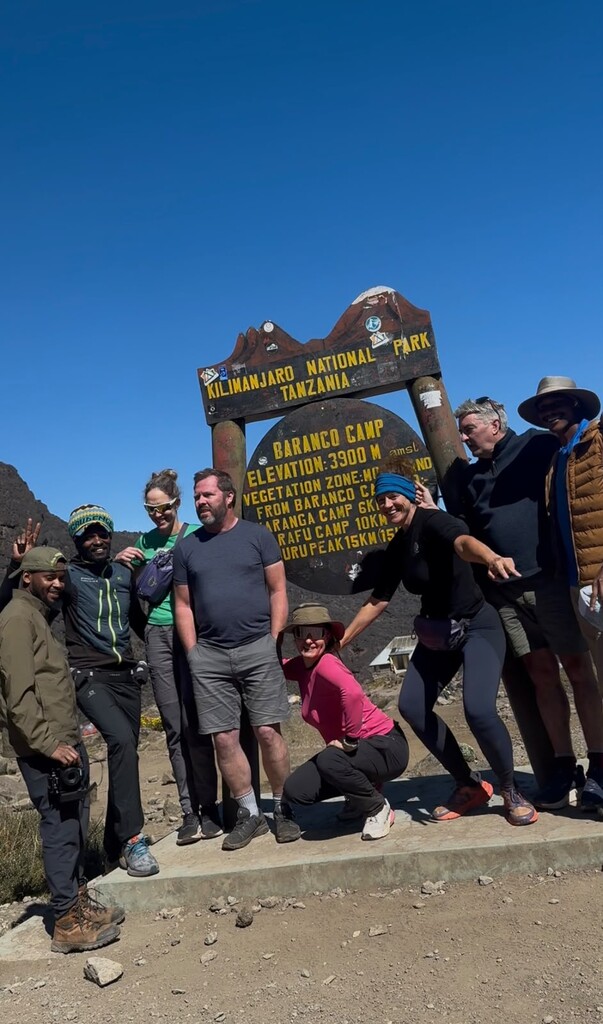
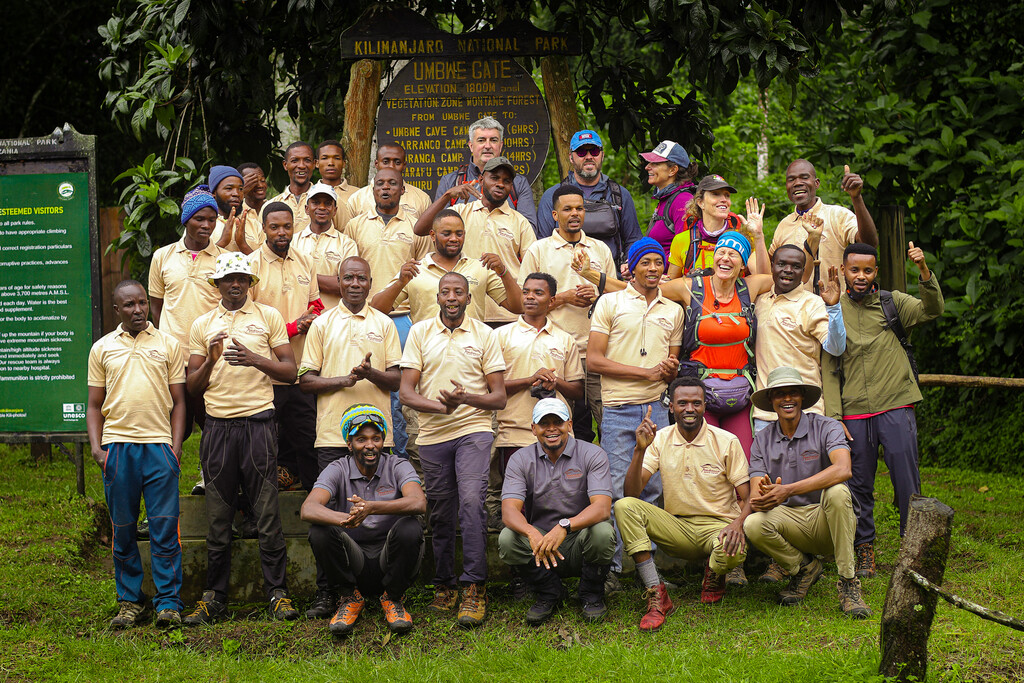
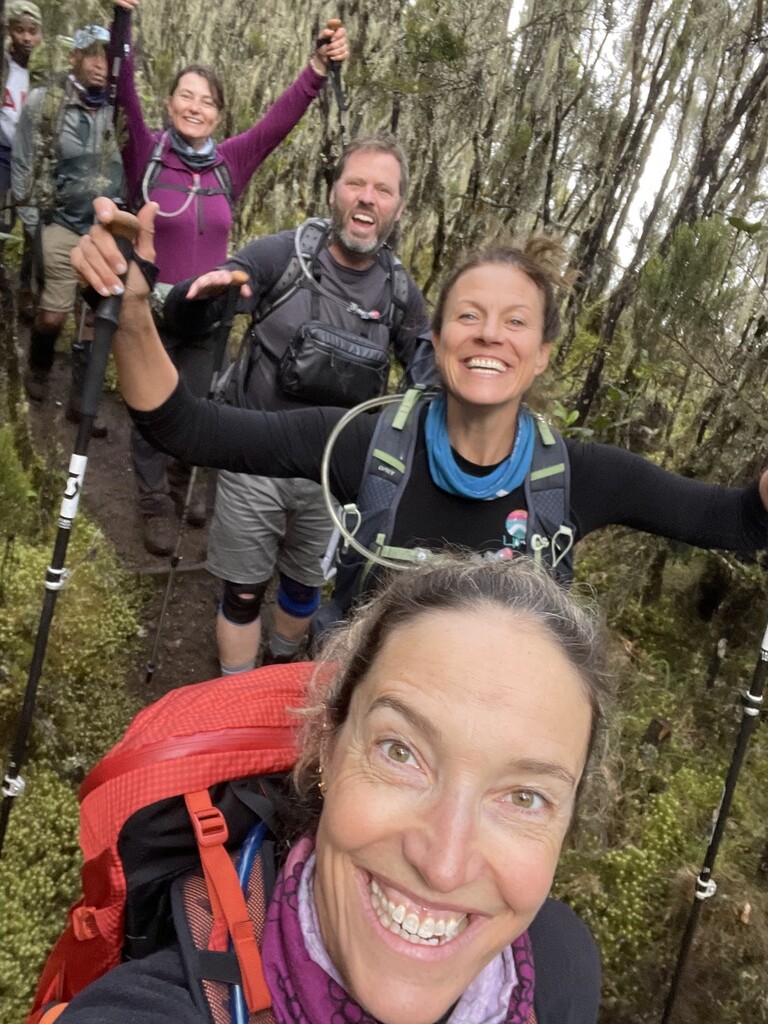
Nine people began the expedition as the route team, eight completed the entire prescribed gate-to-summit-to-gate journey, and 22 additional members of the Tanzanian expedition crew made the supported journey possible. Thirty-one human beings moved this expedition through Kilimanjaro.
Completing FKT team
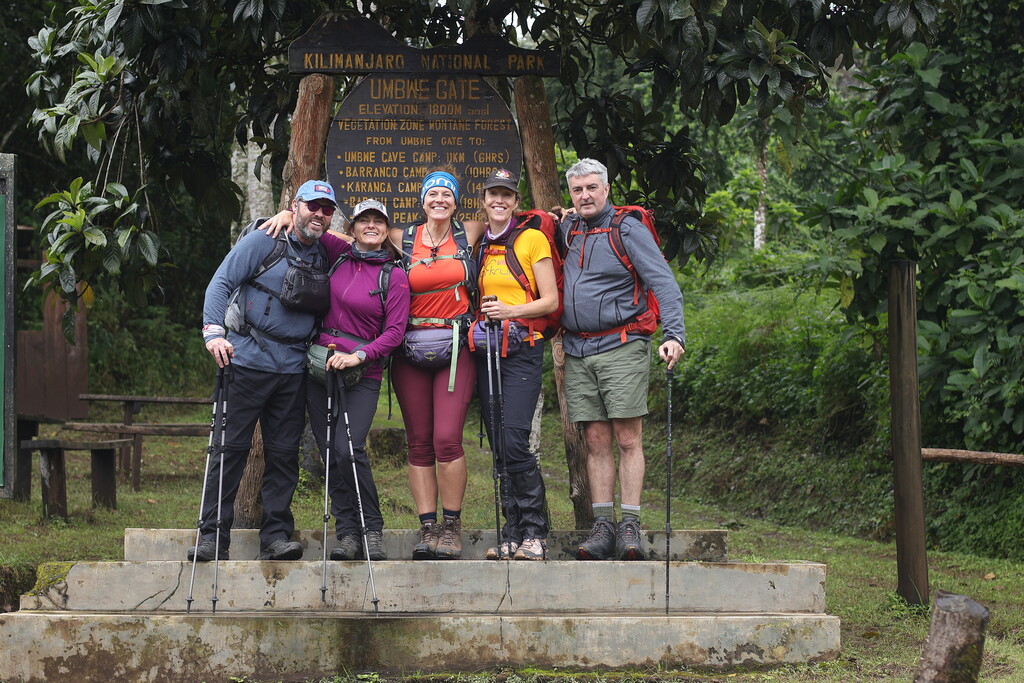
The following eight people began at Umbwe Gate, reached Uhuru Peak and completed the descent to Mweka Gate as part of the same supported team effort:
- Lindsey Bell
- Kelly Saunders
- Dagna Taylor
- Stuart Holmes
- Victor Oisso
- Joseph Mrope
- Gaudence LeKule
- Razak Buu
Rory MacGregor: expedition route-team member
Rory MacGregor was one of the nine people who began the expedition and he completed the route to Barafu Camp. He had suffered severe diarrhoea and had been unable to ingest sufficient food for approximately two days. At close to 5,000m, with a long overnight summit ascent still ahead and no certainty about whether his symptoms were solely gastrointestinal or being compounded by altitude, continuing would have introduced an unacceptable risk. Rory was withdrawn on medical and safety grounds and descended with guide support.
He is therefore not listed as one of the eight completing FKT athletes, but his contribution to the expedition is integral to this account. A summit photograph cannot measure the effort required to reach Barafu while ill, or the courage involved in accepting that the responsible choice was to turn back. His withdrawal was a safety decision, not a failure of commitment.
The wider Tanzanian crew
The four Tanzanian guides formed part of the nine-person route team. Beyond them, the expedition’s confirmed overall count leaves 22 additional crew members. The operational records describe porter and kitchen roles in slightly different ways, including references to 21 porters and two chefs; these labels should not be treated as mutually exclusive headcounts. “Helicopter,” whose outstanding work included managing and maintaining the portable toilet facilities, was one of the wider crew, not an additional person outside the confirmed total.
The wider team transported tents, sleeping systems, food, cooking equipment, sanitation facilities and the infrastructure of our temporary mountain home. Porter loads were weighed at Umbwe Gate. The chefs kept the team nourished across five days and four nights in an environment where appetite, logistics, temperature and altitude all complicated the simple act of eating. Helicopter’s work protected sanitation, dignity and wellbeing with extraordinary consistency and humour.
The word “supported” is not a footnote. It is an honest description of a collective achievement built around Tanzanian labour, expertise, route knowledge, judgement, care and cultural connection.
Evidence relating to team identity
Official summit certificates were issued to Lindsey Bell, Kelly Saunders, Dagna Taylor and Stuart Holmes. The Tanzanian guides did not request personal certificates at the time because they work regularly on Kilimanjaro.Their completion is instead evidenced through time-stamped summit photographs and video, route imagery, camp and gate material, park documentation and their visible presence throughout the journey. Certificates are supplementary evidence, not the sole basis on which completion is asserted.
3. Why Umbwe
We chose Umbwe because we wanted to learn from the mountain directly. It is one of Kilimanjaro’s steepest and most direct southern approaches, gaining altitude rapidly and offering less gradual acclimatisation than longer itineraries. That combination makes it physically demanding and places particular importance on pace, hydration, nutrition, symptom awareness and the judgement of licensed Tanzanian guides.
The purpose was not simply to stand at the summit. This expedition began as a reconnaissance journey: a way to test our kit, team systems and individual responses; to understand the terrain and altitude; and above all to meet the mountain on its own terms. We arrived with objectives, but Kilimanjaro retained the right to change them.
The mountain itself is a dormant volcanic massif formed by Shira, Mawenzi and Kibo. Uhuru Peak sits on Kibo’s crater rim. Across the route we travelled through rainforest, heath and moorland, alpine desert and the summit zone—an ecological transformation compressed into little more than fifty kilometres.
4. The preparation journey
The recorded time was 94 hours and 30 minutes, but the achievement did not begin when the clock started. The vision had been held for almost two years, with eleven months of structured expedition preparation and more than a year spent building relationships among many of the same people.
Preparation included operator and route research, safety planning, expedition logistics, physical training, breathwork, nutrition support, team days, equipment reviews, role-setting and repeated conversations about communication and decision-making. Kit flat-lays and a “bag buddy” mapping exercise helped people understand where equipment would be and how the team could support one another when thinking became harder at altitude.
Polly Warren supported breathwork and nervous-system regulation. Lucy Kelly supported nutrition, fuelling and the practical reality of eating for exertion and recovery. Kelly Saunders brought more than 26 years of Pilates experience into the team’s preparation and then travelled the mountain as one of the expedition members. Their work mattered because endurance is created long before the dramatic photograph. It lives in the quiet repetition of breath, strength, food, recovery, trust and learning.
5. The expedition: five days on Kilimanjaro
Section 1 — Umbwe Gate to Umbwe Cave Camp
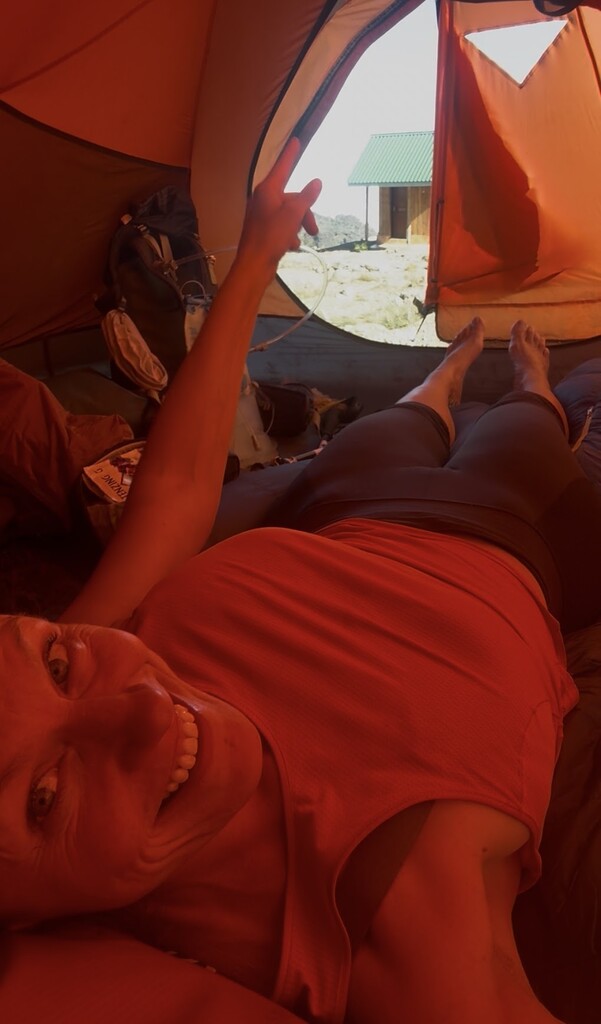
At Umbwe Gate the expedition became real. Park registration was completed, porter loads were weighed, equipment was organised and our nine-person route team stood inside the much larger structure of guides, porters and chefs who would move with us. The official clock began at 1:01pm.
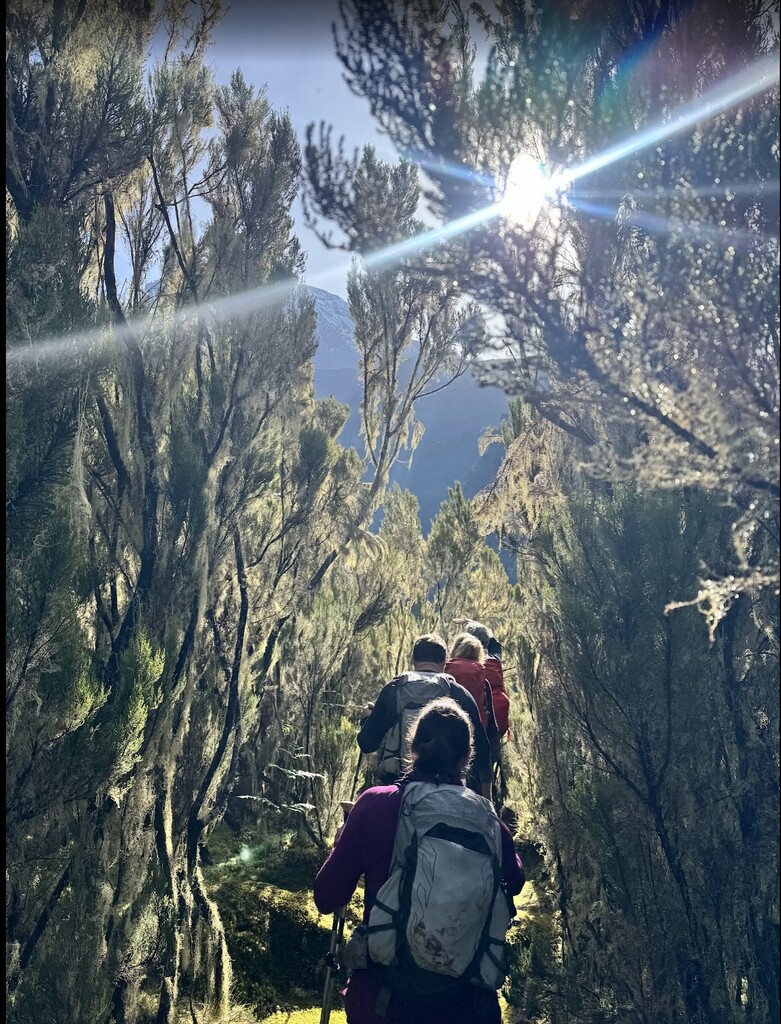
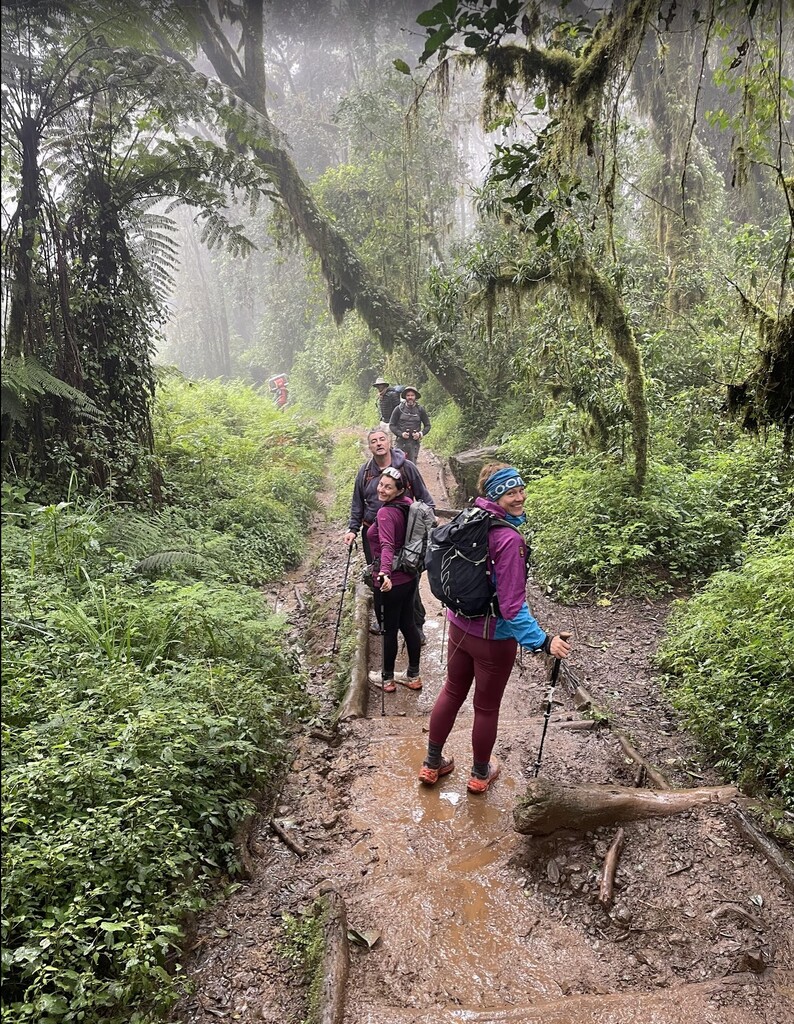
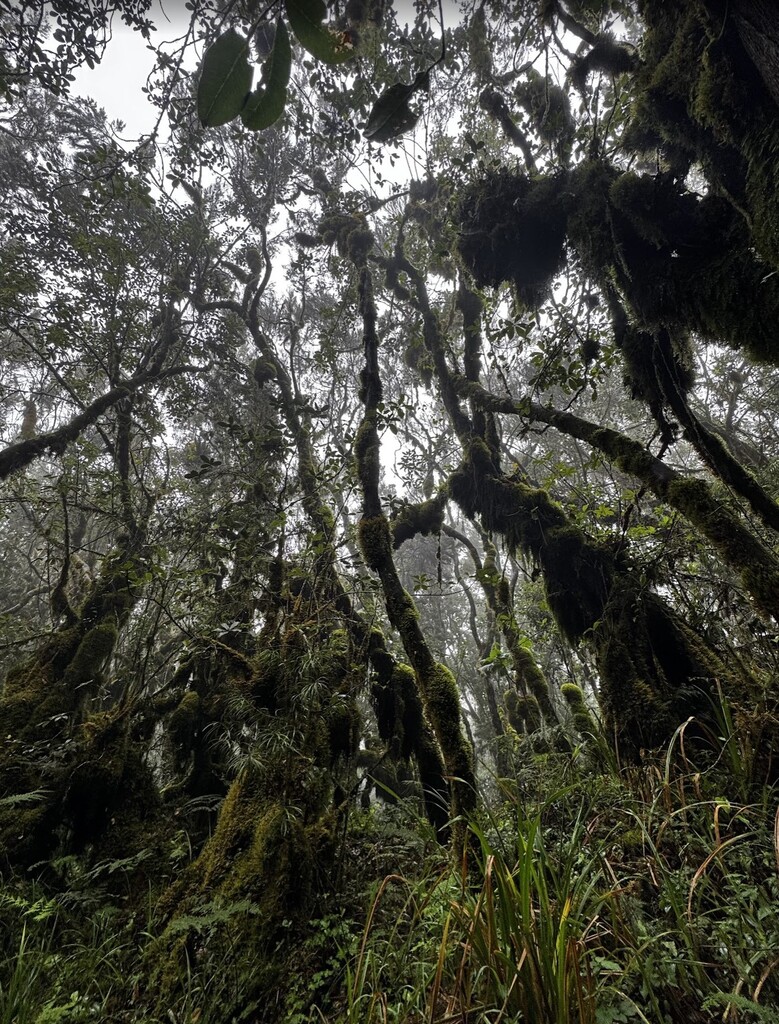
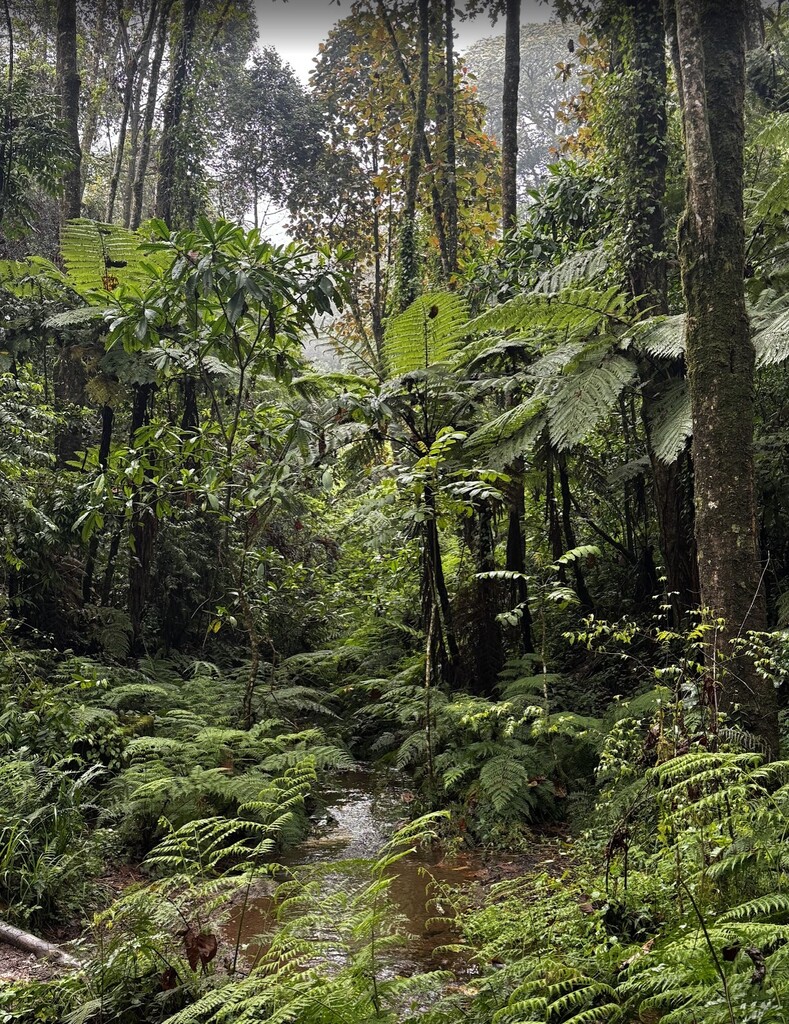
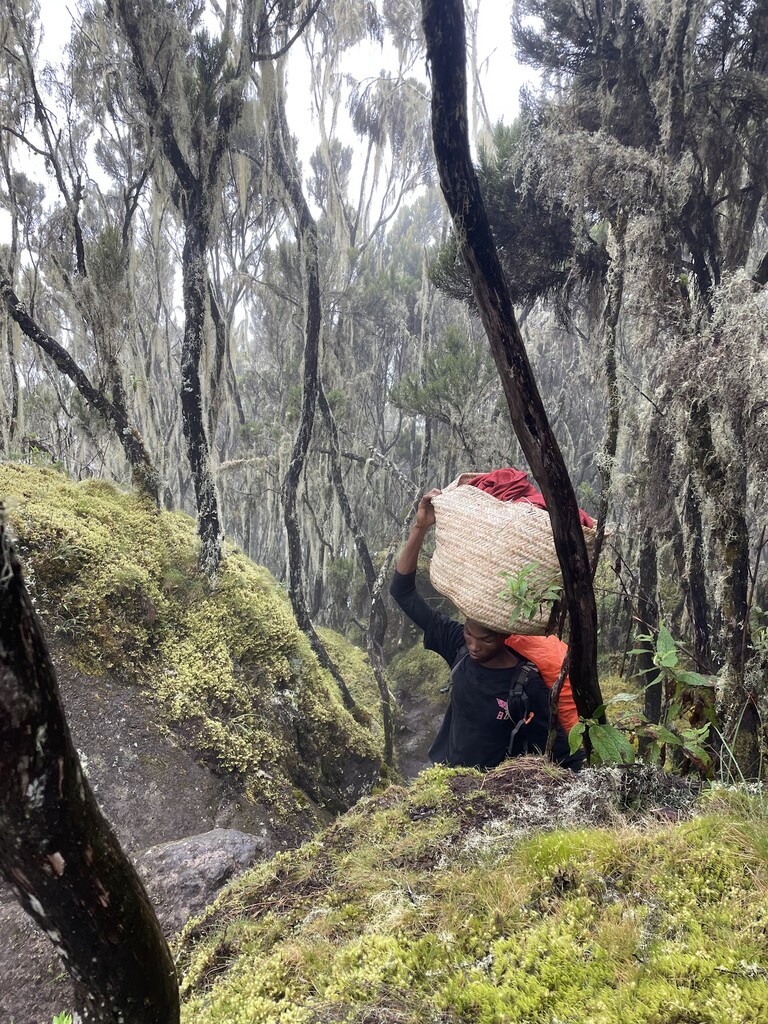
The trail entered dense montane rainforest. Humidity wrapped around us; underfoot, mud, wet rock and exposed roots demanded attention. The vegetation created a close green world of moss, vines, ferns and canopy, with monkeys and forest sounds reminding us that we were visitors moving through a living ecosystem.
The first stage took 5:24:55 elapsed, of which approximately 4:08 was moving time. Filming, regrouping, learning the route and managing expedition logistics accounted for much of the non-moving time. Physically, the climb began teaching us that Umbwe offers little gentle introduction. Emotionally, there was excitement, curiosity and the first awareness that the plan on paper had become a shared responsibility.
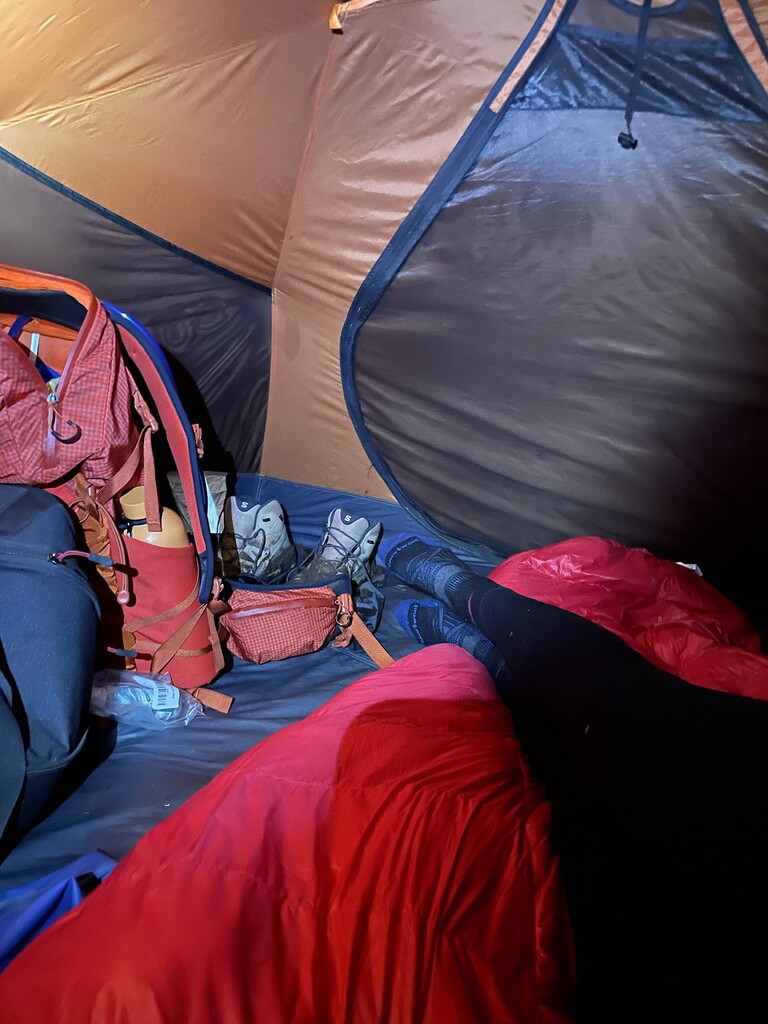
At camp, food, hydration, oxygen readings and individual wellbeing became part of the rhythm. Lindsey and Kelly began low-dose Diamox during the early expedition. The evening also revealed one of the route’s continuing tensions: the body needs rest and fuel just as altitude can make appetite, sleep and digestion increasingly difficult.
Section 2 — Umbwe Cave Camp to Barranco Camp
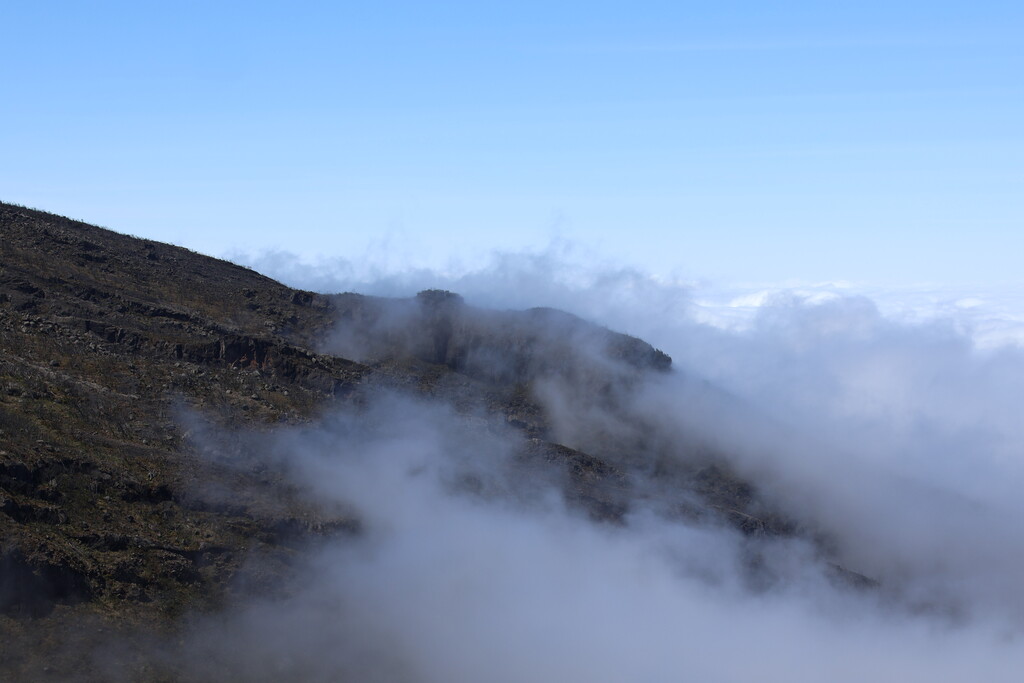
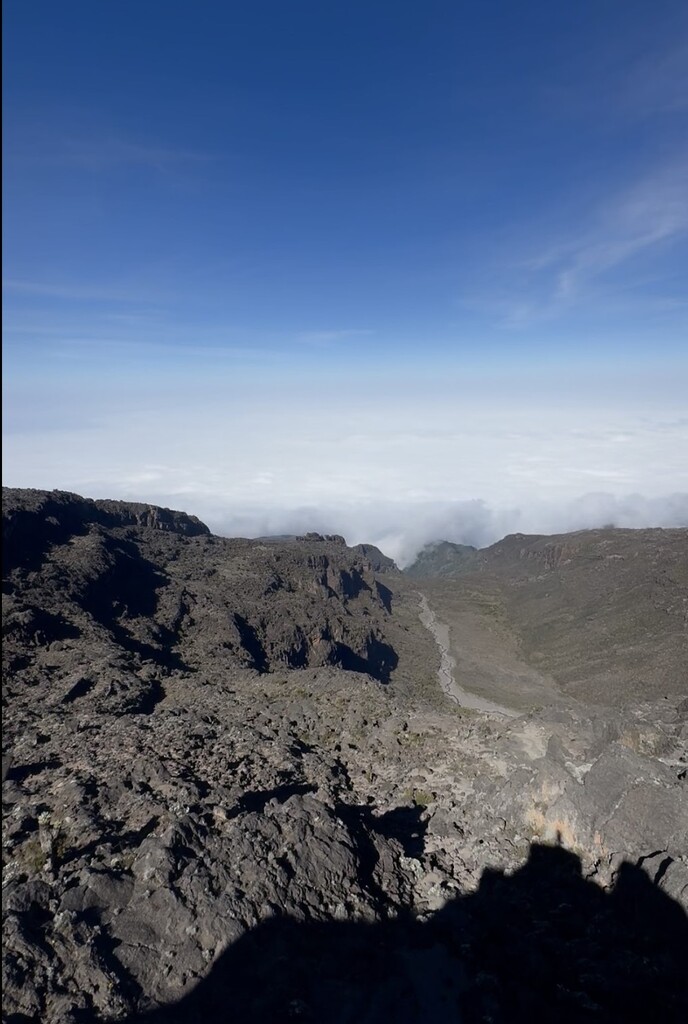
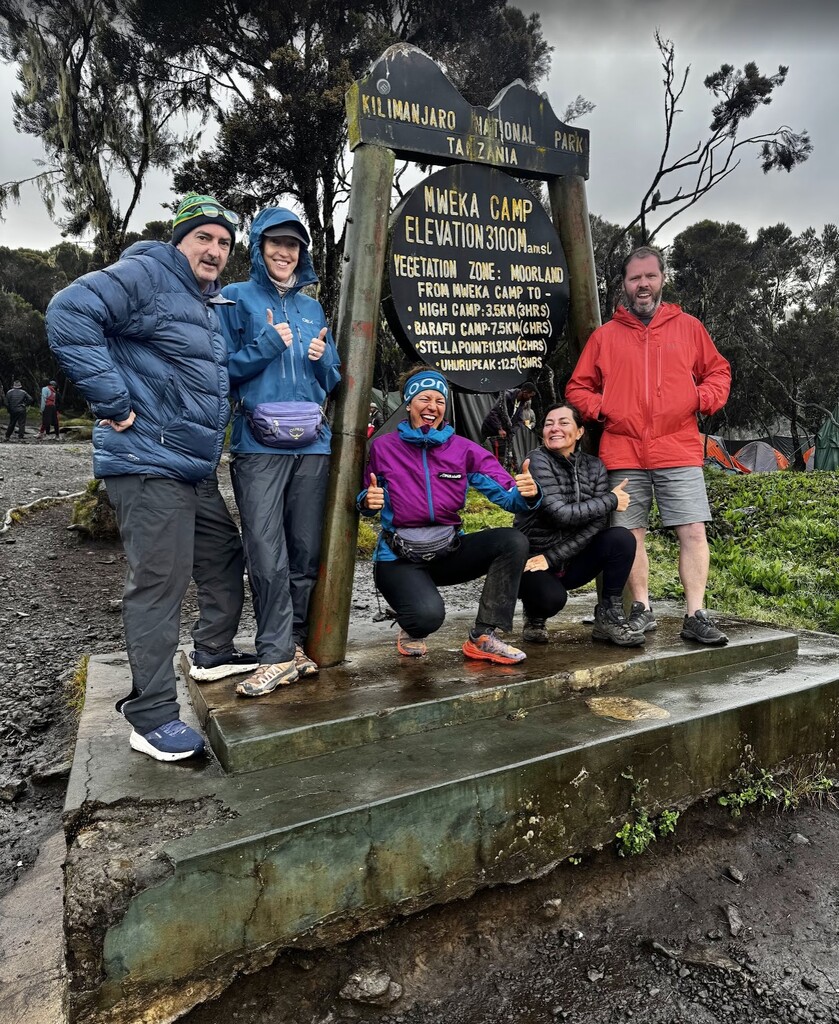
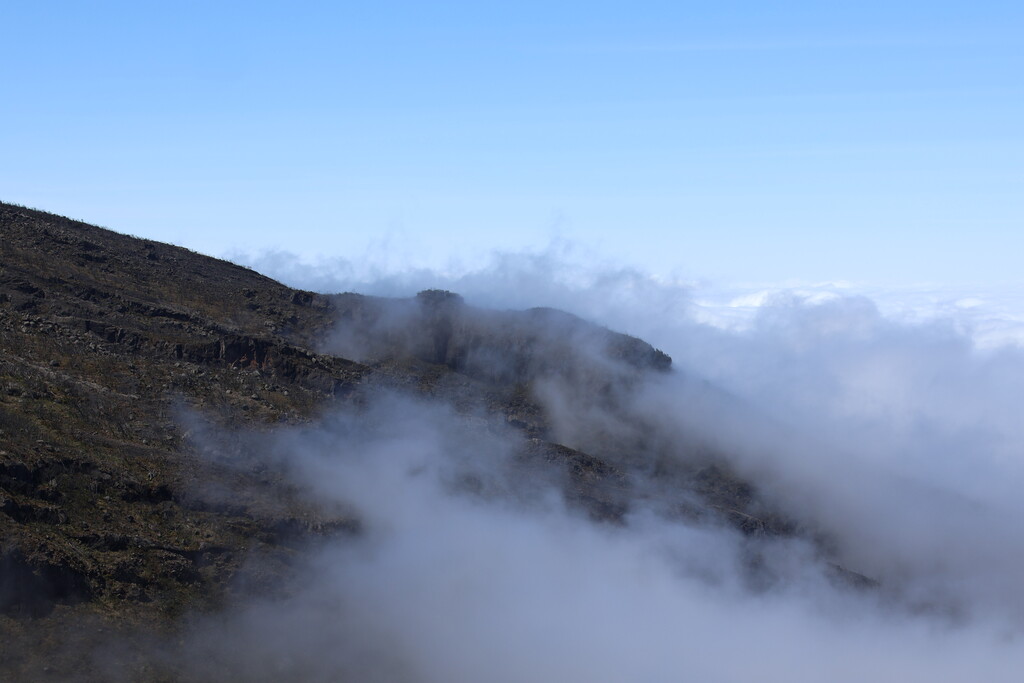
The forest began to thin and the world opened into heath and moorland. We climbed above cloud, passed giant heathers, groundsels and unfamiliar Afro-alpine plants, and repeatedly stopped to notice shapes and species we had never seen before. Curiosity was part of the human journey: learning the mountain rather than treating it as scenery to be crossed.
The stage lasted 5:08:20, with approximately 2:16 moving and 2:52 non-moving. Increasing altitude began affecting people differently. Kelly experienced significant symptoms consistent with acute altitude stress and required close monitoring, reduced pace, rest and support. Rory was suffering from diarrhoea and struggling to take in food. Stuart experienced fatigue. Dagne remained comparatively strong. The same path was already becoming several different internal journeys.
This was where leadership became less about maintaining a single plan and more about holding a safe team together. Pace changed. People regrouped. Guides monitored symptoms and oxygen readings. Hydration, food, honest communication and “pole pole” slowly, slowly became practical safety tools rather than mountain clichés.
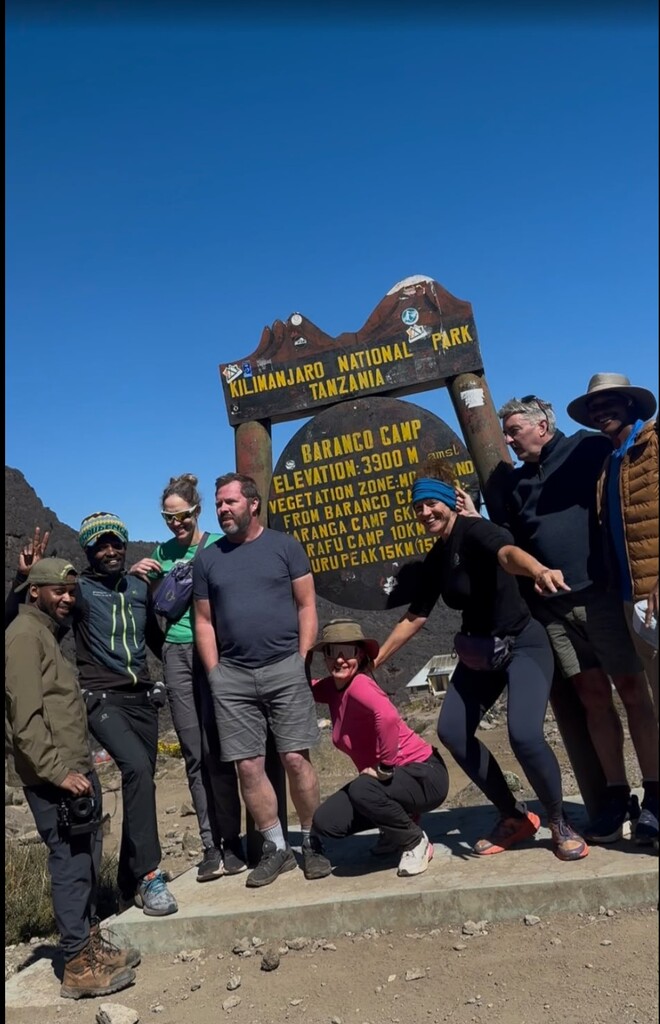
Barranco Camp sits beneath the vast Barranco Wall. It is a magnificent place to arrive, but it also places the next day’s challenge directly in front of you. Awe and apprehension existed together.
Section 3 — Barranco Wall, Karanga and Barafu Camp
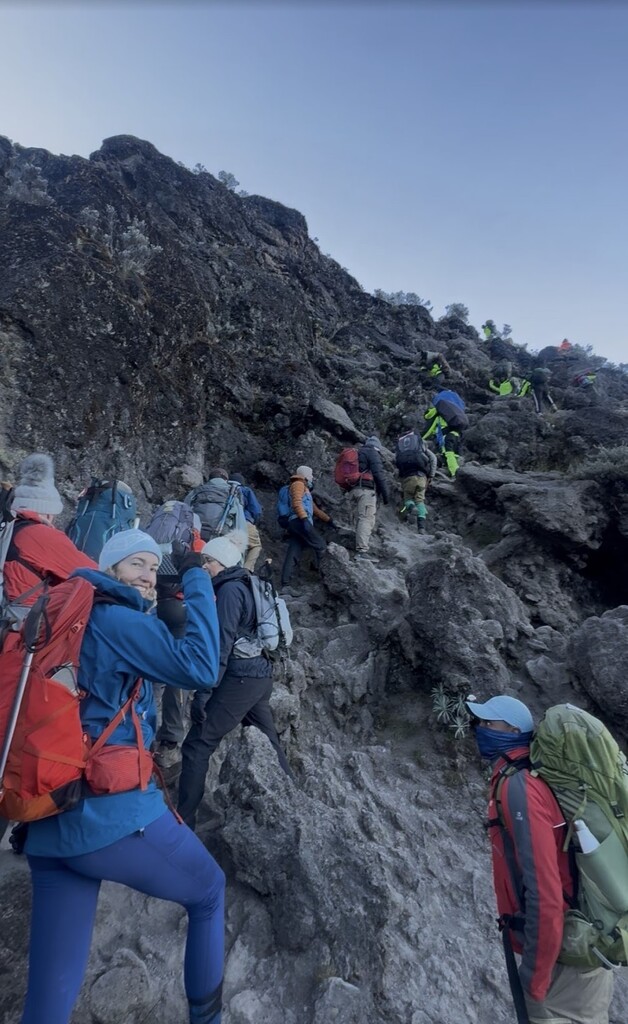
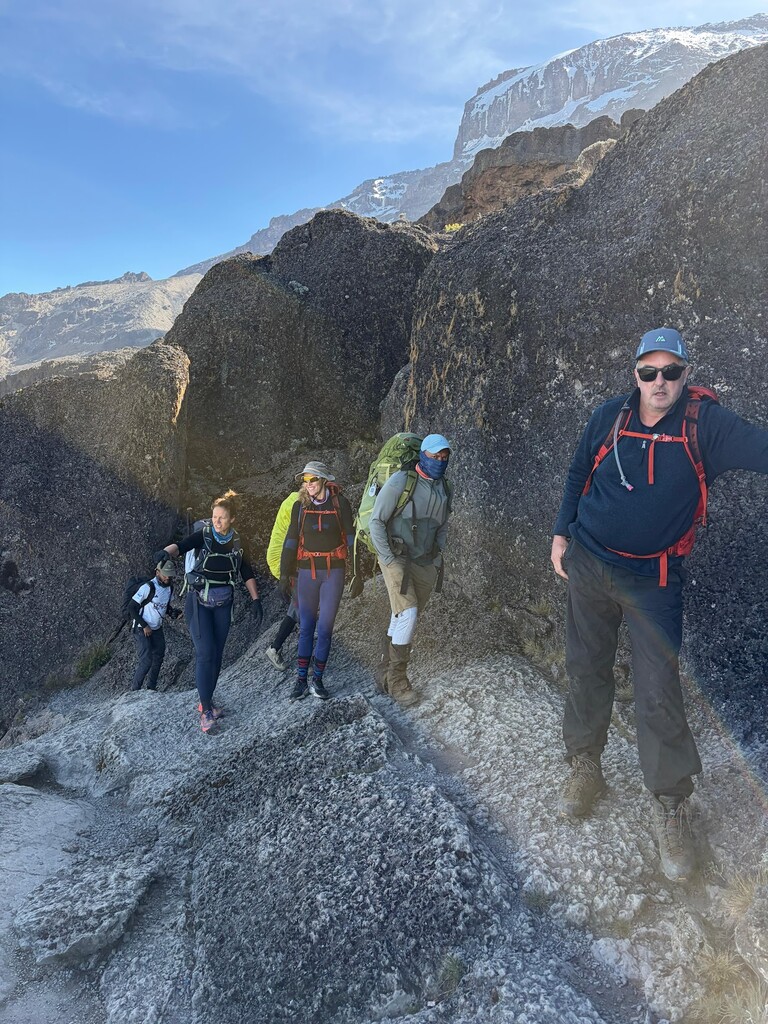
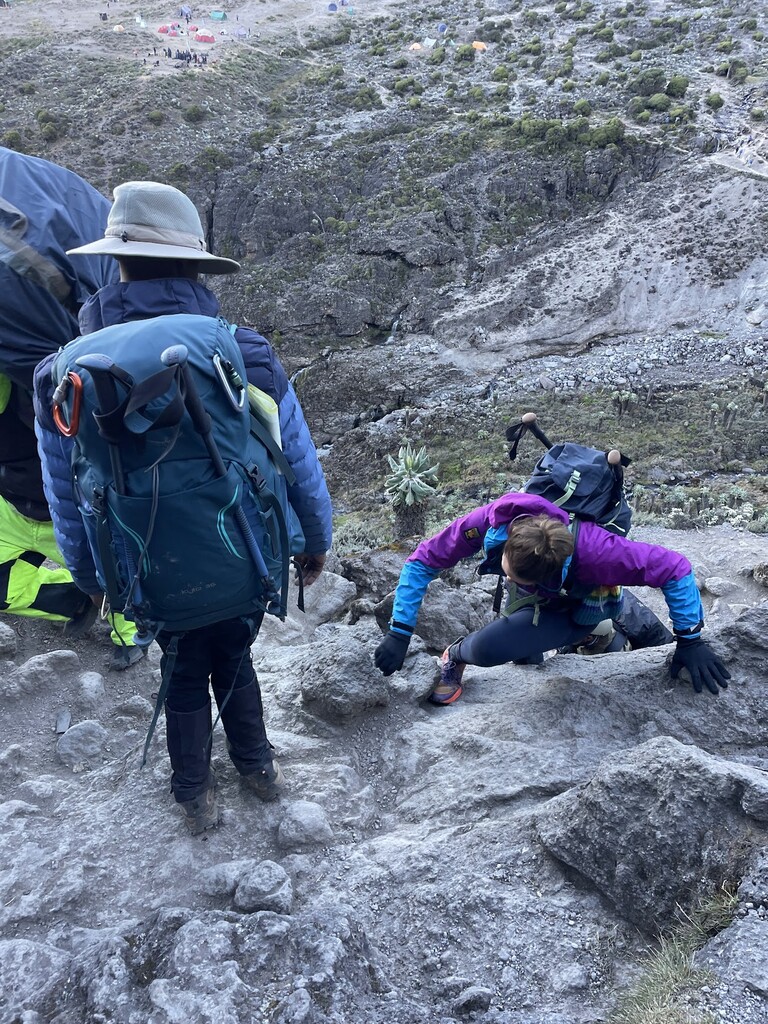
The day began with Barranco Wall: steep, sustained scrambling on established rock steps, using hands as well as feet. It is not normally regarded as technical climbing, but exposure, height, traffic and altitude make it psychologically and physically demanding. It had to be acknowledged and moved through one careful handhold and foothold at a time.
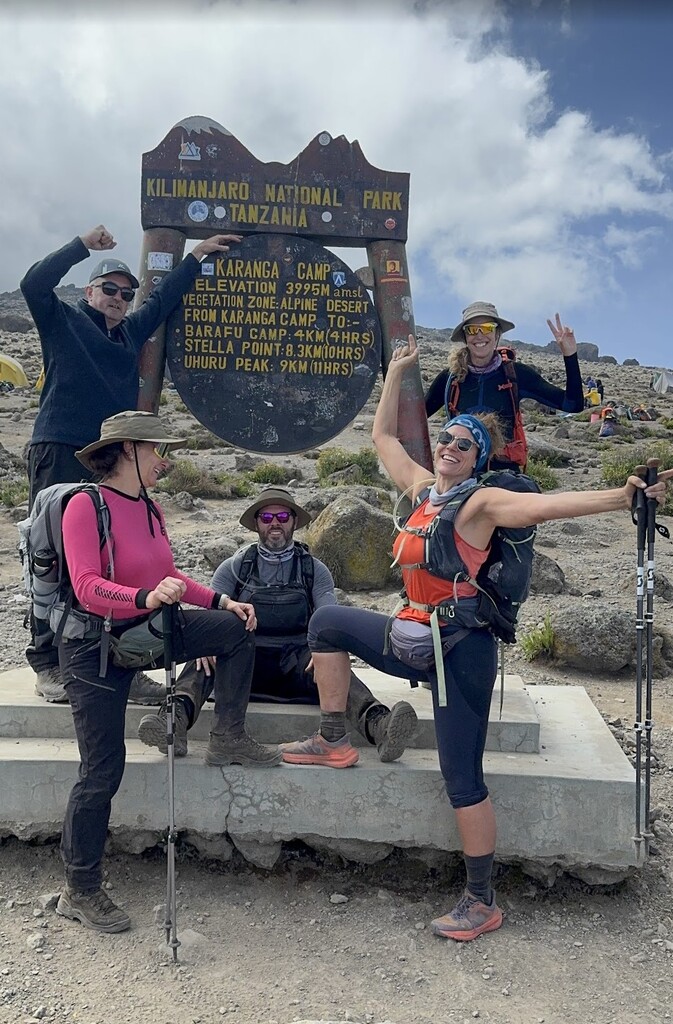
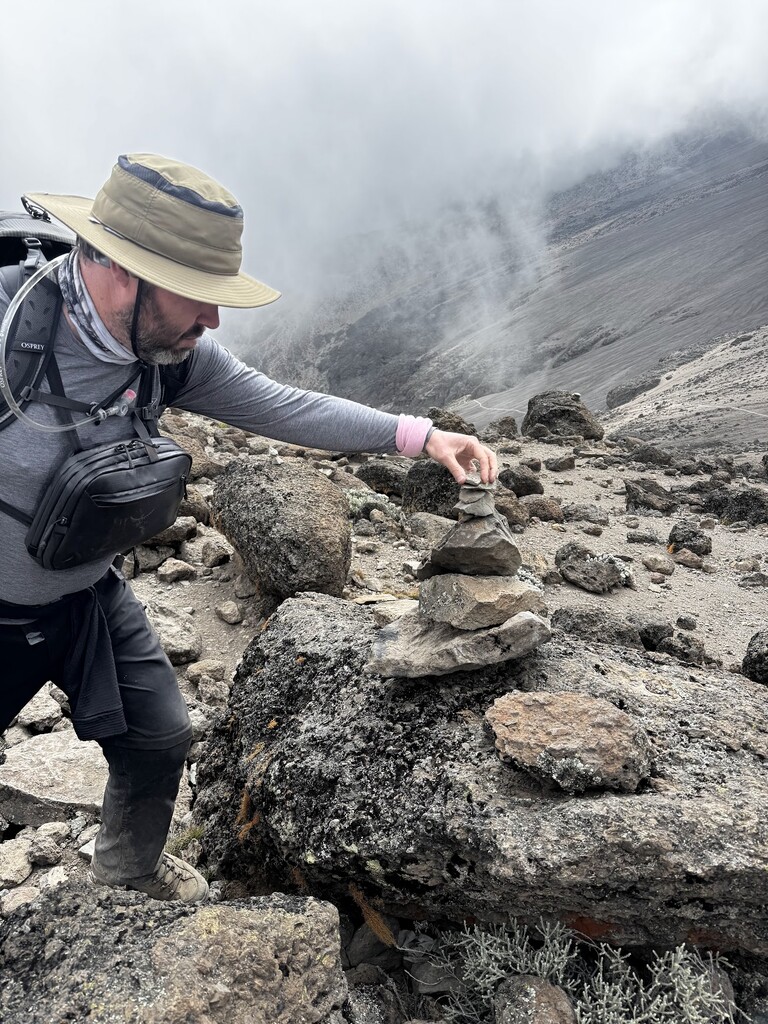
The Tanzanian porters moved through the same terrain carrying the equipment that sustained the expedition. Their strength can appear effortless from a distance, but it is skilled, demanding work. Beyond the wall, the route undulated through Karanga while the vegetation thinned and water logistics became harder. Crew members travelled to collect water because high camps cannot simply provide what the team needs.
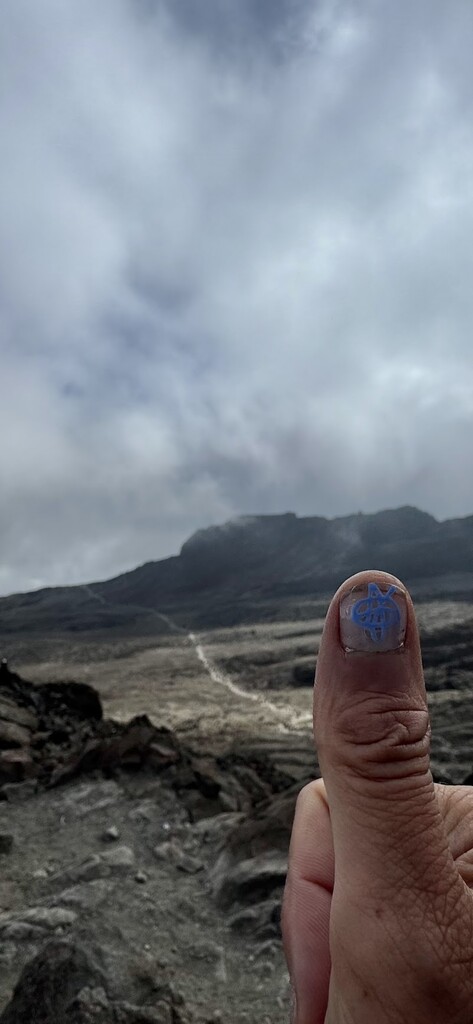
As we climbed towards Barafu, the landscape became barren, rocky and increasingly lunar. Warmth disappeared quickly when the sun fell. Oxygen was lower, appetite was unreliable and fatigue was accumulating. The stage took 7:17:00, including 4:33 moving and 2:44 non-moving.
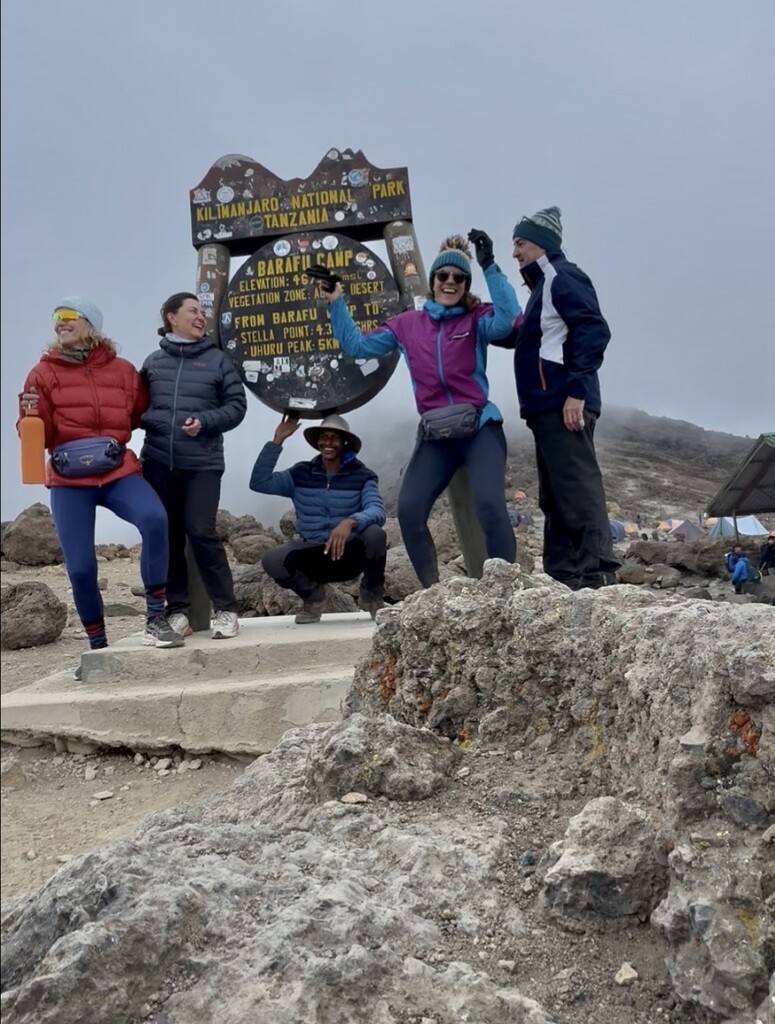
Barafu was not the finish of the day in any meaningful sense. It was the place where we needed to eat, prepare summit kit, make decisions and attempt to sleep before the hardest section. We had approximately three hours’ rest before the summit movement began.
Section 4 part A & B — Barafu to Stella Point, Uhuru Peak, Barafu and Lower Mweka
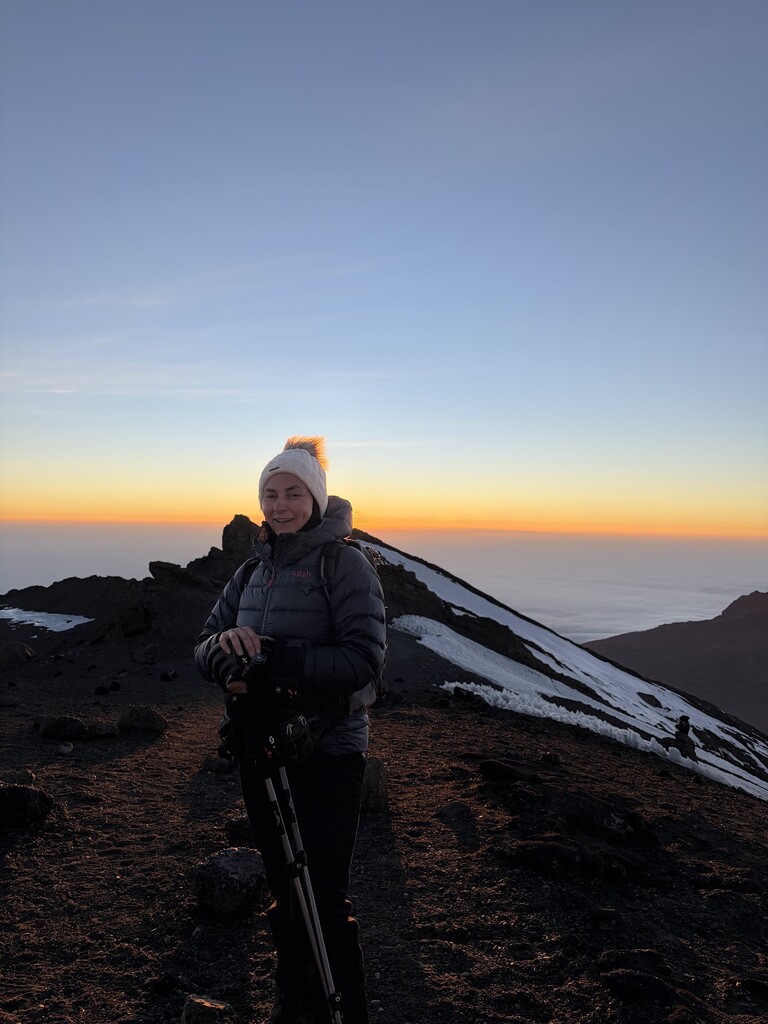
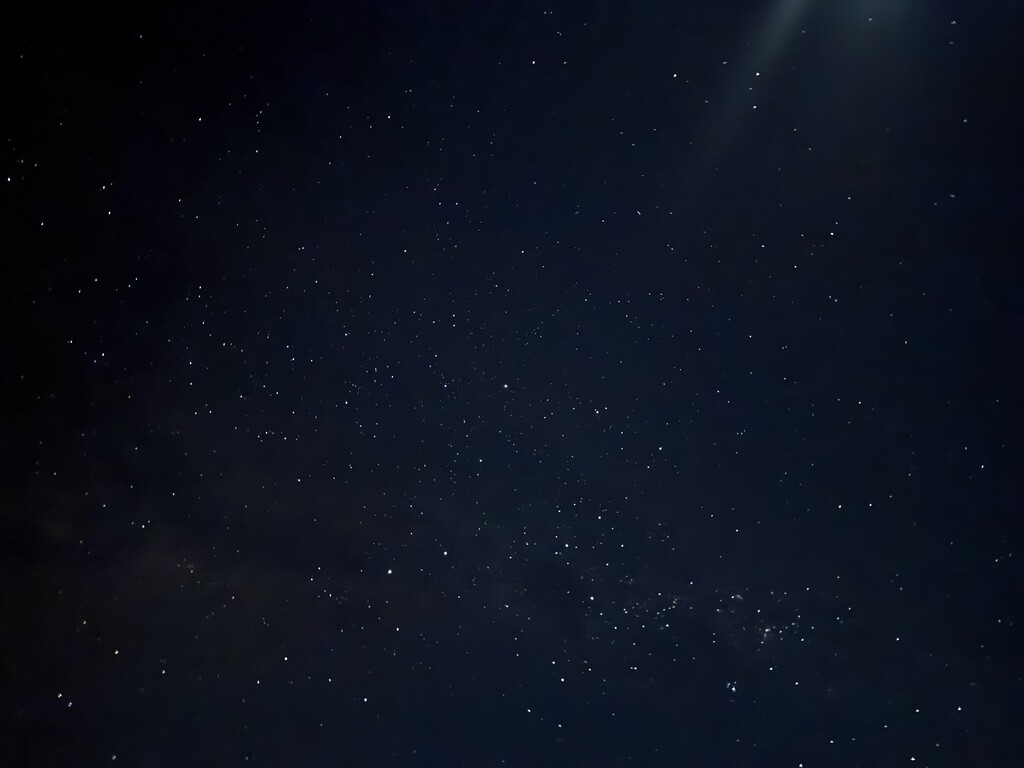
The summit push began in darkness beneath an extraordinary sky. Head torches reduced the mountain to small circles of ground: loose volcanic scree, rock and the boots immediately ahead. Temperatures were freezing, wind was strong and each metre was being gained with substantially less available oxygen.
Rory’s illness had left him depleted after two days without adequate nutrition. A safety-led decision was made that he could not continue the long summit ascent. He descended with support. That decision was painful, but mountains do not reward the pretence that risk is not real.
For the remaining team, movement became “pole pole” in its purest form. Kelly was experiencing significant altitude effects. At points even managing her head torch and maintaining rhythm became difficult. At this stage focusing on the next breath and next step rather than the scale of the mountain above becomes the focus.
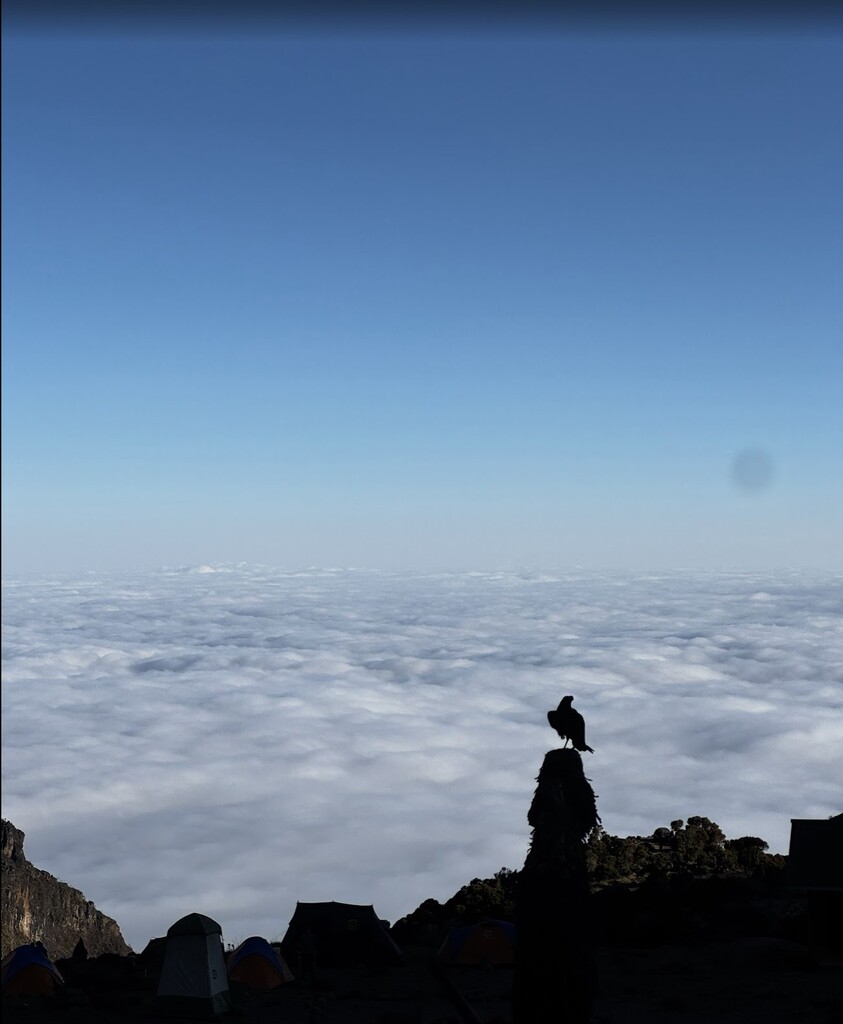
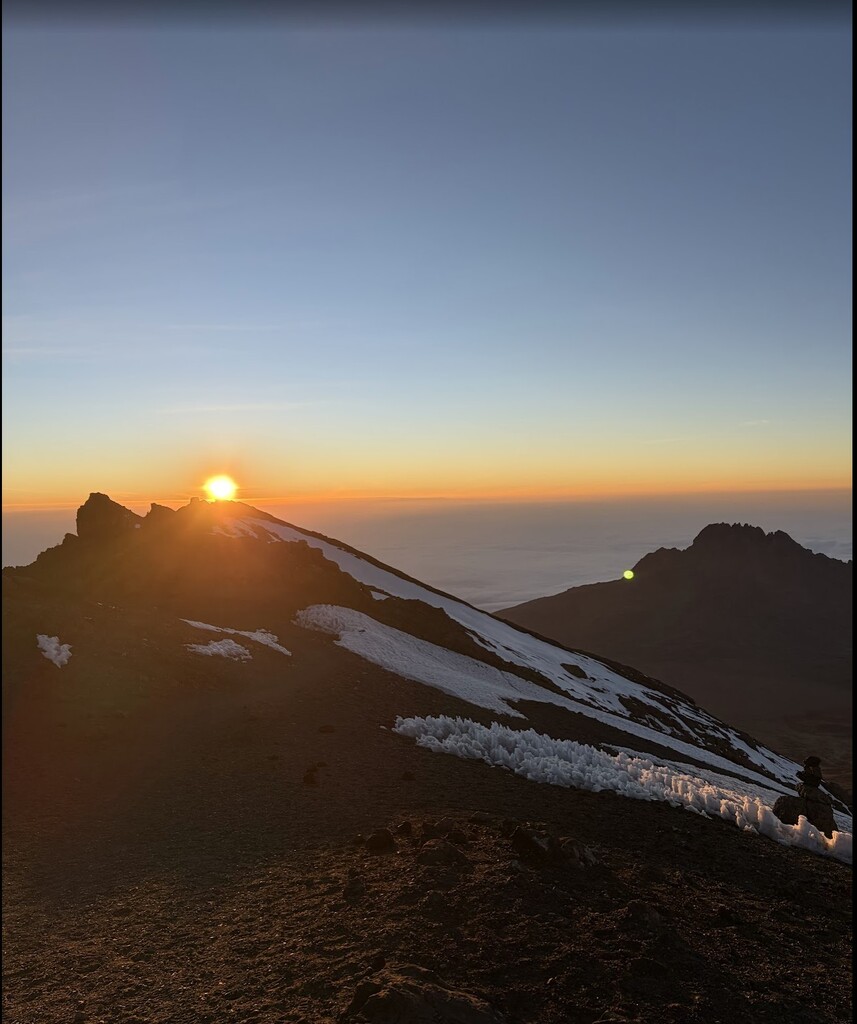
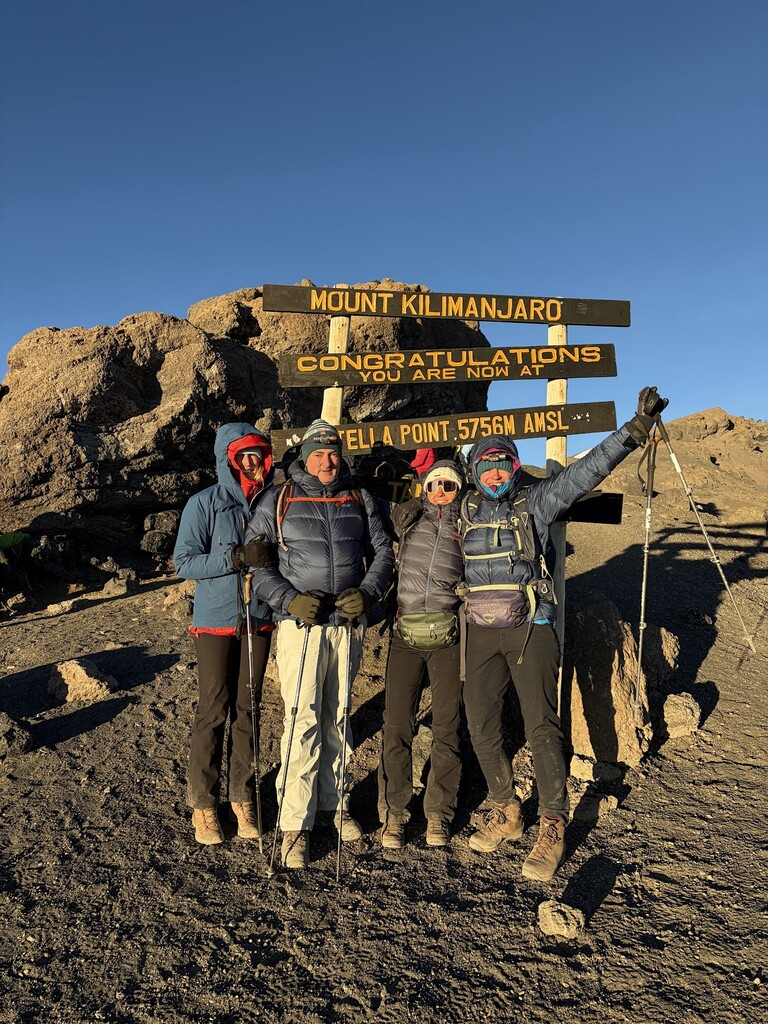
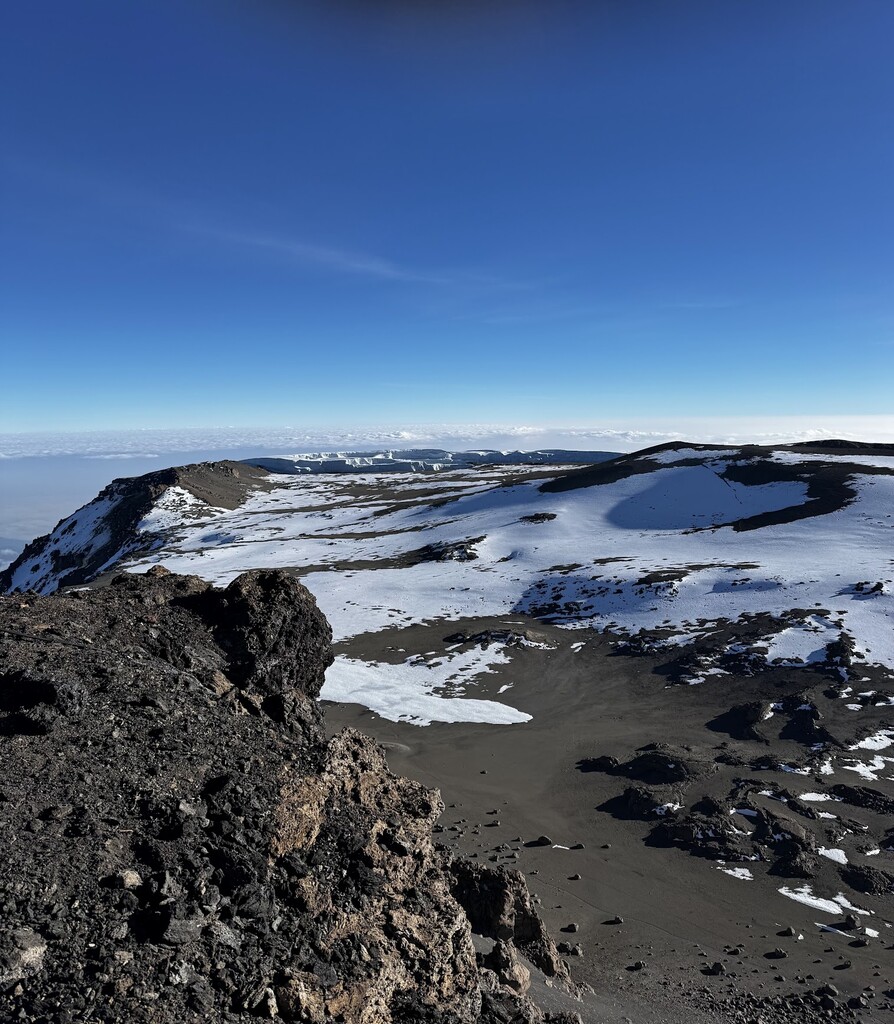
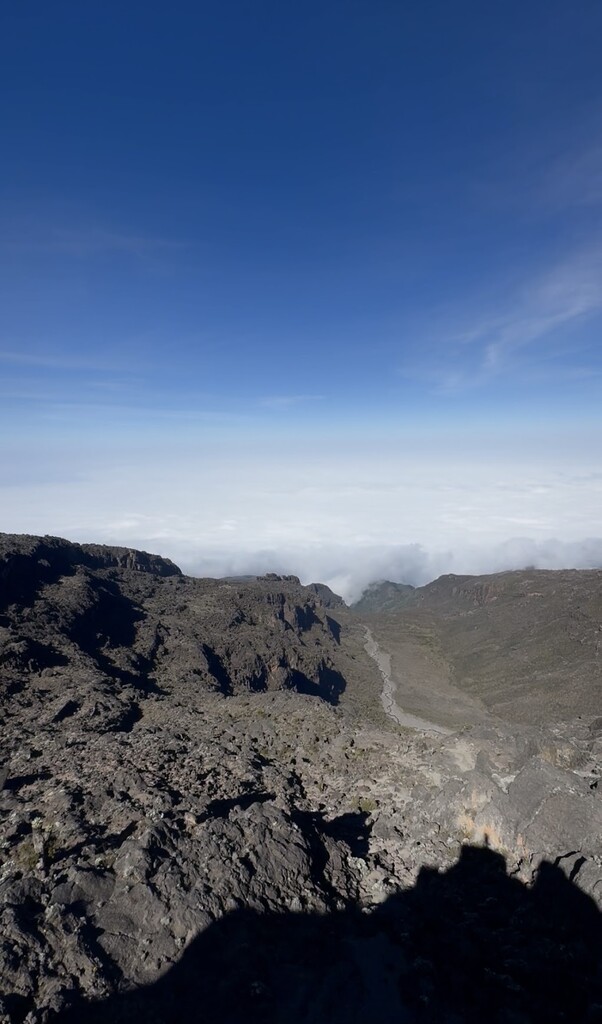
The sky changed gradually. Sunrise arrived across a blanket of cloud, giving shape back to the mountain and revealing the scale of what had been climbed in darkness. Stella Point at approximately 5,756m placed us on Kibo’s crater rim, but Uhuru Peak still lay ahead. The final traverse passed glaciers, ice and volcanic formations in an environment almost stripped of ordinary life.
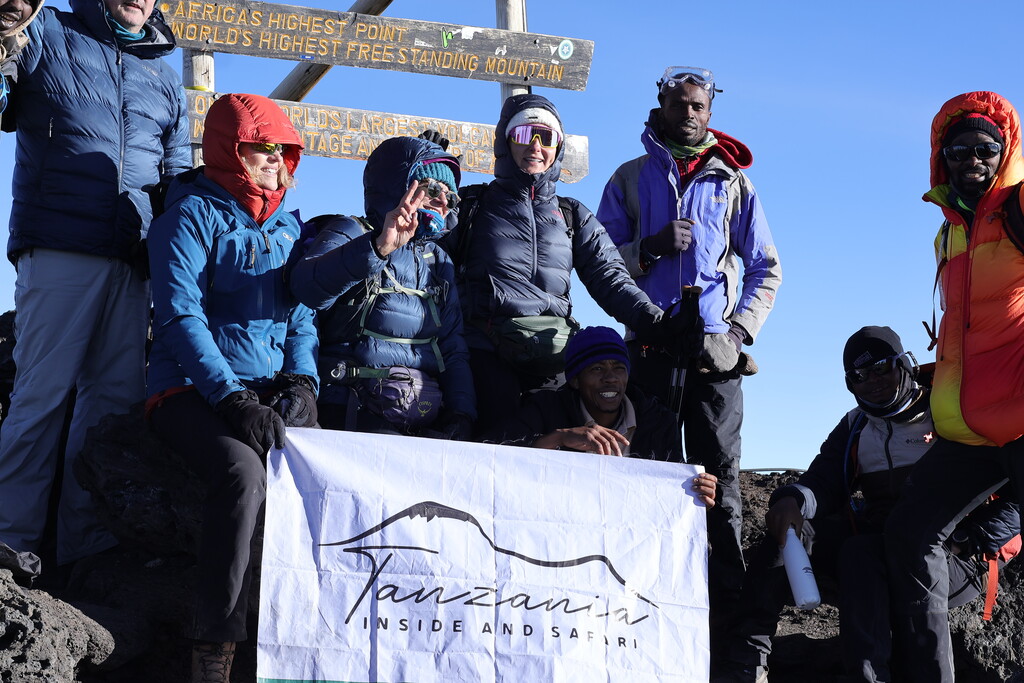
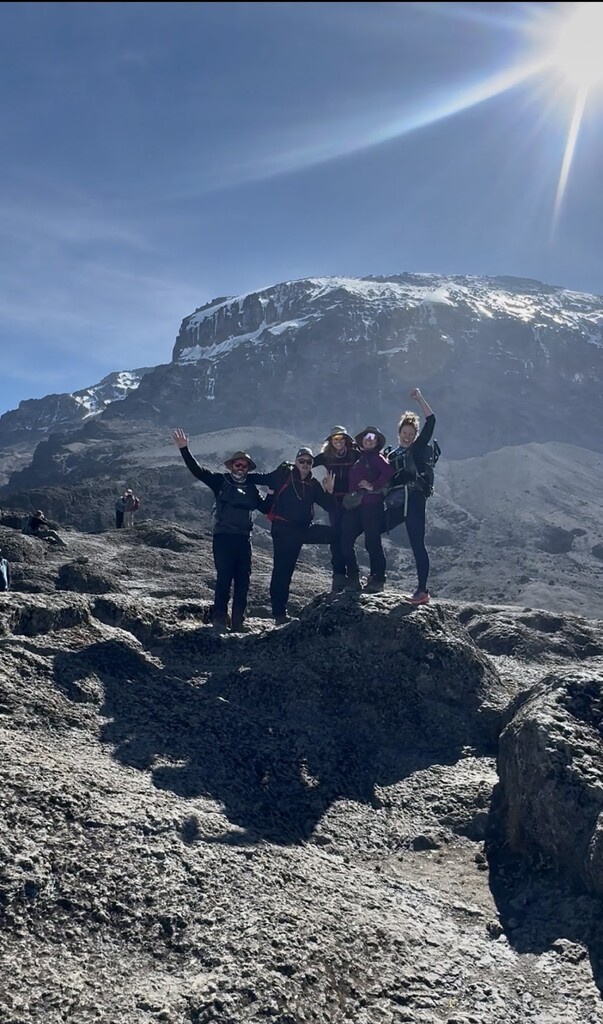
Eight of our nine route-team members reached Uhuru Peak at 5,895m: Kelly, Dagne, Stuart, Victor, Joseph, Gaudence, Razak and myself. The moment contained celebration, disbelief and exhaustion, but it did not end the responsibility. A gate-to-summit-to-gate effort is only half complete at the highest point.
The complete Barafu–Stella–Uhuru–Barafu stage took 9:39:00, including approximately 8:33 moving. We then continued from Barafu to Lower Mweka Hut in 3:28:33. Loose scree and volcanic ash allowed rapid loss of altitude but demanded balance, leg strength and concentration. After the summit, extreme fatigue made the descent a different type of test: less glamorous, no less consequential.
Section 5 — Lower Mweka Hut to Mweka Gate
As altitude reduced, vegetation returned. Alpine desert became moorland and then rainforest again. Oxygen and temperature grew kinder, but feet, knees and tired legs still had hours of wet roots, mud and sustained downhill movement to manage.
The final stage took approximately 4:15:00, with 3:05 moving. The team reached the official Mweka Gate finish at 11:31am on 24 June 2026. The clock stopped at 94 hours and 30 minutes.
There was joy and relief, but also the strange compression that follows a major expedition. Nearly two years of vision, a solid year beside many of the same human beings, ten months of mental, emotional and physical preparation and the work of 31 people had become one number: 3 days, 22 hours and 30 minutes. The time is extraordinary. It is not the whole story.
6. The measurable journey and the human journey
Every Fastest Known Time has two journeys travelling alongside one another.
There is the measurable journey: distance, elevation gained and lost, moving time, continuous elapsed time, camps reached, altitude, changing terrain and ultimately the clock. Our GPX files, Strava and Outdooractive tracks, photographs, videos, park records and certificates show where our feet travelled.
Then there is the human journey, and no GPS watch can record it. It is what happened to our bodies, minds and emotions across those measurable kilometres: awe, laughter, fear, exhaustion, altitude, diarrhoea, nausea, headaches and food we did not want but knew we needed. It is one person noticing another is struggling and quietly changing their rhythm. It is the courage to keep moving and the courage to stop.
For me, it meant holding both journeys at once. It meant respecting the objective while accepting that people were experiencing different realities inside the same expedition. It meant relying on Tanzanian guides’ knowledge, listening to symptoms, allowing pace to change and understanding that protecting a person or the team can make someone disappointed. Safety decisions can carry emotion without becoming the wrong decisions. For the past 6 years I have been trekking with nature solo, no team, no support team and this journey has been one of the toughest of all because it involves so many peoples hopes, dreams and helping them bring those into a plausible livable reality.
The measurable journey tells us what we achieved.
The human journey tells us how.That journey is what happens to our bodies, minds and emotions while we're travelling all those measurable miles. It's the awe of standing above a blanket of clouds, the laughter, fear, exhaustion, altitude, diarrhoea, nausea, headaches and the food you really don't want to eat but know you bloody need to. It's the person beside you noticing you're struggling and quietly changing their own rhythm to match yours. It's curiosity making you ask questions about a flower you've never seen before, stopping long enough to notice the shape of a tree, listening to the history of the people whose mountain you're being privileged enough to climb, and gradually realising that every person within a team can be travelling exactly the same physical route whilst experiencing a completely different internal journey.
For me, both journeys have to be travelled together to achieve something like this.
The preparation, consistency, connection, belief and belonging were part of how the number became possible.
7. Safety, altitude and decision-making
Umbwe’s rapid altitude gain was a central risk. The team used licensed Tanzanian guides, park registration, deliberate pacing, hydration and nutrition routines, symptom conversations and pulse-oximeter readings as part of its safety practice. Oxygen saturation was treated as one input alongside observed movement, cognition, appetite, headache, nausea, gastrointestinal illness and self-report—not as a number that could override the whole person.
Kelly’s significant altitude symptoms required adaptation and close support. Rory’s gastrointestinal illness, inability to fuel and deterioration before the summit push required withdrawal. In both cases, decisions were individual rather than formulaic. Continuing one person and turning another around are not contradictory when their symptoms, functional capacity and risk are different.
The guides’ judgement was fundamental. Their familiarity with terrain, weather, altitude behaviour and descent options allowed the international trekkers to move within a safe supported structure. No claimed time should obscure the priority given to human life and health.
8. Evidence and verification
This Premier Route submission is supported by a multi-source evidence package intended to allow independent checking of the complete line, elapsed time, team identity and supported style.
- Original GPX files for the individual recorded stages.
- Strava activity links containing GPX traces, times and expedition photographs.
- Outdooractive individual tracks and one combined route record are available
- Photographs and video across the ascent, camps, summit and descent.
- Official Kilimanjaro National Park registration and route records.
- Photographs and video at the Uhuru Peak summit sign identifying the completing team.
- Photographic evidence at the official Mweka Gate finish.
- Summit certificates issued to Lindsey Bell, Kelly Saunders, Dagna Taylor and Stuart Holmes.
- Photographic and video evidence establishing the Tanzanian guides’ presence throughout and at Uhuru Peak, in place of certificates they did not request at the time.
9. Reflection and legacy
The journey did not end at Mweka Gate. Afterwards came debriefing, assessment, difficult conversations, changed plans and a deeper understanding of leadership. Public attention often moves quickly from a finish line to the next story, while the people who lived an expedition continue processing what it changed.
That later difficulty does not diminish the achievement. Nine people began together. Eight reached the highest point in Africa and completed the prescribed gate-to-summit-to-gate line. Rory travelled almost the whole ascent while seriously unwell and made the responsible safety decision. Twenty-two additional Tanzanian crew members made the expedition possible. What 31 people created together will stay with me personally until my spirit is in the clouds
Through Project Summit Every Feeling, we hope the route leaves a legacy larger than a time: a reminder that mental health travels with us up physical and mental mountains, through exhaustion, fear, awe, laughter, discomfort, connection and everything in between. People can travel exactly the same physical path and experience entirely different journeys within it.
Every feeling belongs.
Step by step. Mountain by mountain. Feeling by feeling.
Live it. Be it. Feel it.
Resource and evidence library
Authoritative mountain, park and FKT resources
- Fastest Known Time — guidelines
- Fastest Known Time — verification requirements
- Tanzania National Parks Authority — Kilimanjaro National Park
- TANAPA — plan a trip, current park access and safety information
- UNESCO World Heritage Centre — Kilimanjaro National Park
- Smithsonian Global Volcanism Program — Kilimanjaro
Expedition tracks and publication
- Lindsey Bell — Strava athlete page
- Lindsey Bell — Outdooractive profile
- Linzi Walks
- Linzi Walks — Linktree
Preparation team and practical resources
- Polly Warren — breathwork and nervous-system support
- Lucy Kelly Nutrition — nutritional therapy and sports/exercise nutrition
- Kelly Saunders Pilates — classes and booking
- The Altitude Centre — altitude training and education
Operator
Tanzania Inside Safari, led by Joseph Mrope, provided the licensed Tanzanian mountain operation and expedition crew. Insert the operator’s confirmed public website here before publication if the correct URL is not already included elsewhere in the FKT submission.
https://www.tanzaniainsideandsafari.com/