
Dear FKT Team,
I am submitting my self-supported attempt on the Rheinsteig route. I ran the route in reverse, from Bonn to Wiesbaden, but I don't see any difference since both towns sit at the same elevation along the Rhine River.
Thank you so much for reviewing my track and report. I hope the text isn't too long, but it’s hard to summarize the experience of 320 km in just a few words.
I truly appreciate all your hard work on the FKT site and for making it possible to find and share these trail running projects.
Best regards,
Mario
REPORT:
The Rheinsteig FKT Project
320 Kilometres - Along one of Germany's Most Beautiful Trails
The Rheinsteig is widely regarded as one of Germany's most spectacular—and demanding—long-distance hiking trails. Stretching roughly 320 kilometres (199 miles) from Bonn to Wiesbaden, it follows narrow singletrack high above the majestic Rhine Valley, weaving past dramatic rock formations, steep vineyard slopes, and centuries-old castles.
While the scenery is breathtaking, the trail is anything but easy. With approximately 11,700 metres (38,400 ft) of total ascent, the Rheinsteig is a true endurance challenge that pushes both hikers and runners to their physical limits.
It was on this very home trail that our team member Mario set himself an extraordinary goal: to establish a new Fastest Known Time (FKT) in the self-supported category, covering all 320 kilometres in record time while redefining his own limits on familiar ground.
________________________________________
Preparation and Travel – The Road to an FKT
When one of Germany's finest long-distance trails is practically on your doorstep, sooner or later you simply have to run it from end to end. That thought had been sitting in the back of my mind for years. This year, I finally decided it was time.
Living in Wiesbaden, choosing the city as my finish line was the obvious choice. That meant starting in Bonn and following the entire Rheinsteig south.
A self-supported project over such a distance requires an enormous amount of preparation if you want to approach it seriously. The days leading up to the attempt were filled with trimming every unnecessary gram from my gear, meticulously researching food resupply points, and solving countless logistical puzzles. In fact, the planning consumed far more time than the run itself ever would.
________________________________________
The FKT Rules
To have an attempt officially recognised as a Fastest Known Time (FKT), a strict set of international rules applies.
Since I chose the self-supported style, the most important regulations were:
• No private support. Friends, family or a dedicated crew are not allowed to assist anywhere along the route.
• Equal opportunities for everyone. Only publicly available resources may be used—supermarkets, petrol stations, public water fountains, restaurants, hotels and similar facilities.
• No pacers. Friends may not accompany or run alongside you for motivation.
• Complete GPS tracking. The entire route must be continuously recorded and submitted afterwards for verification on the official FKT platform.
________________________________________
Train Delays, Heat Anxiety and an Unwelcome Encounter
After work on Wednesday evening, the adventure finally began.
Thanks to the usual chaos of the German railway system, the journey to Bonn immediately turned into my first test of patience. I didn't arrive until after 10 p.m.—already an hour behind schedule.
After walking to my hotel and taking a cold shower to escape the stifling heat trapped inside my room, I managed to squeeze in about six hours of sleep before the real challenge began. The weather forecast looked brutal. Thursday was expected to stay just below 30°C, but temperatures were forecast to climb even higher over the following days. Saturday and Sunday were expected to reach 32°C, and anyone familiar with the Rheinsteig knows what that means. The slate-covered vineyard slopes absorb the sun all day and radiate the heat back like an oven. I wasn't looking forward to it—but I'd chosen this July window myself. Now I had to live with that decision.
The only upside was that the warm nights allowed me to travel light. My thinnest sleeping bag would be sufficient for the planned bivouacs, and besides my running clothes I only packed a lightweight wind jacket and one spare shirt.
________________________________________
Day One
At exactly 7:00 a.m. on Thursday morning, I stood in front of Bonn's historic Town Hall.
One deep breath. I started my GPS watch. Then I took the first step into my own adventure.
The opening kilometres are pleasantly gentle. The trail winds through Bonn's old town and along the banks of the Rhine before leaving the city behind and climbing into the beautiful—but demanding—Siebengebirge hills. Although I had reduced my equipment to the absolute essentials, carrying two litres of water—the bare minimum in these temperatures—together with food still made the backpack surprisingly heavy. Every gram was noticeable, and sweat was already pouring down my face.
Fortunately, much of the early route runs through shaded forest. The trail constantly climbs and descends over a mixture of forest roads and flowing singletrack.
Fully aware of the scale of the challenge ahead, I deliberately kept the pace extremely conservative.
• On every climb I switched straight into power hiking.
• On the descents I resisted the temptation to run aggressively in order to preserve my quadriceps.
• Progress was slow, but it was steady—and that was exactly what I wanted.
________________________________________
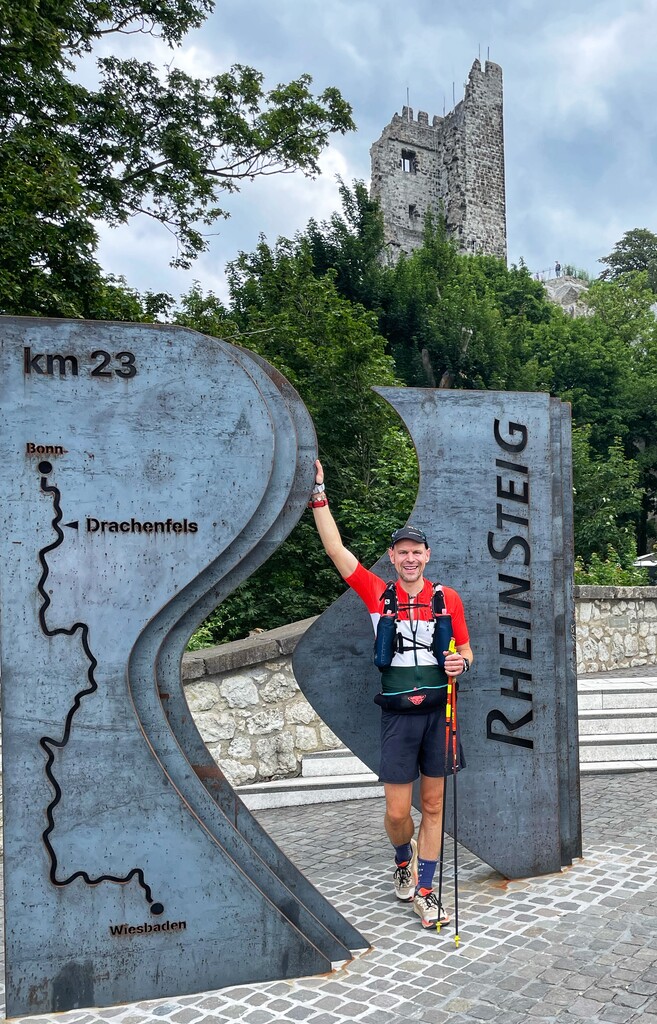
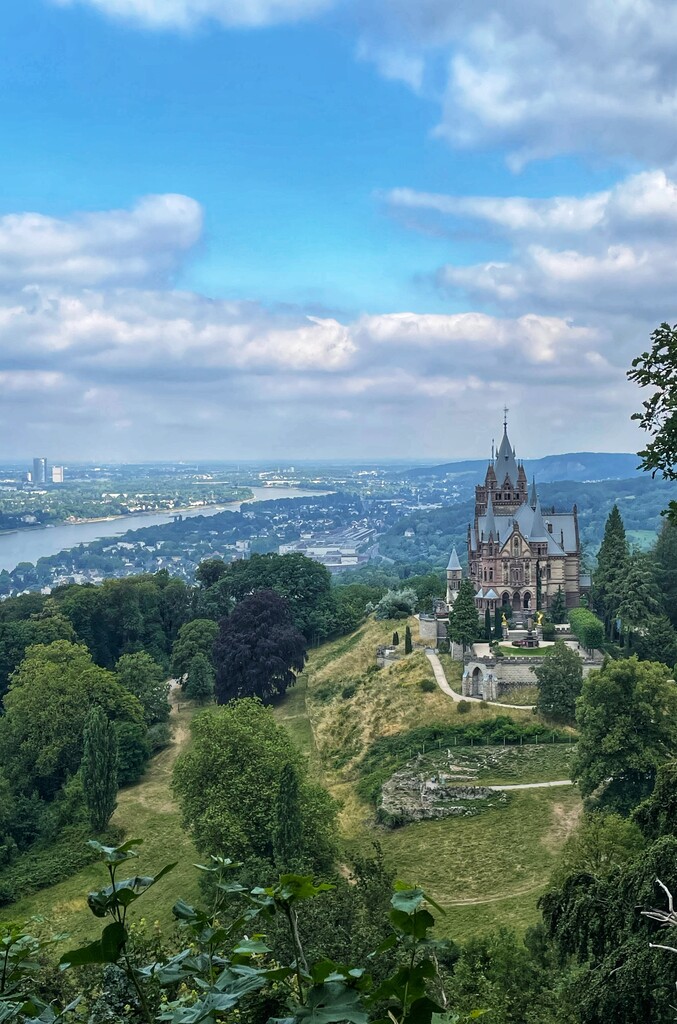
After 23 kilometres, I reached the famous Drachenfels.
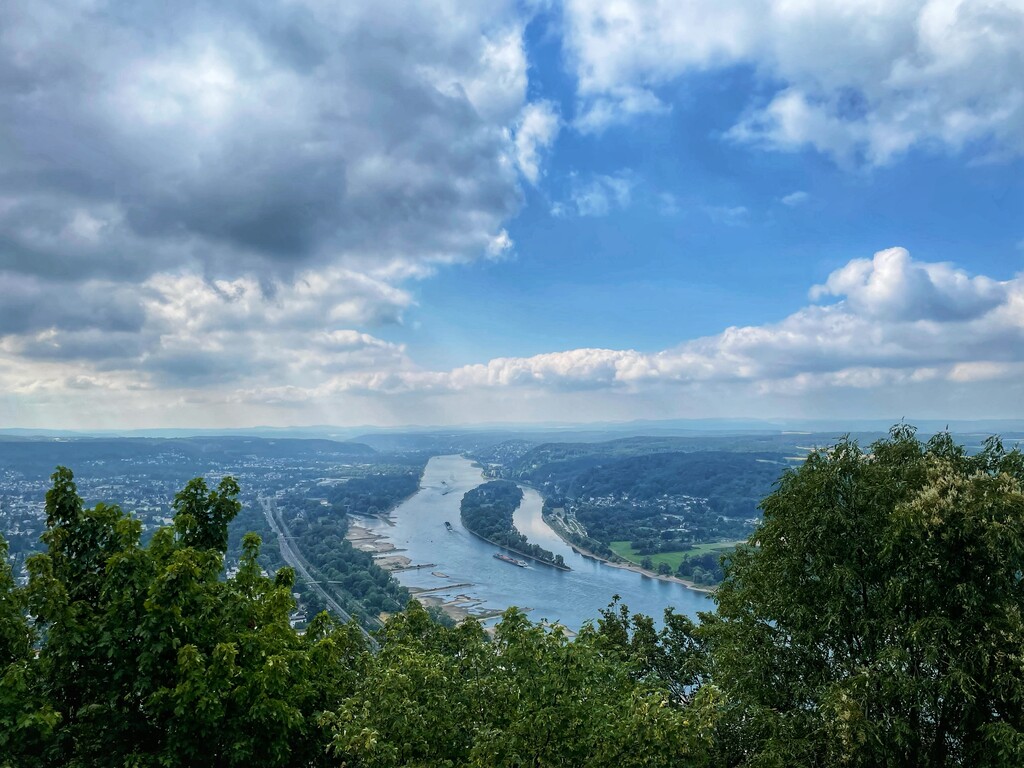
I headed straight for the public restaurant toilets to refill my bottles to the brim. After taking one brief look across the Rhine Valley, I moved on. There would be plenty of time for sightseeing after the finish. My first major resupply stop was planned for Linz am Rhein, at kilometre 53. By the time I reached the local EDEKA supermarket, the afternoon sun was hammering the asphalt. It was only a taste of what was still to come over the next three days.
To escape the heat, I spent the entire break indoors. Inside the air-conditioned supermarket I bought lunch and cold drinks before settling into the adjoining bakery, where I found the perfect spot—with a power outlet—to recharge both myself and my electronics.
After a well-earned 90-minute break, I headed back onto the trail. By now I had left the Siebengebirge behind and still planned to cover another 40 kilometres before the end of the day.Physically, everything felt surprisingly good. Everything except one thing. After only 30 kilometres, a nasty blister had formed on my heel. Despite stopping early to treat it properly and covering it with Compeed blister plasters, it would become my constant companion for the rest of the journey.
________________________________________
The evening in the Rhine Valley was simply spectacular.
The setting sun painted the vineyards in golden light while I continued making steady progress despite the blister.
At Hammerstein Cemetery, around kilometre 77, I refilled my bottles from a water tap directly beside the trail before continuing into the forest.The viewpoints, the evening colours and the peaceful solitude made this one of the most memorable sections of the entire run.
During the entire long weekend I encountered surprisingly few people on the Rheinsteig.
They probably knew why. The warm summer evening that welcomed me at dusk was merely a gentle preview of the scorching temperatures still waiting ahead.
As darkness settled near Leutesdorf, the trail became noticeably more technical, climbing steep vineyard singletrack where careful footwork was essential.
________________________________________
Around 1 a.m., fatigue finally began creeping into my legs.
I actually welcomed it. From the outset, I had planned to sleep for roughly two hours during the first night. There's always debate about whether sleeping during the first night of a multi-day ultra makes sense. The body is still relatively fresh, and from previous races I knew I could usually stay awake for 36 to 40 hours before serious sleep deprivation set in. But this wasn't about squeezing out every possible minute. My goal was to complete the Rheinsteig ambitiously—not to gamble everything on an all-or-nothing finish time. ________________________________________
Back to that night.
At around 1 a.m., the biggest confrontation of the entire trip unfolded. Deep in the forest I encountered two hunters who were anything but pleased to find someone running through "their" woods in the middle of the night. They accused me of ruining their hunt and tried to stop me from continuing. Calmly, I explained that under German law I was perfectly entitled to use public hiking trails at any time of day or night, and that they had no legal authority to prevent me from doing so. The forest belongs to everyone. A heated argument followed—one that is probably best not repeated here in detail. Despite threats and intimidation, they ultimately failed to stop me. I'm a peaceful person by nature, but I also know how to stand my ground when necessary.
So I continued.
________________________________________
The confrontation left me running on pure adrenaline for nearly an hour before exhaustion finally caught up with me again.
About 7.5 kilometres before Rengsdorf, I reached a large shelter that I already knew from the KoBoLT (Koblenz–Bonn Trail) race, held every November. On a thick carpet of leaves I spread out my ultralight sleeping mat and sleeping bag.
Brush my teeth. Eat a quick snack. Change into my dry shirt. Put on the wind jacket. By the time everything was ready, another half hour had disappeared. It was somewhere between 2:30 and 3:00 a.m.
Day Two
Unfortunately, I barely slept at all.I spent most of the night tossing and turning, unable to find a comfortable position. To make matters worse, a large dead branch suddenly crashed out of a nearby tree and slammed into the forest floor. So much for a peaceful night in nature. At some point I drifted into a light doze that at least gave me a little rest, but it was nowhere near proper sleep.
When my alarm went off at 5:00 a.m., climbing out of the sleeping bag required a considerable amount of determination.
Mentally, I still felt completely groggy, but physically my legs had recovered remarkably well, which gave me confidence for the day ahead.
My timing had been planned so that I would reach the REWE supermarket in Rengsdorf—about 500 metres off the Rheinsteig—right when it opened at 7:00 a.m. The plan was simple: eat a proper breakfast, restock my supplies and head back onto the trail.
Although my legs were still holding up surprisingly well after roughly 95 kilometres and several thousand metres of climbing, my stomach had started protesting with a mild wave of nausea.
________________________________________
At exactly 7:00 a.m., not a second earlier or later, I was standing at the supermarket entrance waiting for the doors to open.
Breakfast. Fresh supplies. Coffee. Exactly what I needed. Fortunately, my body was ready to accept food again. My stomach settled down, everything stayed where it belonged, and within minutes I felt genuinely alive again. An hour later I was back on the Rheinsteig, heading towards Sayn. After making two unscheduled visits to the bushes—I'll spare you the details—my digestive system had finally settled completely. Freshly fuelled, I found a good rhythm once again. The trail was kind to me that morning. Flowing singletrack. Easy forest roads. And, most importantly, plenty of shade.
By around 10:30 a.m., after roughly 120 kilometres, I reached Sayn exactly according to schedule.
________________________________________
By 11:00 a.m., however, the thermometer had climbed relentlessly past 30°C. The sun became merciless the moment I left the shade.
Whenever I passed even the smallest stream or water source, I stopped to cool myself down. I soaked my hat and a small microfibre towel in the cold water before wrapping it around my head. Those few moments of cooling became essential for survival.
The next section towards Koblenz proved considerably more demanding than I remembered from running the KoBoLT back in 2018.
Combined with the relentless heat, it became a real grind.
________________________________________
The final ten kilometres before Koblenz were particularly tough. The landscape gradually lost much of its variety.
Instead of cool forest, the trail crossed increasingly open terrain with almost no shade. I felt as though I was being slowly roasted under the afternoon sun. By the time I reached the slate-covered trails below Ehrenbreitstein Fortress, where the rocks had been baking in full sunlight all day, I was completely cooked. Both physically and mentally. Barely thinking straight, I dragged myself towards what had become my personal oasis in the desert: Lidl.
Just before reaching the supermarket, the day somehow became even more surreal. Several hostesses promoting a sports car brand tried to convince me to take a test drive. Which manufacturer was it? Honestly, I have no idea. Nor did I care in the slightest. My tunnel vision was locked entirely on the Lidl sign. There wasn't a single functioning brain cell left for sports cars or smiling promotional staff.
I politely declined and explained that taking a high-performance car for a spin in my severely dehydrated condition probably wasn't the safest idea—and that Germany certainly didn't need any more reckless driving incidents.
________________________________________
Finally, I escaped into the wonderfully air-conditioned supermarket. After buying fresh supplies, I moved into the cool underground car park next door. There, in the shade, I lay down for 90 minutes and focused entirely on damage control.
Drink. Drink even more. Eat whatever my stomach would tolerate. Unfortunately, that last part proved difficult. The extreme heat had completely shut down my appetite.
________________________________________
Eventually I picked myself up again and started moving towards my next destination:
Braubach, home of the famous Marksburg Castle. The first few kilometres followed the Rhine promenade through Koblenz—straight back into the blazing afternoon sun. Thankfully, the trail soon climbed back into shaded woodland alongside a beautiful stream.
I gradually found my hiking rhythm again. But reality soon caught up with me. Once your body has been completely broken down by hours of extreme afternoon heat, recovery simply doesn't happen that quickly.
________________________________________
For the rest of the day I never really got going again. Running became increasingly rare.
Instead, I accepted my snail's pace and focused on one thing only: Keep moving. Slowly. Steadily. Without worrying about speed.
________________________________________
Despite the suffering, the scenery remained magnificent.
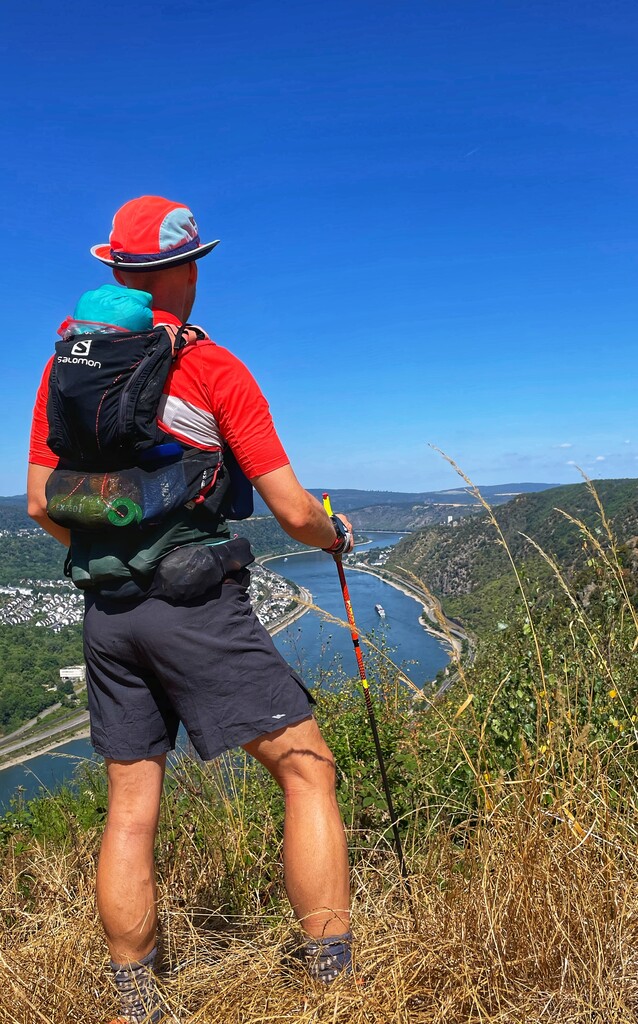
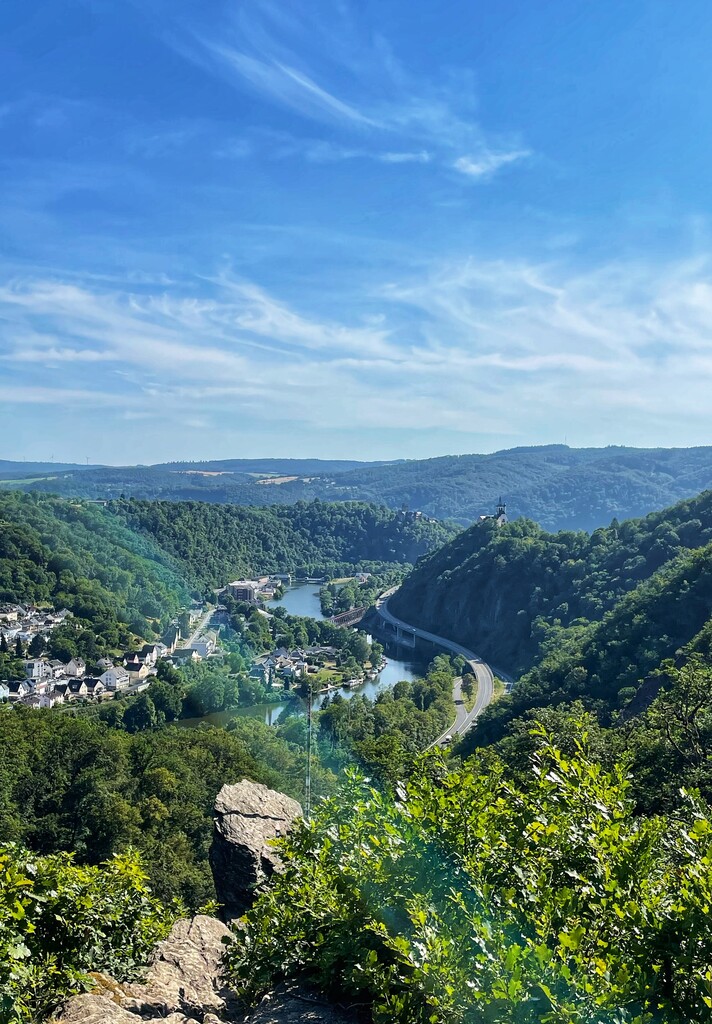
One highlight after another passed by. The absolute standout was the breathtaking Ruppertsklamm, with its narrow rocky passages and cool stream cutting through the gorge. After crossing the Lahn Valley, I finally entered the UNESCO Upper Middle Rhine Valley, rewarded with spectacular views of the historic Marksburg Castle towering above the river.
________________________________________
Shortly after 8:00 p.m., I reached Braubach.
Unlike the previous night, I had booked a guest room here. One proper night's sleep. A shower. Clean clothes.Luxury.
Before the run, I had also mailed myself a food package to the accommodation—a perfectly legitimate strategy under the self-supported FKT rules.
Inside were all the things I'd carefully planned for the second half of the project:
• a proper breakfast porridge,
• amino acids,
• electrolytes,
• protein shakes,
• energy gels,
• energy bars,
• and, most importantly, my specialised ultra-endurance carbohydrate drink mix.
That package was supposed to make a huge difference. According to DHL, it had already arrived two days earlier.
Naturally...It wasn't there. Murphy's Law strikes exactly when you need it least.
So instead of recovering, I had to rush off to the nearest supermarket.Thankfully, the local Netto was still open until 9:00 p.m., allowing me to cobble together a makeshift replacement for the missing supplies. Not ideal. But it would have to do.
________________________________________
The shower afterwards was pure bliss. Washing my running clothes felt almost as good. And the bed was heaven.
Despite the oppressive heat inside the room, I fell asleep almost instantly shortly after 10:00 p.m.
At 4:20 a.m., the alarm dragged me back into reality. The plan was to make as much progress as possible before the heat returned.
Because the forecast for Saturday and Sunday offered absolutely no hope of cooler weather.
Day Three
A good night's sleep worked wonders. Mentally, I felt refreshed, and physically my body had recovered surprisingly well. That was more than welcome, because the section ahead is widely regarded as the toughest stretch of the entire Rheinsteig. The Upper Middle Rhine Valley, with its relentless climbs through steep slate vineyards and technical singletrack, demands respect. My goal for the day was ambitious: Approximately 85 kilometres and nearly 4,000 metres of climbing, finishing in Assmannshausen.
________________________________________
During the cool morning hours, I made steady progress. Given the demanding terrain, I was far from fast, but I was moving consistently.
Most importantly, my quadriceps were still in good enough shape to let me jog the descents comfortably. And something even more important happened. With the pleasant morning temperatures, I was finally able to appreciate the incredible landscape again. Despite all the effort, I found myself feeling genuinely grateful simply to be out there. Moments like these are essential on adventures like this. No matter how difficult the challenge becomes, you should never lose sight of why you chose to do it in the first place. If you stop appreciating the experience entirely, it's probably time to rethink your approach.
________________________________________
After roughly 25 kilometres, I stopped at the small hiking kiosk in Lykershausen. I'd been looking forward to this visit all morning.
The owner, Günter, is an incredibly warm-hearted and entertaining man who runs his little trail stop with genuine passion. We ended up chatting for quite a while. Even during an FKT attempt, that's something I'm happy to make time for. On such a physically demanding and often lonely journey, a positive conversation can be worth far more than a few minutes on the clock.
________________________________________
Eventually, though, it was time to move on. After about 45 minutes, I shouldered my pack once again and tried to refocus.
By now it was midday. And with midday came my old companion. The heat. Once again, the slate-covered hillsides had transformed into giant radiators, reflecting unbearable temperatures back onto the trail. I don't want to complain about the weather over and over again.
After all, choosing the right season is part of planning a successful FKT attempt. This was my decision. I knowingly accepted the risk.
Still, if I'm going to give an honest account of the journey, it's impossible not to mention how much the heat shaped every single day.
________________________________________
By the time I reached Sankt Goarshausen, I found myself in a very similar state to the previous afternoon. Perhaps I handled the heat slightly better this time. But only slightly. The routine at my supermarket stops had become almost ritualistic. Buy food. Buy drinks. Find a shady place. Rest for an hour—or ninety minutes. Drink. Eat. Repeat.
________________________________________
At around 4:00 p.m., I set off on what is often called the Queen Stage of the Rheinsteig, from Sankt Goarshausen to Kaub.
By now I had passed the 200-kilometre mark. For the first time, I felt absolutely certain that I would reach Wiesbaden. The finish no longer seemed like a distant dream. It had become inevitable.
________________________________________
Unfortunately, confidence alone doesn't make tired legs move any faster. Once again, the afternoon heat had taken its toll.
Running became increasingly rare. Most of my progress came through determined power hiking. More than ever, I missed the carbohydrate drink mix that had disappeared with my missing DHL parcel. My stomach had grown thoroughly sick of surviving almost entirely on supermarket snacks, sugary energy bars and sweets. Proper liquid calories would have made a world of difference.
________________________________________
Even so, the Rheinsteig continued to deliver one spectacular view after another. The scenery repeatedly lifted my spirits despite the growing exhaustion. Eventually I reached Kaub, where I briefly stopped at the local youth hostel for a couple of cold drinks.
The woman behind the counter asked where I had come from and where I was heading. When I told her that I'd started in Bonn and was planning to reach Wiesbaden, she looked at me as though I'd completely lost my mind. By this point, reactions like that had become fairly normal. After finishing my drinks, I simply smiled and continued towards Lorch.
________________________________________
It was now 9:00 p.m. Finally, the temperatures began to ease.
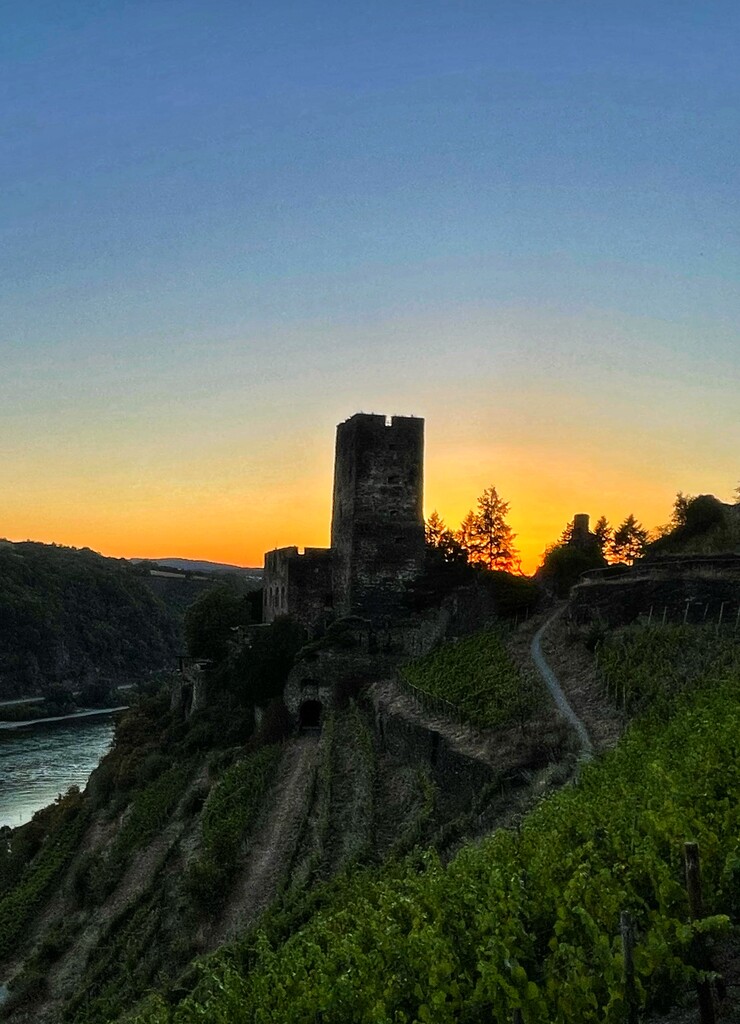
As the sun disappeared behind the hills, I enjoyed one of the most beautiful sunsets of the entire journey before darkness settled over the valley. Then the forest came alive. The following hours felt like a genuine wildlife safari. I've rarely seen so many animals during a single night. Wild boar. Deer. Mouflon. Red deer with calves. Martens. Foxes. Hares. They seemed to be everywhere. The wild boar were by far the most unnerving. Entire sounders lay hidden only metres from the trail, often revealing their presence only through the unmistakable smell that Germans jokingly compare to Maggi seasoning. Every sudden grunt beside the trail sent another surge of adrenaline through my body. Each time, I imagined a huge boar charging straight at me. Fortunately, none of them had any interest in doing so.
________________________________________
The wildlife wasn't actually my biggest problem anymore. My feet were. After nearly three days of running and hiking in extreme temperatures, they felt as though they were on fire. Every single step hurt. The blister on my heel had steadily grown larger despite repeated treatment. By the time I reached Lorch around midnight, I desperately needed a break. I stopped for about 30 minutes, soaked my feet in the cool water of the Wisper stream and carefully treated the blister once again. It desperately needed the attention.
________________________________________
Afterwards, I continued climbing towards Teufelskadrich, where a mountain shelter awaited a few kilometres before Assmannshausen.
Running was completely out of the question now. It was little more than a slow stagger through the darkness.
To make matters even more surreal, cheesy German party music drifted across the Rhine from several river cruise boats below.
Not exactly the soundtrack I'd hoped for.
________________________________________
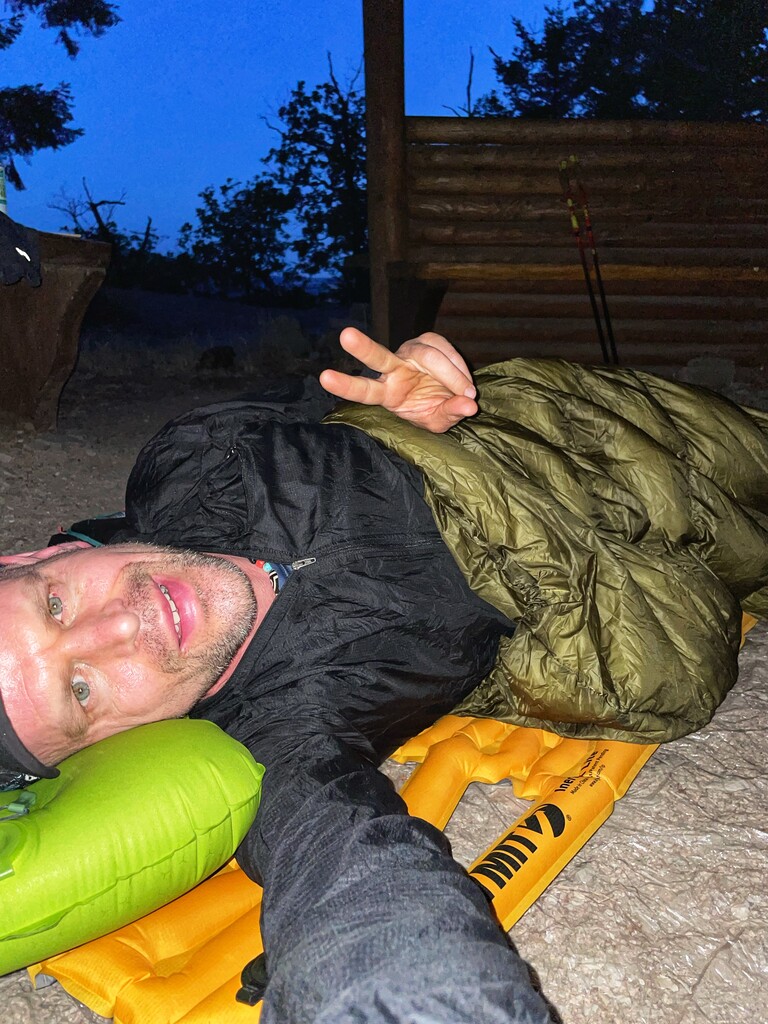
At around 3:00 a.m., I finally reached the shelter. I laid out my sleeping mat. Slipped into my sleeping bag. Closed my eyes. Thankfully, sleep came almost immediately. For 90 precious minutes, everything else simply disappeared.
Day Four
Day four had arrived. The finish line was finally within reach. What remained was one last "push" of around 75 kilometres to Wiesbaden.
At 5:00 a.m., as dawn broke over the Rhine Valley, I packed away my bivouac gear and set off once more. The 90 minutes of sleep had done me a world of good. During the cool morning hours my legs felt noticeably fresher again. For the first time since the previous morning, I was able to jog the flatter sections and downhill trails once more. At the cemetery in Assmannshausen, I refilled my water bottles before continuing to the famous Niederwald Monument. Normally this historic viewpoint is packed with tourists. This morning, however, I almost had it entirely to myself. Only one elderly couple stood beside me, quietly enjoying the magnificent panorama across the Rhine towards Bingen and the Nahe Valley. It was one of those rare moments of complete peace that make adventures like this unforgettable.
________________________________________
Beyond the monument, the Rheinsteig followed a series of vineyard tracks. Technically, the terrain wasn't particularly demanding, but compared with the spectacular trails higher above the valley, I found this section somewhat less inspiring. Still, I was able to cover ground efficiently for a while. That changed quickly. By 10:00 a.m., the sun was once again blazing down onto the vineyards with full force. The heat had returned. And with it, the familiar struggle. Every patch of shade became a welcome refuge. One particularly memorable oasis appeared at Marienthal Abbey. The peaceful monastery grounds offered public toilets, a water tap for hikers, and large trees casting deep shade across the courtyard. At that early hour I had the place almost entirely to myself. I took my time. Rested. Refilled my bottles. Cooled my body. And simply enjoyed the quiet.
________________________________________
The remainder of the journey can be summarised quite simply. It became a long, relentless grind through the rolling hills of the Rheingau towards Wiesbaden. In hindsight, I had underestimated this final section. The constantly changing terrain prevented me from finding any real rhythm. Earlier in the Upper Middle Rhine Valley, the long climbs had allowed me to settle into efficient power hiking before jogging comfortably downhill. Here, however, the constant succession of short climbs and descents—combined with the relentless heat and mounting fatigue—made any ambitious forward progress almost impossible. Mentally, that was surprisingly difficult. Under normal circumstances, this would have been relatively easy terrain. Now it felt endless.
________________________________________
Fortunately, there were still enough opportunities to refill my water and cool down. At Eberbach Abbey—special thanks to the toilets in the monastery tavern—later at the village fountain in Kiedrich, and finally at the spring in the centre of Schlangenbad, I was able to replenish my water supplies and lower my body temperature. Those stops also became essential for treating my blister. Without regular care, every step became increasingly painful. By now, my stomach had almost completely given up accepting food. Nevertheless, I forced down another energy bar every now and then. As ultrarunners like to say: "No fuel, no forward." The last thing I wanted was to bonk so close to the finish.
________________________________________
Then another unexpected problem appeared. My power bank suddenly stopped working. Despite still showing plenty of charge, it simply refused to recharge my completely drained phone. Ordinarily, that wouldn't have mattered much. But my friend Andre had kindly offered to meet me at the finish line at Biebrich Palace—with a pizza waiting. To coordinate our timing, I needed my phone. What followed was probably one of the more bizarre moments of the entire project. Standing beside the small church and cemetery in Frauenstein—literally only a stone's throw from my own apartment, which I absolutely could not enter under self-supported FKT rules—I desperately searched for an outdoor power socket. Fortunately, I found one. Thankfully, my GPS watch had been fully charged beforehand. I don't even want to imagine what would have happened if the GPX recording had failed after more than three days on the trail. That would have invalidated the entire FKT attempt.
________________________________________
Once everything had been coordinated, there was only one thing left to do. Finish. Over the final 10 kilometres, I squeezed every last bit of energy out of my exhausted body. I simply wanted to get it done. Strangely enough, the overwhelming emotions I usually associate with ultrarunning never really arrived. Normally, reaching the finish line after such an adventure is one of the sport's most powerful moments.
This time, body and mind had simply been numbed by four days of relentless heat.
________________________________________
The final approach led through rather unspectacular meadows and vineyards before I reached Schierstein.
Unfortunately, that also meant running straight through the Schierstein Harbour Festival. Food stalls. Loud music. Crowds of people.
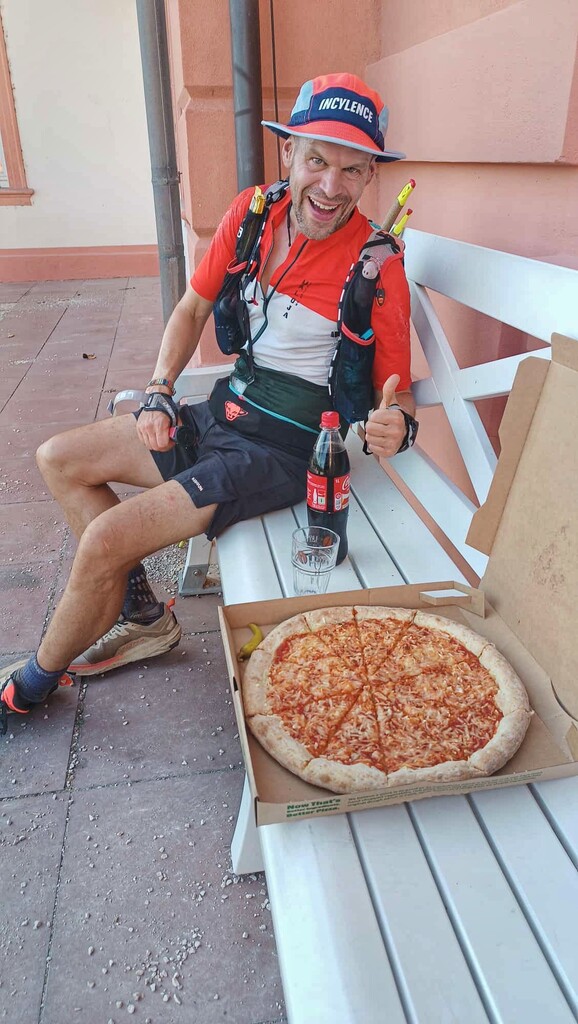
Exactly the opposite of what I wanted after nearly 320 kilometres. I lowered my head and pushed through. Thankfully, things became quieter again along the Rhine promenade. And finally… After more than 84 hours, approximately 320 kilometres, and around 11,000 metres of climbing, I crossed the finish line in front of Biebrich Palace. I was absolutely overjoyed. The pizza waiting for me. An ice-cold bottle of Coca-Cola. And the warm welcome. At that moment, nothing in the world could have tasted—or felt—better.
________________________________________
Conclusion
Completing a 320-kilometre self-supported project is something to be proud of. And I absolutely am. Above all, I'm incredibly grateful that my body coped so well with the enormous physical stress. Apart from the blister disaster on my foot, everything held together remarkably well. No tendon problems. No joint pain. Just sore muscles and tired legs—which are simply part of ultrarunning.
________________________________________
Looking back at the raw numbers afterwards, one thing stood out more than anything else. These multi-day projects are unbelievably slow. You massively underestimate how much time disappears into short breaks, treating injuries, supermarket stops, charging electronics, solving logistical problems and simply dealing with an exhausted body. On paper, the average pace might resemble a leisurely Sunday walk. The reality couldn't be more different. It's hard work. Physically exhausting. Mentally draining. And surprisingly frustrating at times, because despite pushing yourself constantly, your actual progress feels painfully slow.
________________________________________
Of course, once the satisfaction of finishing settles in, every ambitious athlete begins asking the same questions.
How well did the strategy work?
What could have been done differently?
And above all: What would have been possible under cooler conditions?
Looking back, I genuinely believe that experienced self-supported ultrarunners could improve this FKT by five to ten hours if the weather were more favourable. That would even bring the mythical three-day (72-hour) barrier within reach. For me personally, however, the result was exactly right under the circumstances. The balance felt good. The challenge pushed me to both my physical and mental limits while still leaving enough room—thanks to the planned recovery breaks—to appreciate the trail, the landscape and the experience itself.
________________________________________
If other ultrarunners ever feel inspired to take on this adventure themselves, I can wholeheartedly recommend it. I'd love to see more FKT attempts on the Rheinsteig and would be more than happy to share everything I learned along the way. It's absolutely worth it. The Rheinsteig is one of Germany's finest long-distance trails. Its constantly changing scenery, technical variety and excellent infrastructure make it a perfect setting for a self-supported endurance project. Ultimately, adventures like this offer something far deeper than simply chasing a time.They provide a rare opportunity to confront yourself—physically, mentally and emotionally. And they don't have to cover 320 kilometres. Experiences like these can be found on much shorter routes as well.Whether an FKT is involved or not is, in the end, almost beside the point.