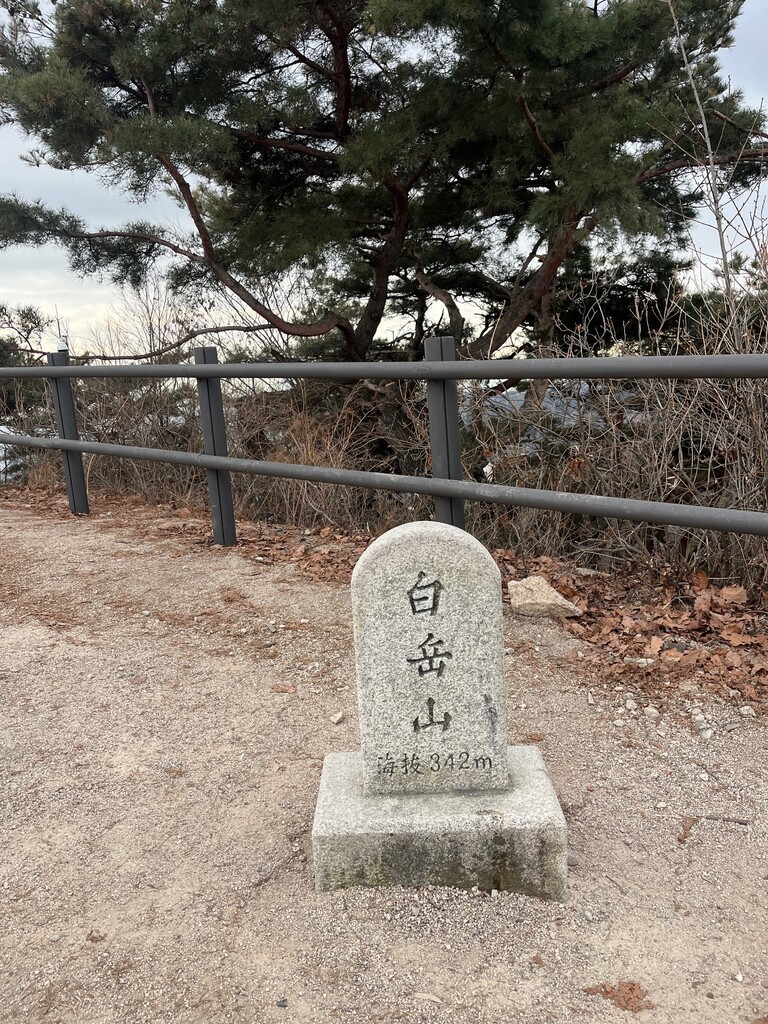
Bugaksan (북악산) -- also known as Baegaksan (백악산) -- is the most significantly located peak in Korea, looming imposingly behind Gyeongbokgung, the foremost Joseon Dynasty palace, and Cheong Wa Dae, the office and residence of South Korea’s president. Though only 342 meters (1,122 feet) high, it is steep on all sides, with sections of sheer granite. The mountain’s importance as a defensive bulwark is underscored by the old fortress wall that climbs up and over it, east to west. Bugaksan is separated from neighboring Mount Inwangsan by Jahamun Road (자하문로), which runs through Jahamun Pass (자하문고개).
On Jan. 21, 1968, a small group of North Korean guerillas scaled Bugaksan in an attempt to infiltrate Cheong Wa Dae and assassinate the president. Their incursion was thwarted, but a bullet-scarred pine tree on the main path stands as a reminder of the incident. Following the guerilla attack, Bugaksan was closed to the public, only opening again on Nov. 1, 2020. Climbing the east-west path over the peak required checking in at a small guard station and receiving a visitor pass. This procedure has since been relaxed, and more trails have opened. However, there are numerous sentry boxes along the fortress wall, and soldiers continue to patrol the path.
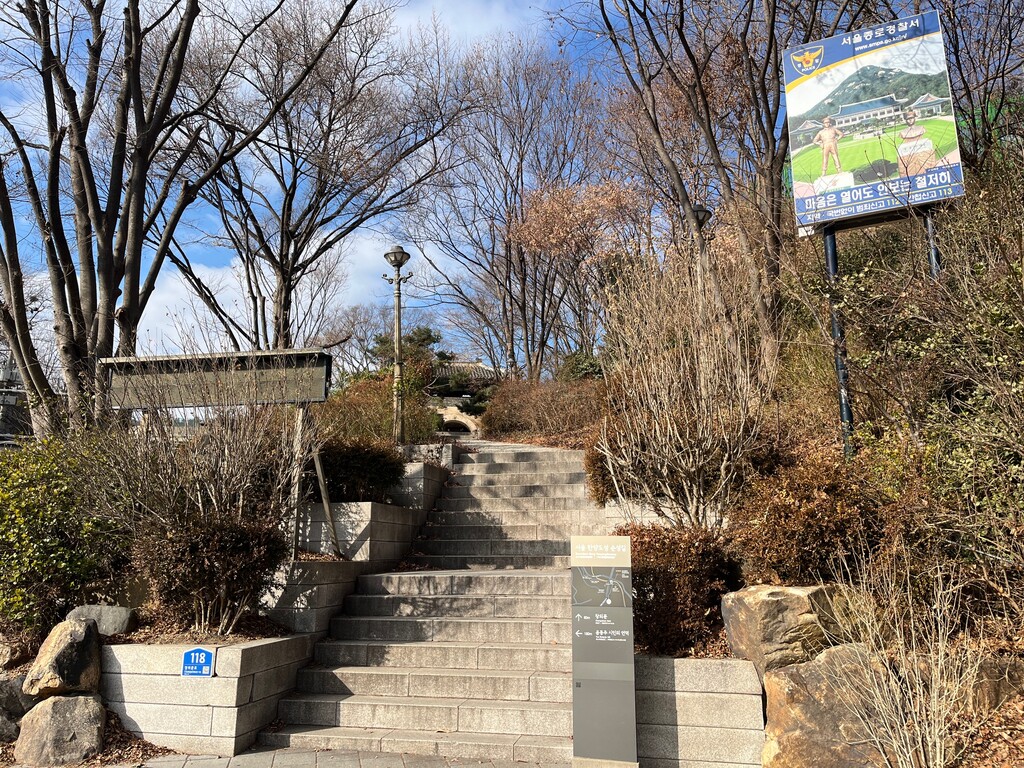
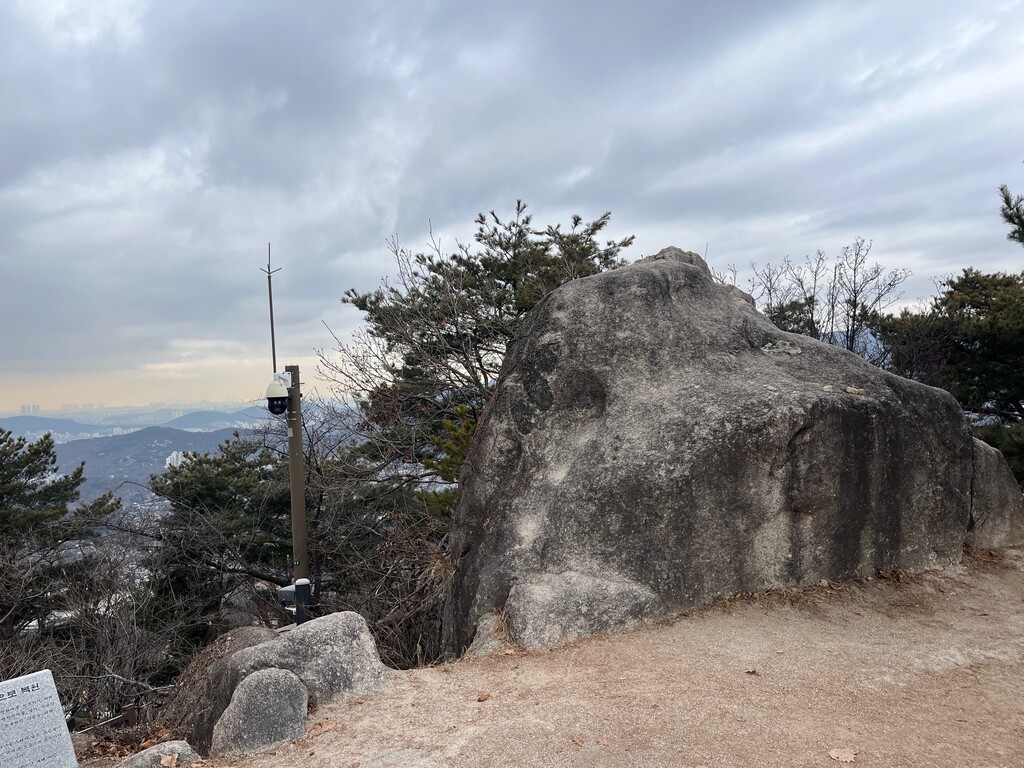
The route up and down the mountain’s west side begins near the bust of Choi Gyu-sik and statue of Jeong Jong-su, policemen who were killed during the 1968 incident. The path to the top consists entirely of wooden staircases, which have replaced massive stone steps that formerly made the climb a bit harder. During the grinding ascent, hikers and runners can enjoy stunning views of Bukhansan National Park and parts of northern Seoul.