
The air is smoky and very hot. We’re smack-dab in the middle of the biggest trail running races of the year… and yet the most-prestigious, most-competitive fastest known times are going down left, right, and center—wildfires and heatwaves be damned.
First, François D'Haene overcame extreme heat to become the first sub-30-hour finisher of the GR 20, a 112-mile route tracing the mountainous spine of Corsica that many consider to be Europe’s hardest, most technical long trail.
Next, compatriot Aurélien Sanchez battled his own 100-degree F desert hotbox en route to becoming the fastest-ever finisher of the Pacific Crest Trail. Just 24 hours after his 45-day run, the northernmost section of the trail got shut down due to the nearby Ptarmigan Fire—probably for the rest of the summer.
The very next day, Germany’s Katharina Hartmuth set a new supported record on England’s legendary Bob Graham Round. Sounds like some type of scrumptious, buttery cracker, but it’s a classic fell running challenge linking 42 peaks in the Lake District for a total of about 66 miles and 27,000 feet of climbing and descending. Harmuth shaved 22 minutes off Beth Pascall’s previous mark, with Pascall there in person for the assist.
And less than a week ago, New Zealand’s Sophie Woods put an exclamation mark on the historic ordeal by setting the overall record on the Via Alpina—a 1,647-mile huck through the Alps with a whopping 475,000-plus feet of climbing.
That’s like doing UTMB 15 times back-to-back. But in this case, the 42-year-old ran through eight countries, in two relentless heatwaves, uncomfortably close to wildfires, through thunder, lightning, and hail, for 29 days.
She shattered the record by six days.
Take that, Odysseus.
The Father of FKT Buzz Burrell said it best when he told me: “These are terrific FKTs, and on some of the most classic and competitive routes in the world.”
Against all odds, we have no choice but to declare: It’s FKT Summer. Here are the results of my investigation into why that is.
FKT and Find Out
Hartmuth’s favorable-weather attempt aside, these records defy all commonsense, logic, and odds. Take Sophie, for example, who told me the heat made everything much harder, forcing her to slow down, seek shade, and accept that she couldn’t force the pace.
“During the first heatwave, I had one of my lowest moments of the entire journey. I was making my way through the Dolomites, it was unbearably hot, and I still had such a long way to go. I ended up bawling my eyes out,” she said. “We call it a tactical cry, and honestly, I felt much better afterward.”
How they each managed to dodge wildfires and plow through inhumane heat doesn’t make any sense to me. It seemed to make perfect sense to Buzz. TL;DR, FKTs have come a long way from scrappy personal projects into professional pursuits.
“These huge accomplishments simply are the new normal,” Buzz said. “Compared with a race, an FKT is very self-reliant, self-directed, and self-created, requiring a higher degree of experience, knowledge, and commitment. But keep in mind, it's still a race.”
Training has leveled up, Buzz pointed out. The Internet, social media, and more attempts on these routes mean more shared beta—like which lines to take across the hills of England or the cliffs of Corsica, or how to pace multi-day efforts like the PCT and Via Alpina. As we’ve seen in racing, the fueling revolution along with other technological advancements in gear like shoes has leveled up speed and recovery.
Perhaps most importantly, according to Buzz, “there is serious money to be made.”
That’s a carrot on a stick to chase these records in heatwaves and also allows for much higher levels of support during and around the FKT attempt. It reminds me of Josh Kerr’s recent world record in the mile, an effort supported all season by a private chef, an aerodynamically tested speed suit, and special track spikes—plus physio work from his mother, among many other things.
It wasn’t long ago when it would be hard to discern whether one was setting out for an FKT attempt or a family backpacking trip. When Buzz and Peter Bakwin set the Colorado Trail FKT in 2000, Peter’s in-laws met them once a day, Buzz says. Similarly on the John Muir Trail the following year, Buzz’s son Galen hiked in to meet them—once.
“Our trail ‘fuel’ might have been leftover pizza from the night before. We were back at work Monday morning,” Buzz said. “That’s not how the game is played anymore. Professional runners don’t have to ask for time off from work because this is their work. And it shows!”
It all changed in 2017, when François set the record on the John Muir Trail, running nearly twice as fast as Peter and Buzz. There, he was the first to implement a “race-level” of support for an FKT, Buzz notes. His record stands nine years later. Now, according to Buzz, that’s how essentially every major, multi-day supported FKT is set.
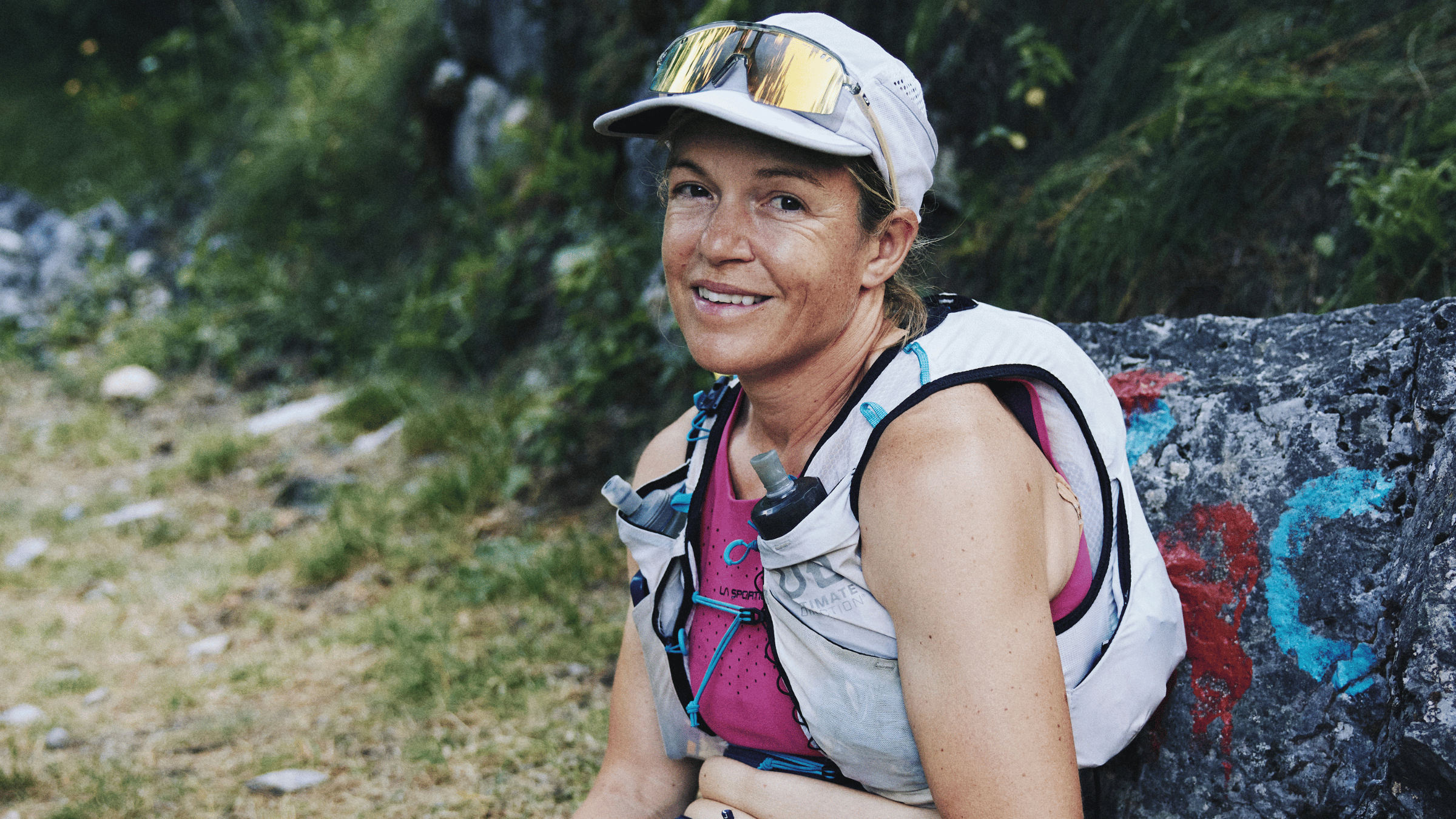
Sophie painted a slightly more complex picture. She didn’t describe her set-up on the Via Alpina as particularly professional—while she is a sponsored runner, she funded most of the project herself. Only her husband and friend Zoe provided in-person support for the attempt.
“In hindsight, having a larger team would certainly have helped, but we simply did not have the resources for that,” she said. “Zoe joined largely out of the goodness of her heart and for the opportunity to share the adventure.”
To Sophie, her decades of experience, including at some of the hardest multi-day races in the world, were her greatest asset: “Over the years, I have built up a huge base of knowledge and experience. I like to think of it as my filing cabinet and my toolbox. Whenever I faced a new challenge, I could reach back into those experiences and find something useful.”
The biggest lesson, she said, was staying in the moment. “That was the only thing I could control.”
Time for Your Own Personal FKT?
Running, of course, isn’t just about racing, and what I love about FKTs is how they bridge the gap between the competitive and the exploratory side of the sport. Yes, most FKTs require a race-like focus and execution. But the most compelling FKTs also require a dedication to learning the route (there are no course markings!) and the eccentricities that come with the landscape—as well as figuring out how to get the best out of yourself.
For some FKTs, you’re optimizing the path from point A to point B. You’re making calculated decisions about when to start, where to stop and fill up bottles, and when and how much to sleep. The only competition is the clock, and with no race date and time on the calendar, you must dig deep into your chest of courage to elect to give it a try, and to continue trying when things inevitably go south.
Even as FKTs professionalize, they’re still one of the most fun and accessible ways to create your own adventure. Two of my most memorable days outside were running two 50-mile FKTs ending on the mountain, a quarter mile from my childhood home in New Hampshire. Giving them a race effort a) allowed me to complete them each in one day and b) locked me into the zone. I felt so present with the landscape, and memories of those sunrises and sunsets and everything in between will stay with me forever.
There are FKT routes all over the world of all various shapes, sizes, and styles waiting for you to explore, and no one is stopping you from creating your own. Leftover pizza optional, but recommended.
p.s. This story is a rare edition of the Trail Runner newsletter that's made it onto the site. Sign up to get our most exclusive story sent to your inbox once a week.