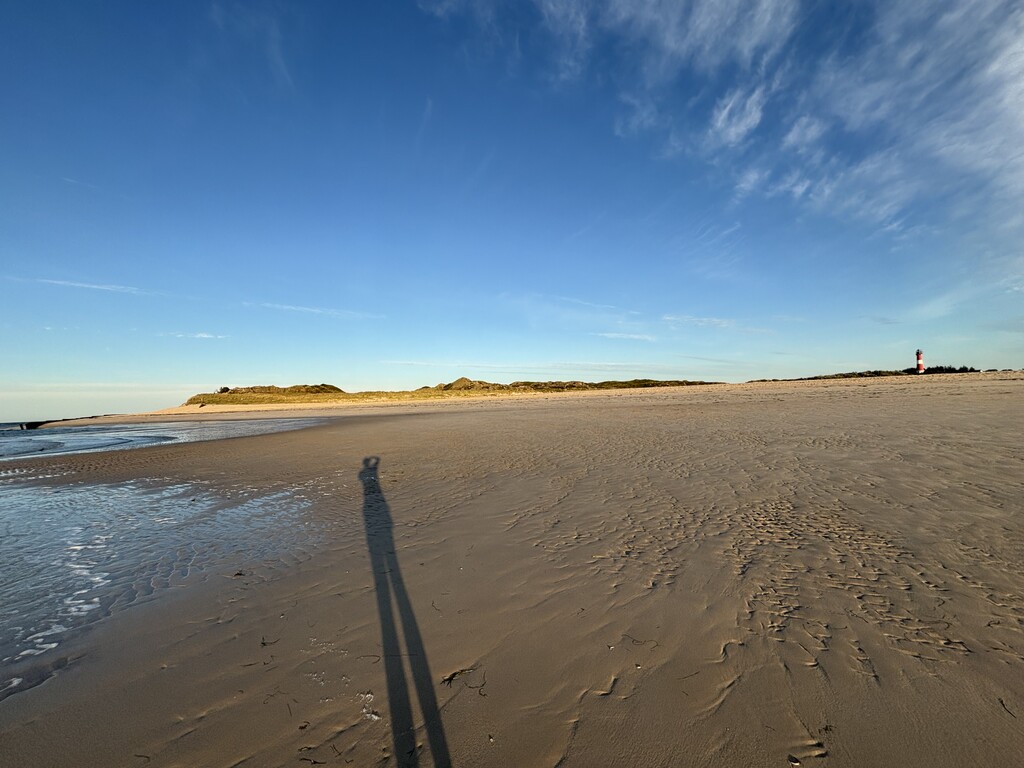
This route traverses the entire island of Sylt, Germany’s most famous North Sea island, from the southernmost accessible point of the “Hörnumer Odde“ to the northernmost point of Sylt – which at the same time marks the northernmost point of Germany.
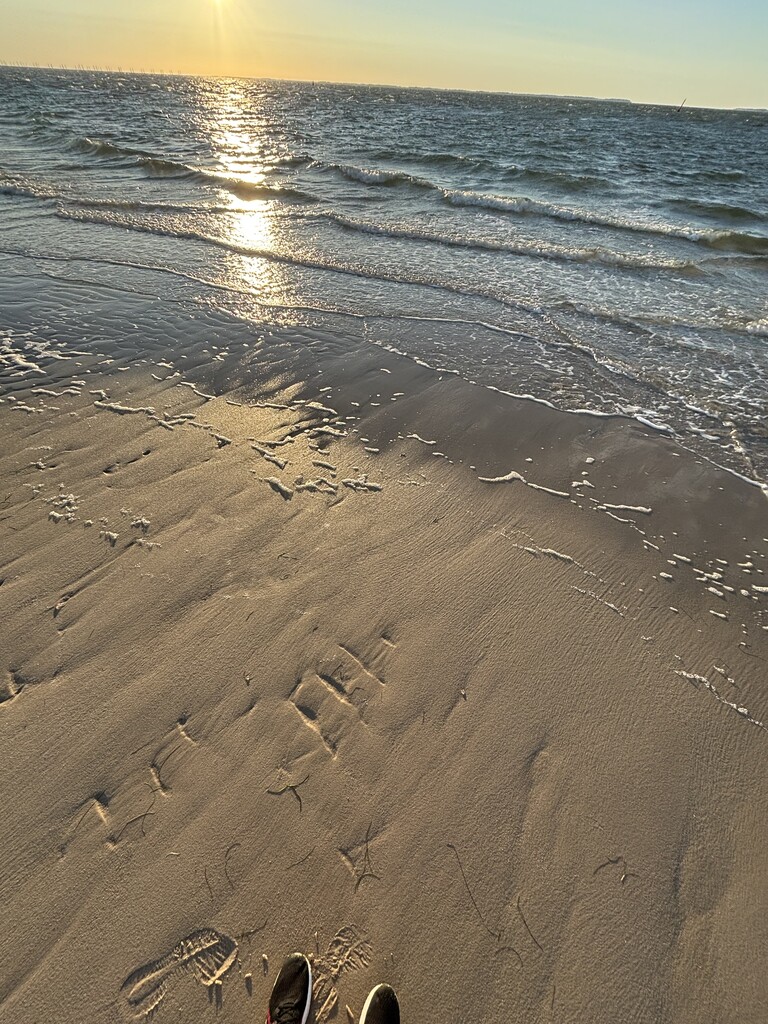
The run follows the entire western coastline of Sylt and is completed exclusively on the beach, directly on the sand, without using roads, paved sections, or inland trails. This makes the route unique and significantly more demanding than a standard road or trail run.
Start/Finish:
- Start (Hörnumer Odde, south tip of Sylt):
The starting point is the southernmost reachable point of the Hörnumer Odde. One can reach Hörnum by road, then continue on foot for about 15 minutes to the very tip of the Odde. The exact shape and length of this sand spit are constantly changing due to coastal erosion and deposition, meaning that maps often show outdated outlines. For this FKT, the start is defined as the southernmost accessible piece of land at the time of the attempt.
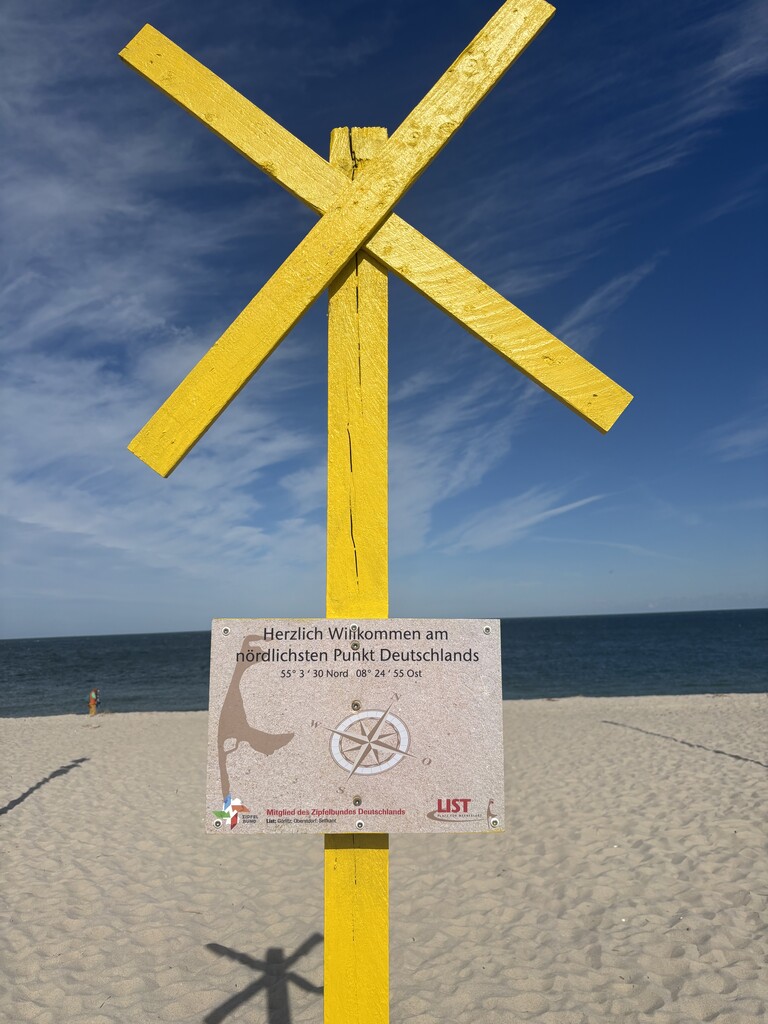
- Finish (“Ellenbogen“, north tip of Sylt / northernmost point of Germany):
The finish is at the northernmost point of Sylt, which is also the northernmost point of Germany. It is clearly marked by an information sign and a series of posts/poles that denote the location. While the coastline continues eastwards due to the island’s curvature, no land extends further north beyond this point – making it an unmistakable and logical finish for the route.
Route guidance:
From the Hörnumer Odde, simply follow the western shoreline northwards along the beach, keeping the sea to your left, until reaching the marked northernmost point at the Ellenbogen. The route requires no navigation beyond staying on the coastline.
Special notes:
- The southern tip of Sylt (Hörnumer Odde) is subject to constant change from the sea. The start is therefore always the southernmost accessible point on the day of the attempt.
- Wind conditions play a crucial role on this highly exposed island. Checking forecasts is strongly recommended, as headwinds or crosswinds can significantly influence the effort and finishing time.
- Tide / water level: Running at low tide (ebb) provides firmer sand and a much better surface. At high tide, the beach is considerably softer and more demanding.
- The cultural context is notable: Sylt is often associated with tourism and luxury lifestyle, but this FKT highlights the island’s raw natural side – sand, sea, wind, and distance.
https://en.wikipedia.org/wiki/Sylt