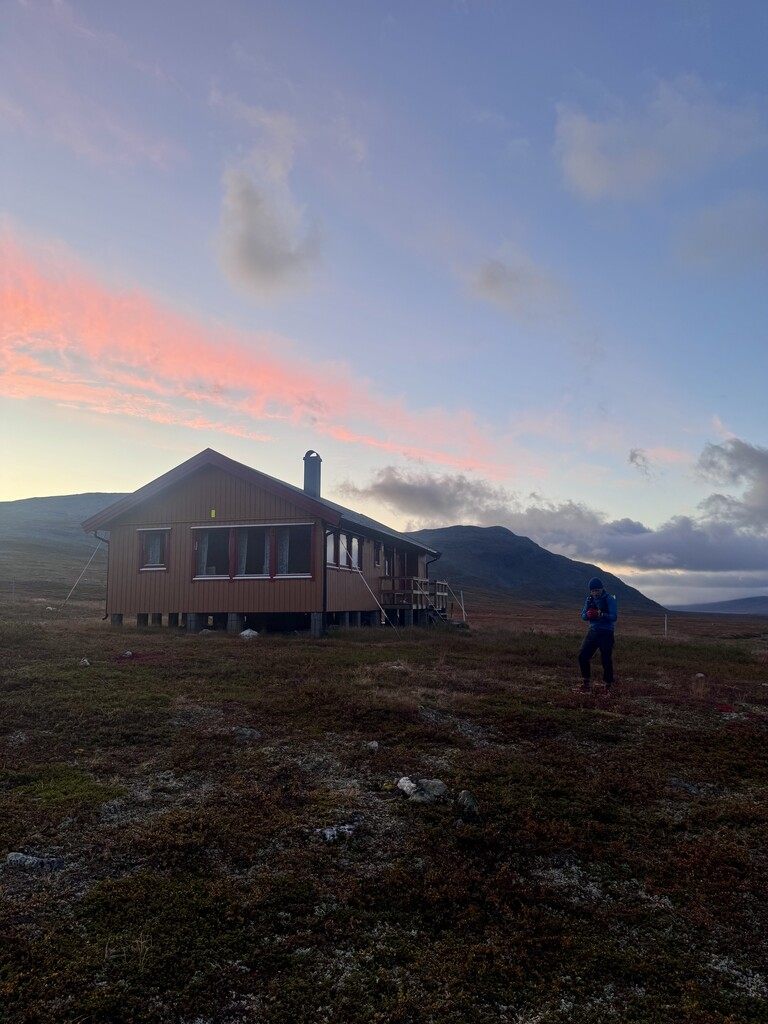
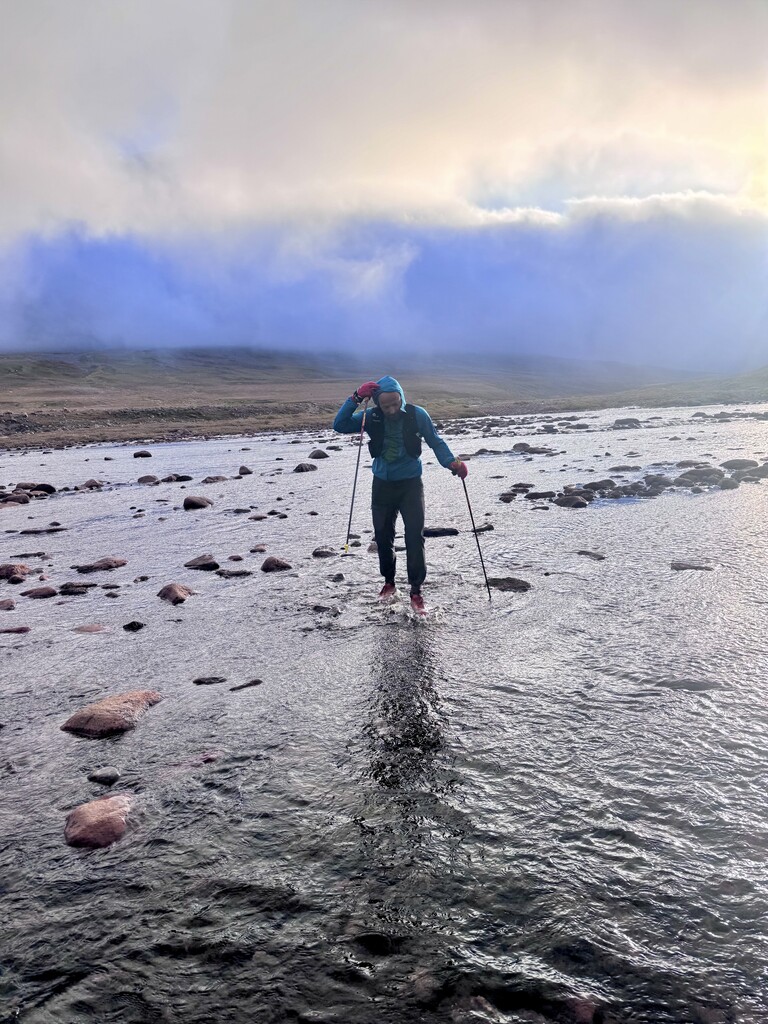
Route: Galgohytta – Gappohytta – Rostahytta – Dærtahytta – Dividalshytta → Dividalen turnaround point Start: E8, approx. 700 m west of the Finnish border Finish: Turnaround point at the end of Dividalen Distance: ~90 km Elevation gain: ~2800 m
Description: The route follows a continuous DNT‑marked trail from the E8 via Galgohytta, Gappohytta and Rostahytta, entering Øvre Dividal National Park about 4 km before Dærtahytta. It continues through the park via Dærtahytta and Dividalshytta, exiting the park roughly 2 km before the Dividalen turnaround point. The entire route is publicly accessible and forms a logical and aesthetic mountain traverse with strong local relevance.
This is a route that does more than cross mountains; it moves through one of the last great wilderness regions in Northern Europe. From the moment you leave the E8 and take your first steps westward, the landscape opens like a quiet promise of everything that lies ahead: wide plateaus, deep valleys, cabins, rivers, and a nature that is still allowed to be itself.
Towards Galgohytta – Where the sky feels largest
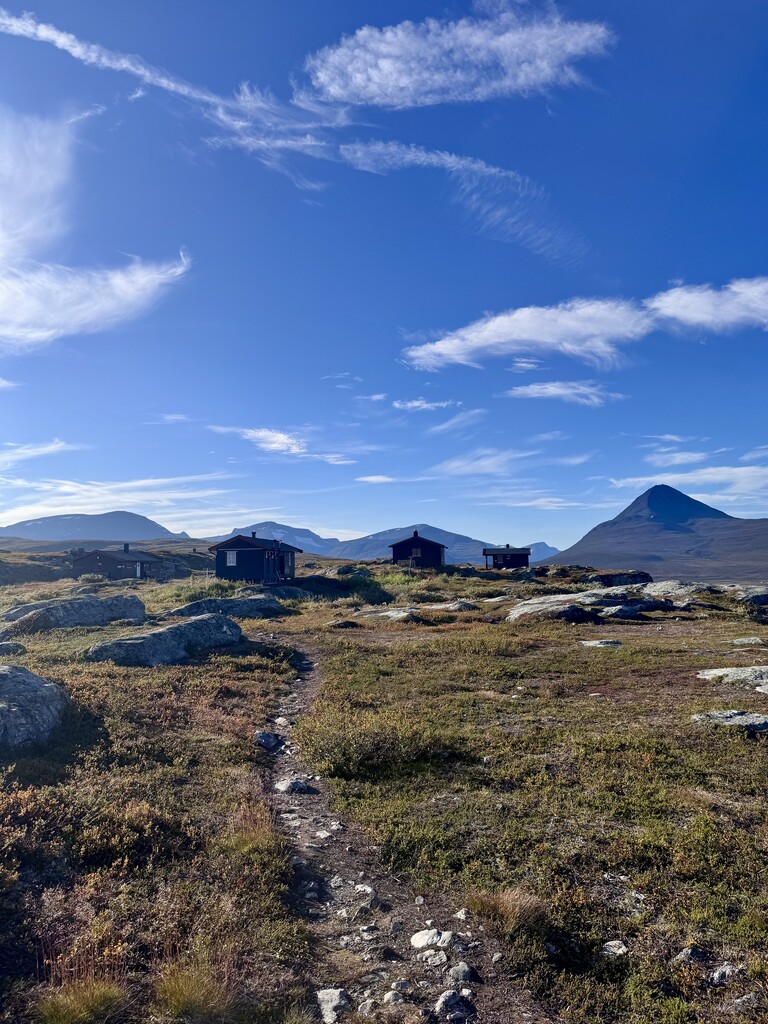
The first kilometers pass through open, wind‑shaped highlands where the horizon stretches endlessly. The mountains lie like an unwritten poem in heather, lichen and stone. Reindeer often move through these areas, calm and unhurried, as if they have always known this land belongs to them. Ptarmigan lift from the ground with a rasping flutter, and snow buntings drift like white sparks against the sky.
Galgohytta to Gappohytta – Between lakes and old paths
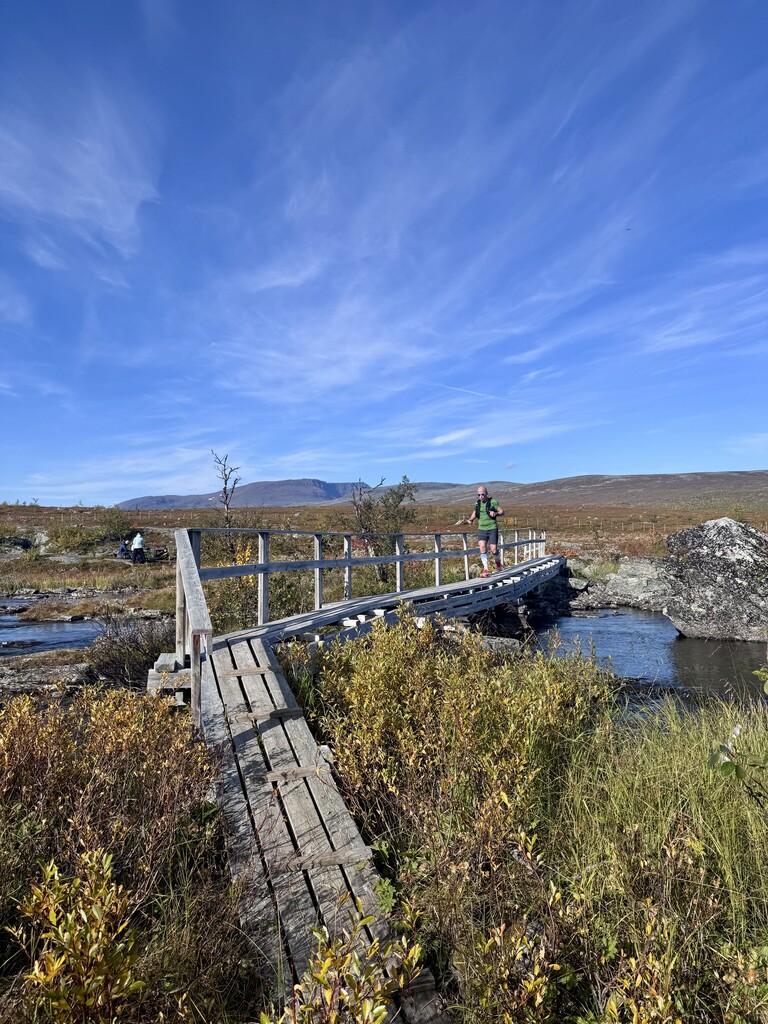
From Galgohytta, the trail winds through terrain shaped by weather, time and footsteps. Small lakes lie like blue mirrors between marshes, and the path carries traces of generations who have walked here before—hunters, fishers, mountain people and wanderers. High above, the golden eagle circles as a silent guardian of the highlands. Here, silence is not the absence of sound, but a presence of its own.
Gappohytta to Rostahytta – Where the plateau opens
On the way to Rostahytta, the landscape widens even more. Ridges rise and fall like waves of stone, giving thoughts room to breathe. Tracks of wolverine, hare and marten appear in the ground—small signs of life in a place that otherwise feels untouched. In summer, the lakes are alive with birds, and the wind carries the sound of a nature that lives without haste.
Into Øvre Dividal National Park – Where nature deepens
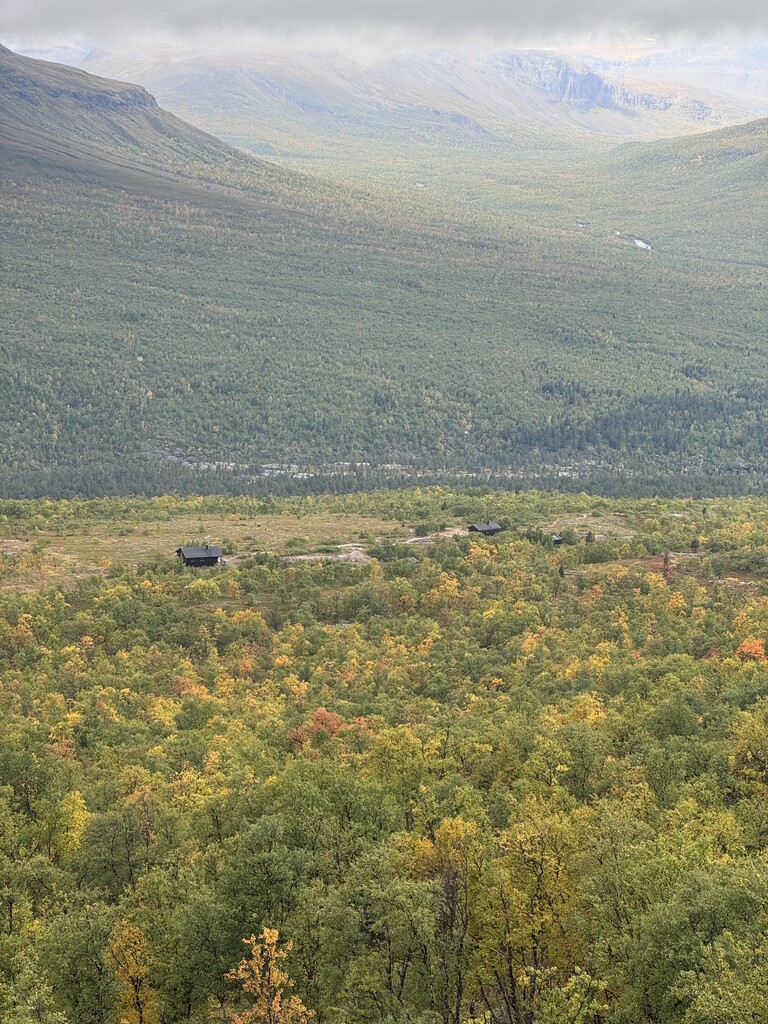
As you approach Dærtahytta and cross into Øvre Dividal National Park, the mountains shift character. Valleys grow deeper, peaks more defined, and the wilderness more intense. This is one of Norway’s most pristine mountain ecosystems, a place where large predators still roam—bear, lynx, wolverine and wolf, shy and almost always unseen, yet undeniably present. The rivers run clear and cold, and the landscape carries a gravity, as if it knows it is rare.
Dærtahytta to Dividalshytta – The heart of the park
This is the most majestic part of the traverse. You follow valleys carved by ice and time, surrounded by mountains rising sharply from the valley floor. Siberian jays follow curiously through the birch forest, and dippers sit on river stones as if they own the water. It is a landscape that both gives and demands—beautiful, but honest.
Dividalshytta to the turnaround point – Back to the valley
Leaving Dividalshytta, the route descends gently through the valley. The birch forest thickens, the grass grows greener, and the river becomes a quiet companion. Moose often move through this area, and small birds fill the forest with life. As you near the turnaround point, and the national park releases its hold, it feels as though the mountains have given you something—a stillness, a rhythm, an understanding of a landscape that lives entirely on its own terms.
Closing
This is not just a route. It is a journey through a mountain region that still remains true wilderness. A line that binds together cabins, valleys, plateaus and nature untouched for centuries. A traverse that offers both distance and closeness—to the mountains, to the land, and to yourself.
Cabin access: Using the cabins is easiest with a DNT membership and the standard DNT cabin key, which is available to everyone. Day visits and overnight stays must be registered and paid for according to DNT regulations.
Why this route is notable: A natural and aesthetic line, classic DNT huts, national‑park terrain, strong local usage and substantial distance. A clear “bucket list” traverse in Inner Troms
Links:
DNT-hyttene
Find your next trip on UT.no - DNT