Admin note: Thru-hike style FKTs that make extensive use of private land are recorded on the Catskill High Peaks route page.
This page is for attempts on public land.
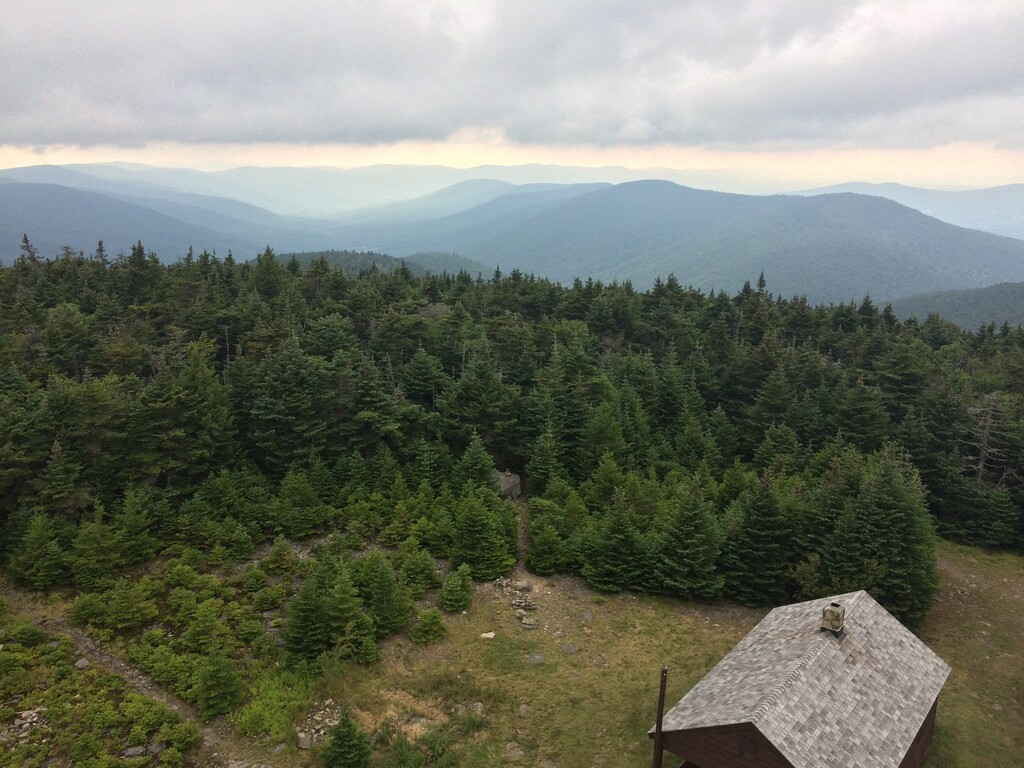
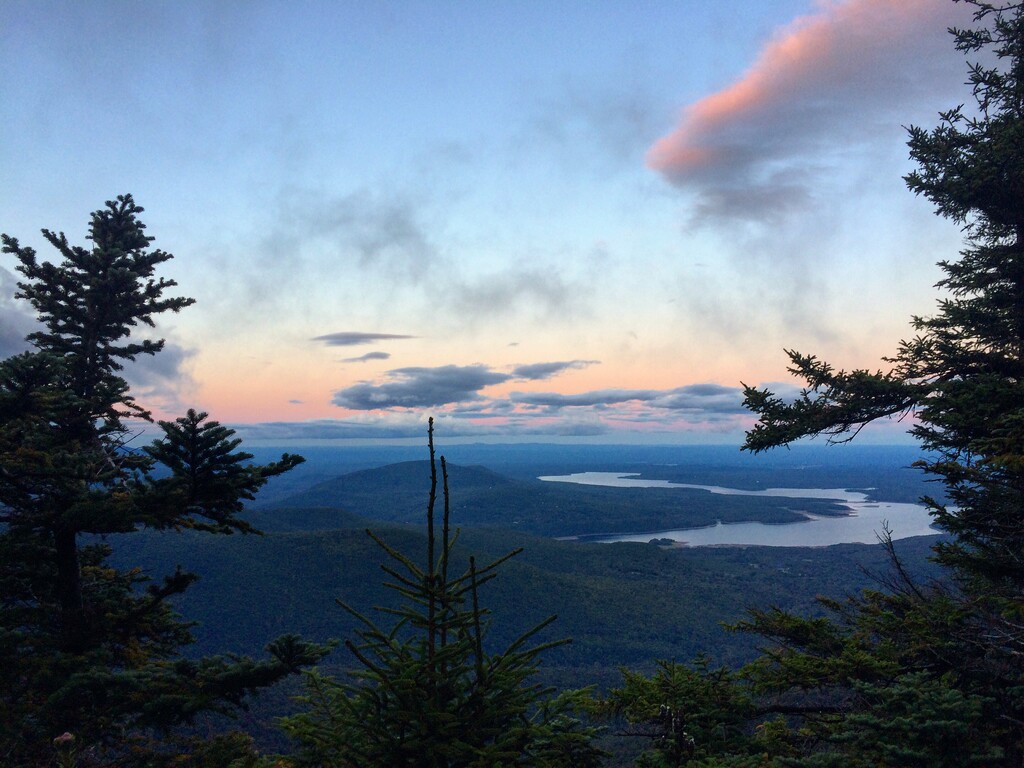
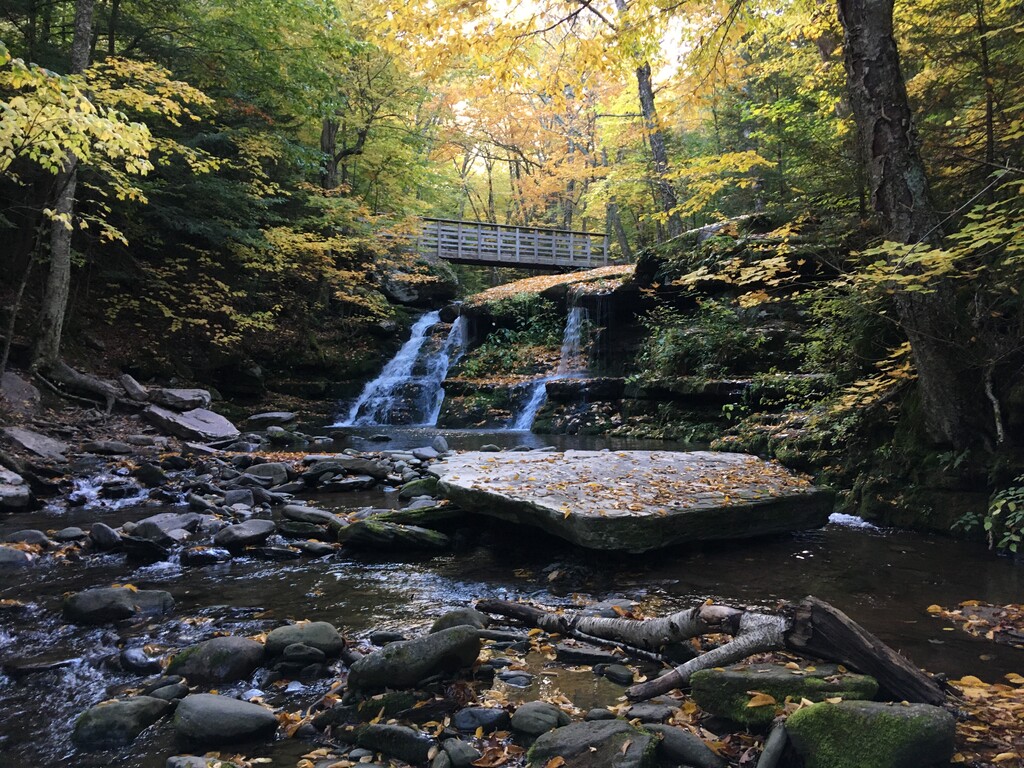
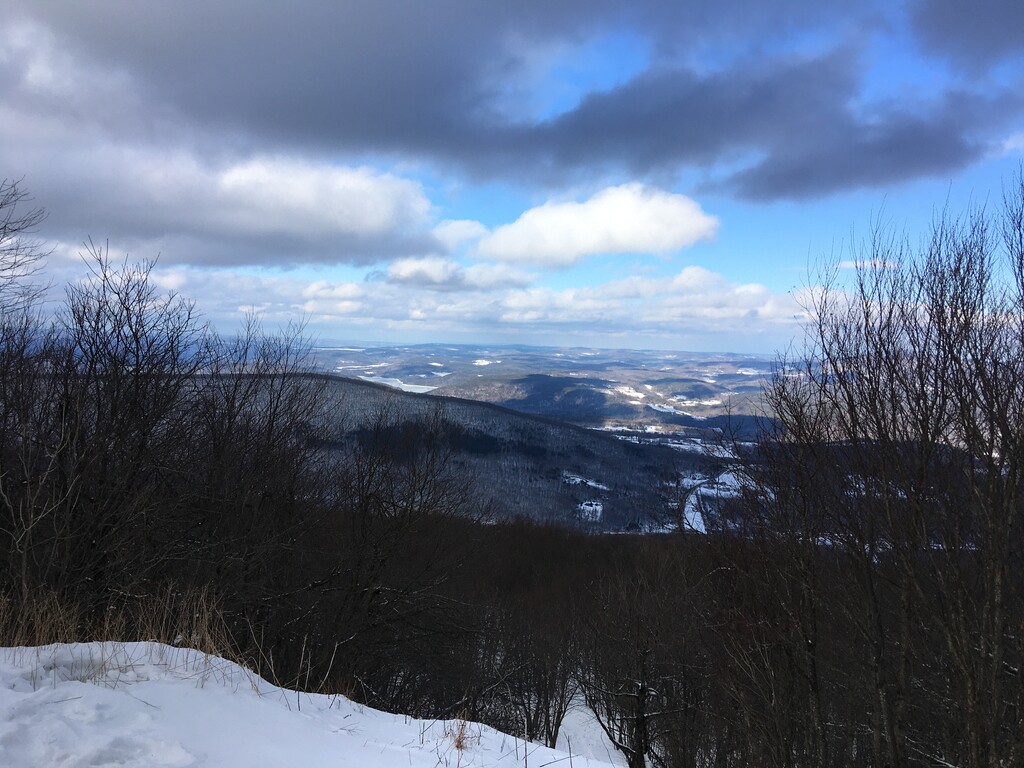
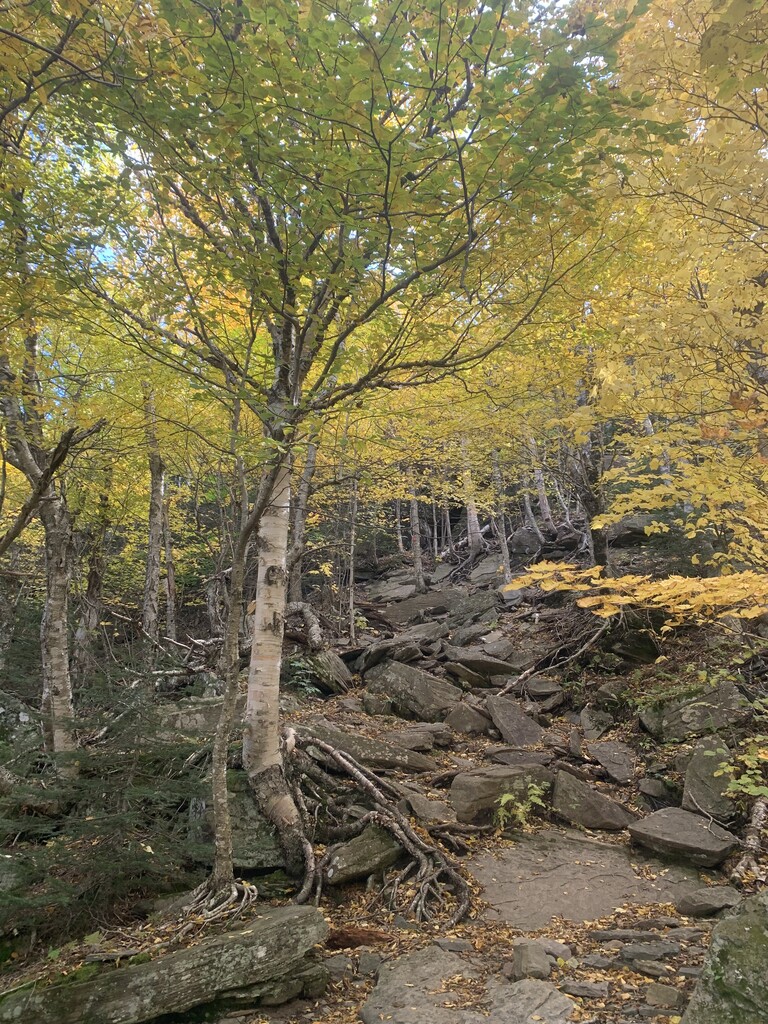
Description: The White Mountains have the 4000 Footers, the Adirondacks have the 46ers, and the Catskills have the 35ers. The 35ers are 33 peaks over 3500 feet. As with any grouping of peaks this large there has been some discussion as to which peaks should be included, but this is the list required for entry into the Catskill 3500 Club and is generally regarded as the official list. The standard route (the way most hikers/runners complete this list) involves tagging all 33 of the peaks, by any legal route, counting your time from first trailhead to last trailhead. Distance will likely be 115-120 miles, with approximately 39,000’ of gain. Most of these peaks are unmarked and it can be difficult to determine where the exact summit is. Preparation is essential. The Catskills aren’t big mountains but they can be very challenging. The trails are rugged (several peaks being on the notoriously difficult Devils Path) and 12 peaks don’t have maintained trails. The peaks without official trails have canisters with a summit register.
People have done this in winter. Phil Vondra completed all 33 peaks in December 2021, supported, in a time of 3 days, 10 hours, 53 minutes. I’m not sure what his exact route was but he was interviewed about his adventure in this podcast.
People have done this as a thru-hike, also known as the Catskill Direttissima. Direttissima is an Italian climbing term meaning “shortest link” or “most direct route.” Direttissimas are also common in the White Mountains and the Adirondacks, where people try to connect a group of high points as a single thru-hike. Ted “Cave Dog” Keizer (2002) and Mike Siudy (2018, podcast link) have set very solid supported times on the Direttissima. The historical Direttissima, traditionally done utilizing private land, has its own separate route page. Comparing times on this route page to the historical Direttissima is problematic for a couple of reasons. 1. Up until 2021 the 3500 Club also required Graham and Doubletop (35 peaks total) to be climbed for entry into their club. They are on private land but the landowners had been favorable to hikers. It doesn’t sound like they will open again to hikers in the future. This article describes why the list was reduced to 33 peaks. Mike and Ted both tagged the historical 35 peaks, which one would think would take more time, but the land closure involving Graham and Doubletop would arguably make a legal thru-hike longer and require more bushwhacking. Any Direttissima attempt going forward requires a completely new route around the Graham/Doubletop closure. 2. The Catskill Direttissima historically involved cutting across some private land to save 20-30 miles. Any Direttissima submitted on this route page should make use of public land.
The first successful attempt at a thru-hike (likely self-supported, with food caches) may have been in the late 1970s, by Jim Senecal and Joe Hevesi, as recorded in the Kingston Daily Freeman in 4 days, 14 hours, both at the age of 19.
Cory Delavalle and Jan Wellford completed a Direttissima without support in May 2011. I have seen a time of 4 days, 13 hours, 5 minutes for their attempt but do not know how accurate this is or if they used private land. Please comment if you have more information on this or any other historical attempts. Comments on style and private land are also welcome as there are many people in the community with decades of experience in the Catskills.
Peaks in 24hrs: People have tried various 24 hour peakbagging records for decades. The Catskill 24 hour record is a natural extension of this, the goal being to tag as many of the 3500’ peaks as possible in 24 hours. Other 24 hour peakbagging records often have slightly different criteria based on local circumstances. For The Colorado 14ers, the “Colorado Rule” has become accepted, which states that the climber must ascend at least 3,000 vertical feet net elevation on foot from the base of the first peak in a series, and descend at least 3,000 feet at the end of the series. This rule is largely due to the fact that a few Colorado 14ers have roads going to the top. This site describes the history of the 24 hour fell record in the Lakes District in the UK, which dates back to 1904. Curiously, the athlete is required to finish back at the same location from which they started before the 24 hours is up.
For the Catskill 35ers 24 hour FKT, I would suggest the following guidelines:
- The clock starts when you leave the first peak and ends on the last peak you summit before 24 hours is up. I believe this is the most simple and doesn’t introduce confusing questions for groups of peaks, such as:
- “Do I need to return to the same trailhead where I started a group of peaks?”
- “If not, what counts as a trailhead?”
- “If I don’t make it back to a trailhead do any of the peaks in a group count?”
- “How far below a peak do I need to be for it to count?”
- Each peak can only be counted once (unless someone somehow manages to first do all 33 in less than 24 hours, which would indeed be a world class effort with around 40,000’ of elevation gain)
- There are a few places where it is common to cross private land to access a peak. If someone does this it will be counted as supported.
- As usual, using a car to drive between trailheads would categorize the effort as self-supported. (please don’t endanger others by driving carelessly or while drowsy.)
- An unsupported effort would be all on foot, no vehicles.

Comments
If someone were to attempt the Direttissima with the new 33 peaks on all public land and unsupported, would a new FKT need to be created or can a 33 peak attempt go under this route?
The full 35ers FKT route is already listed here: https://fastestknowntime.com/route/catskill-high-peaks-ny
These listings should probably be combined to avoid confusion.
Since that route includes (the arguable shortcut through) Graham and Doubletop, that are now closed to the public, do you think it should be included as a historic variation of this route? It also went through a lot of other private land that could be problematic for athletes who don’t have permission from the landowners.
This GPX is only peak locations. Is there one with the actual route taken?